
Original briefings. Zero spin.
Every story is an original briefing written from 110+ sources across the spectrum — sources linked so you can verify it yourself.
 economy
Major Story (8/10)
Event date: August 8, 2026
economy
Major Story (8/10)
Event date: August 8, 2026
China's Record $1.2 Trillion Trade Surplus Is Approaching a Breaking Point, Former U.S. Trade Chief Warns
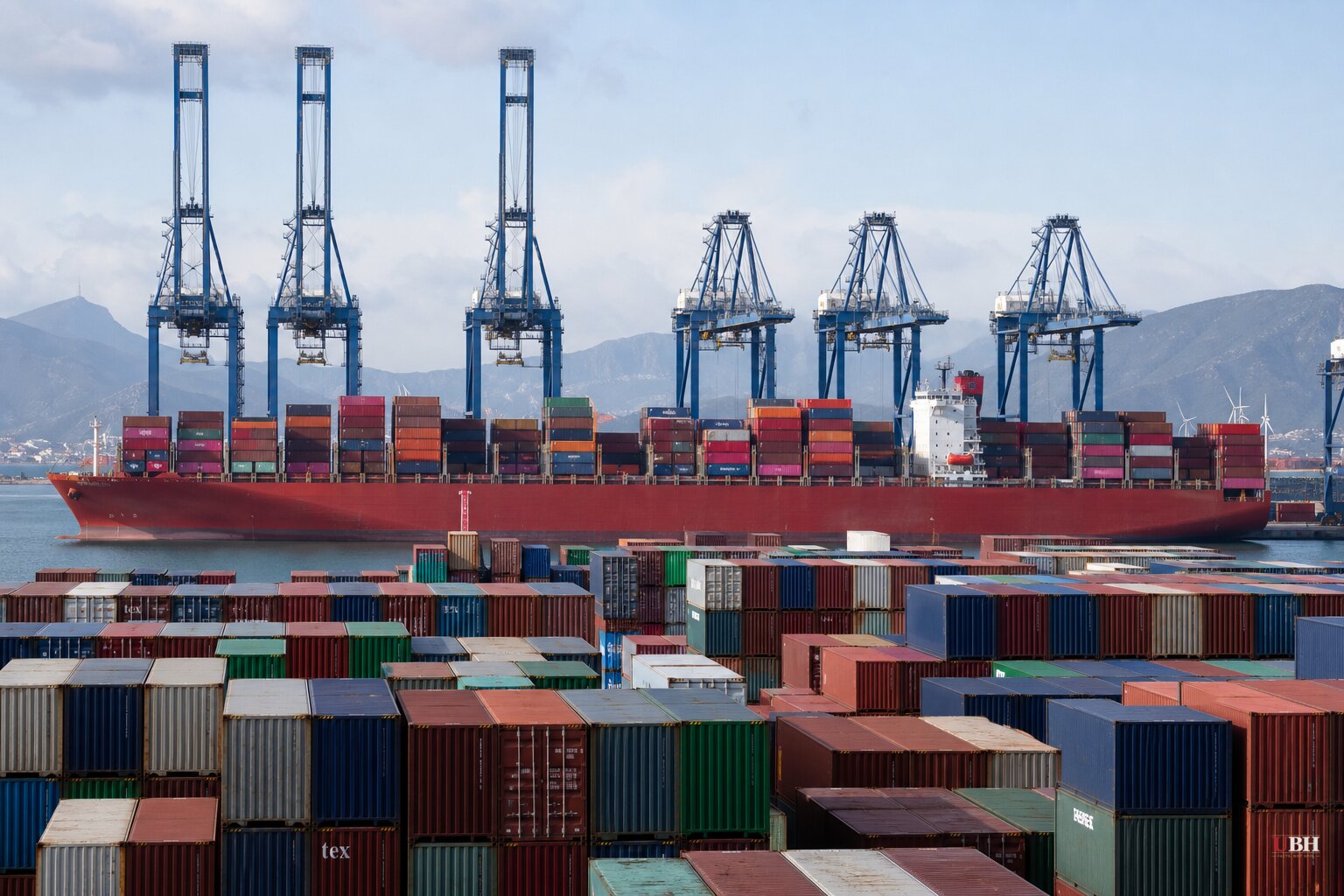
China posted a $1.2 trillion trade surplus in 2025. That's the largest in recorded history, according to figures cited by Michael Froman, the former U.S. Trade Representative under President Obama who now runs the Council on Foreign Relations.
Froman laid out the case in Foreign Affairs last month: China's surplus grew roughly three times faster than global goods trade overall, and in early 2026 it expanded more than 20% year-over-year. The IMF projects global GDP growth around 3.1% this year. The world isn't growing fast enough to keep absorbing what China is producing.
Two sectors are driving it. Chinese vehicle exports, led by EVs, climbed 21% in 2025 to $142 billion, according to reported figures. Lithium-ion battery exports hit $77 billion the same year. Beijing is subsidizing this stuff hard, and Chinese firms are undercutting foreign rivals by as much as 30%, helped by a currency that stays conveniently undervalued.
Nearly a third of Chinese industrial firms are operating at a loss, Froman notes. State subsidies and central mandates keep factories running even when nobody's buying at a profitable price. That's not a healthy economy. That's a government propping up production for its own sake.
China's domestic economy is a mess too
While Beijing keeps flooding the world with cheap exports, its own consumers aren't spending. Retail sales in July were barely 0.6% above year-ago levels, according to Milton Ezrati, writing in the Epoch Times. At China's own inflation rate, that's zero real growth.
The property crisis is worse. Property investment dropped 19% over the past year. Construction fell another 5% in the first half of 2026 compared to the same period in 2025. Home purchases were down 17% through June, and residential values have dropped roughly 25% since the crisis began, gutting household net worth, per Ezrati's reporting.
Fixed asset investment, meaning factories, equipment, and technology, fell 6.7% from January through July 2026 versus the same stretch a year earlier. That's happening even as Beijing pours money into EVs, quantum computing, and other favored industries under its "Made in China 2025" program. About 40% of urban workers are now in what Beijing calls "flexible employment," which is gig work and part-time labor by another name.
China can't sell enough at home, so it dumps more abroad.
Washington isn't trying to fix China anymore
U.S. Trade Representative Jamieson Greer told Axios flatly that trying to reform China's economic model is over. "We did that for 25 years with our best people, and everything got worse," Greer said. He waved off the idea of coordinating with Europe on China policy, asking instead why the Europeans aren't already taking their own action.
That's a fair point. The EU spent decades treating open markets with China as gospel and is only now racing to erect its own trade barriers, per Froman's Foreign Affairs essay. Trump hiked tariffs on China last year and made it the centerpiece of his "Liberation Day" trade push. Beijing's own numbers back up the diagnosis: the export model is running hot because everything else in the Chinese economy is cold.
The fair counterpoint on tariffs
The strongest pushback isn't about whether China is dumping. Even Froman, an Obama-era Democrat, agrees on that. The pushback is about how Washington has gone about responding.
Jonathan Ostry, writing in the Korea Herald, points out that the Liberation Day tariffs were announced, paused, restored, ruled unconstitutional by U.S. courts, and then replaced with duties enacted under different legislation. Ostry's research, covering FDI flows from over 200 countries into 35 OECD nations over nearly four decades, found that unpredictability itself scares off investment, because firms delay decisions until the policy picture clears up. That's a real cost, separate from the tariff rate itself, and it's a legitimate critique of how this trade war has been executed, whiplash and all.
Both things can be true. China's export-driven overcapacity is a genuine structural problem, and Washington's on-again, off-again tariff rollout has created its own drag on investment. Froman's warning is that if protectionism spreads fast enough, cutting off Chinese manufacturers from foreign markets all at once, the fallout hits fragile Chinese firms, state banks holding bad loans on "zombie firms," and ultimately spills back onto everyone else, the U.S. included.
No crisis has hit yet. Whether Beijing reforms its export model before the world's patience runs out, or whether tariff walls close in first and force the reckoning Froman describes, remains the open question hanging over global markets heading into the rest of 2026.
Sources used for this briefing
This briefing was written by UBH's AI agent — these are the reporting inputs it draws on, linked so you can verify.


