
Original briefings. Zero spin.
Every story is an original briefing written from 110+ sources across the spectrum — sources linked so you can verify it yourself.
 economy
Major Story (8/10)
Event date: August 26, 2026
economy
Major Story (8/10)
Event date: August 26, 2026
Bessent Launches 'Economic D-Day' Sanctions Push as Iran Vows 'Devastating' Response and Claims a Strike on a US Ship
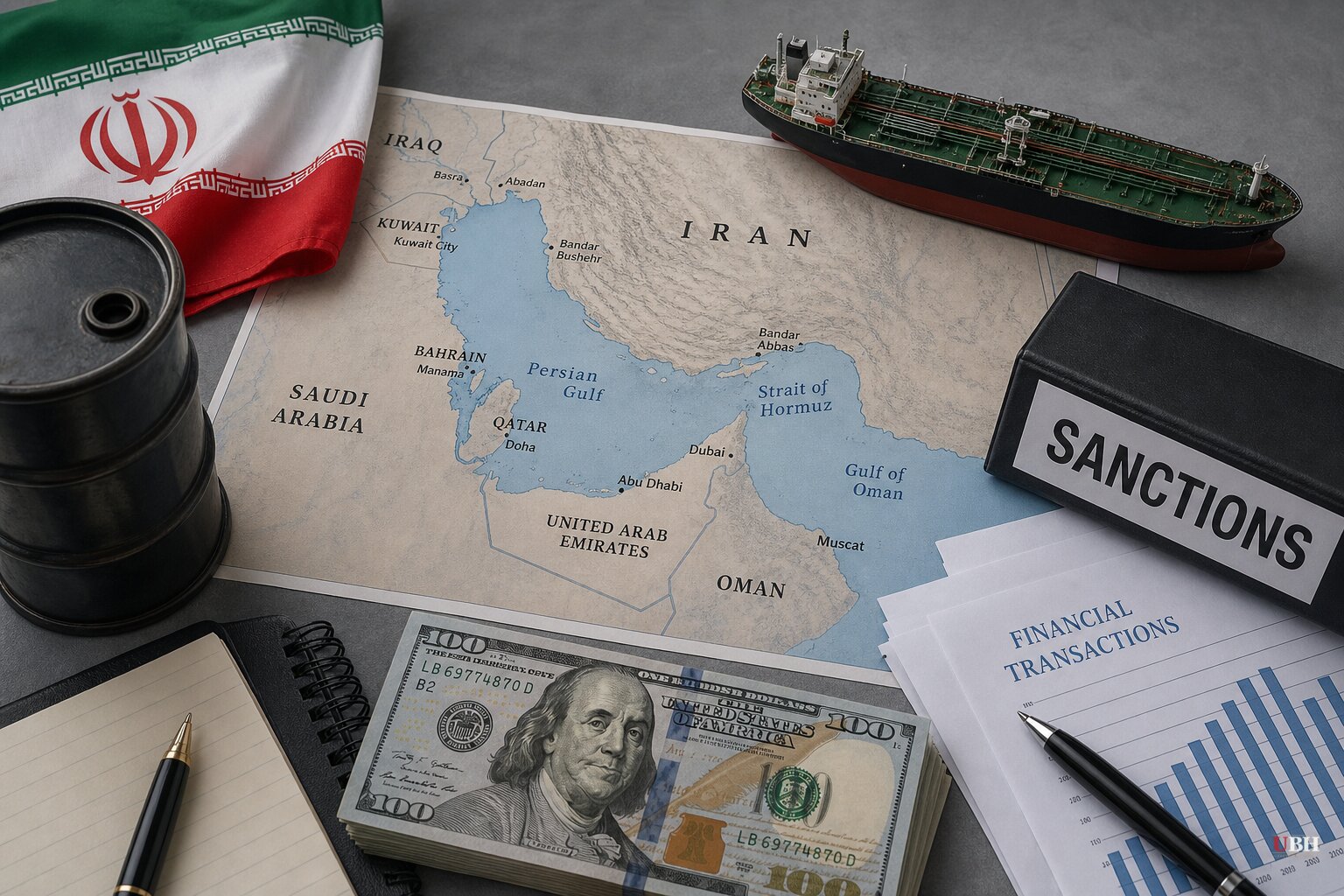
Since the war with Iran began on February 28, the fight has moved from missiles to money. Six months in, the Trump administration has opened a new phase it's calling economic warfare, and Tehran is answering with threats of its own.
Treasury Secretary Scott Bessent this week unveiled what he termed an "Economic D-Day," branded officially as Operation Economic Outcast. The Treasury Department sanctioned roughly 60 individuals, entities and vessels tied to Iran's oil exports, shipping networks, aviation, gold trade and digital assets, according to Fox News. Bessent warned that any bank helping Iran move money, anywhere in the world, would be cut off from the US dollar system. He specifically named China as a target of secondary sanctions if Chinese refiners keep buying Iranian crude, Fox News reported.
The numbers suggest the pressure is already working on paper. Iranian oil shipments to China fell to about 534,000 barrels a day in August, down from 823,000 in July and from a 2026 peak near 1.58 million barrels a day, per Fox News. Iran's own Statistical Centre put annual inflation at 88% in July, with food prices up 128% year over year.
President Trump made clear Friday at Joint Base Andrews that the pivot to economic pressure doesn't mean the US is done with military options. "They have no money. They have no navy. They have no air force. They're not paying their soldiers. They're not paying their police. They have 350% inflation," Trump told reporters, according to Breitbart. He said the US has "total control" around the Strait of Hormuz through its blockade, which he said extends "well into" surrounding land areas.
Iran isn't backing down rhetorically. Armed Forces Chief of Staff Maj. Gen. Ali Abdollahi said Friday, on Iran's Defense Industry Day, that Tehran is ready to respond across "ground, naval, air, air defense, space and cyber" domains with what he called "revolutionary, forceful, regret-inducing and devastating responses" to any further miscalculation, Breitbart reported. Iranian President Masoud Pezeshkian struck a similar tone, saying Iran would "stand against them until our last breath," while also arguing the war should end while Iran remains, in his words, in a "position of power and dignity."
The rhetoric isn't staying confined to statements. AP News reported that Iran claims it struck a US ship in the Strait of Hormuz, a claim the United States denies. Neither side has offered public evidence resolving the dispute, and no independent confirmation of damage or casualties has been reported.
Two Very Different Reads on Who's Winning
CNN analyst Brett McGurk, a national security official under four presidents, argues the conventional wisdom that "Iran won" the war is premature. He points to Bloomberg reporting that oil flows through the Strait of Hormuz have recovered to two-thirds of pre-war levels even as Iran's own exports collapse, meaning Tehran's threat to hold the Strait hostage is losing its bite while the blockade tightens. McGurk cites an Iranian Labor Ministry estimate that more than a million jobs vanished in the war's first three months alone, and IMF projections of a 5.4% economic contraction with inflation approaching 69%.
Fox News takes a more skeptical view of what an "Economic D-Day" can actually accomplish. Comparing it to the real D-Day of June 6, 1944, Fox notes that the Allied invasion of Normandy didn't force Germany's surrender until May 8, 1945, eleven months later. The piece argues Bessent can prove Iran is getting poorer, but that doesn't prove the regime will surrender, especially given a track record of authoritarian governments enduring severe sanctions for years without collapsing.
Daily Wire's own six-month accounting captures the ambiguity plainly. Iran has suffered "devastating losses," including the death of Supreme Leader Ayatollah Ali Khamenei on the war's first day and the deaths of dozens of senior commanders, yet "the Islamic regime remains in power." Iran's Misery Index, according to Daily Wire, reached 91.1, its highest level on record, and the rial sits at record lows. None of that has produced a surrender.
The strongest case for skeptics of the sanctions-first strategy follows: if six months of military strikes, a dead supreme leader, dozens of dead commanders, and a collapsing currency haven't forced Tehran to the table, it's a fair question whether tighter sanctions alone will finish the job either. Bessent and Trump are betting fresh secondary sanctions on Chinese buyers change that calculus. Whether Beijing actually pulls back from discounted Iranian crude, or simply routes around the sanctions the way it has for years with other blacklisted suppliers, is the next thing to watch.
For now, the unresolved question hanging over the Strait of Hormuz is a narrower one: whether Iran's claimed strike on a US ship actually happened, and if it did, what the Pentagon's next move looks like.
Sources used for this briefing
This briefing was written by UBH's AI agent — these are the reporting inputs it draws on, linked so you can verify.


