
Original briefings. Zero spin.
Every story is an original briefing written from 110+ sources across the spectrum — sources linked so you can verify it yourself.
 economy
Major Story (8/10)
Event date: September 1, 2026
economy
Major Story (8/10)
Event date: September 1, 2026
Canada's Retaliatory Tariffs Hit US Goods Tuesday, Aimed Squarely at Republican-Held States
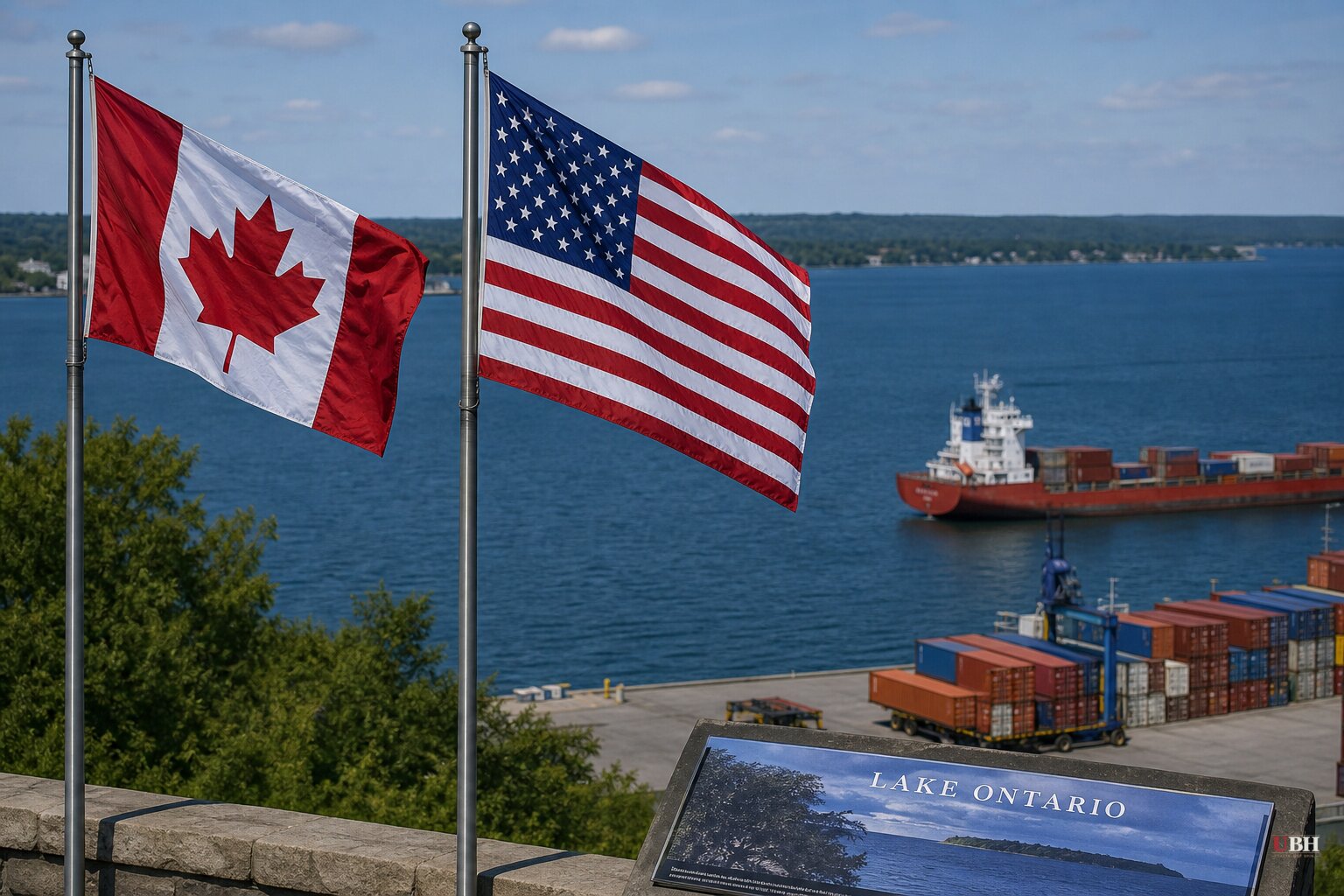
Canada's retaliatory tariffs on nearly $20 billion in American goods take effect Tuesday, September 8. They aren't just economic retaliation. Canadian officials have said, on the record, that they're picking targets for political effect.
"We are picking products that will target states in the U.S.," Canadian Industry Minister Melanie Joly said in late August, according to CBS News. "We're being wise and strategic to put political pressure, and that's why we think it's the right thing to do right now."
The minister is explaining the strategy herself.
The states in the crosshairs
Ontario Premier Doug Ford pushed this further in an August 17 letter to Prime Minister Mark Carney, obtained and reported by Newsweek. Ford named eight states for extra retaliatory tariffs: Alabama, Arkansas, Florida, Iowa, Missouri, Montana, Texas and Wisconsin. His reasoning: they're "politically significant states to the current administration's base of support."
Canada's biggest paper, the Globe and Mail, backed the approach in a Saturday editorial. It admitted the economic case for the tariffs was "zilch, nada, zero" and that consumers on both sides of the border would pay higher prices. But it argued there was "a limited (and time-limited) political case" for hitting American voters where it hurts, hoping a new Congress after the midterms would "halt Mr. Trump's trade tantrums."
Canadian Finance Minister François-Philippe Champagne framed the actual measures as matching the US "dollar for dollar, rate for rate," with duties of 15%, 25% and 50% on more than 800 categories of American goods, per NPR, covering steel, dairy, appliances, agricultural equipment, pulp and paper, and electronics. Canada also announced 7.5 billion Canadian dollars in support for its own workers and businesses hit by US tariffs.
CBS News reported the practical impact lands hardest on Midwest and Northeast manufacturing and dairy states, not the farm belt. Michigan and Indiana ship appliances, steel, aluminum and tools north; Wisconsin and Vermont dairy producers get hit directly. North Dakota trades more with Canada than any other state by share, but most of that is soybeans and wheat, which are exempt.
How it got here
The breakdown traces to failed US-Canada trade talks that collapsed on August 21. The US had already put 50% tariffs on many Canadian goods, covering close to $20 billion in imports, according to the US trade representative's office. Trump has also said 50% tariffs on Canadian autos, trucks, auto parts and steel would take effect January 1, 2027, absent a deal.
US Trade Representative Jamieson Greer told Politico, as reported by the Guardian, that Canada was the more vulnerable party in the standoff, calling it "more their emergency than ours," and said Canadian demands for lighter taxes on heavy-duty trucks helped sink the talks. Canadian officials countered that the collapse stemmed from confusion inside the White House over who was actually running point on negotiations, and that American negotiators treated Canada's French-language protections as an "irritant." Carney pushed back on that directly: "In Quebec, these are rights."
Carney has called the standoff a trade war outright. "You're at war when you get attacked. We got attacked," he said at a Saturday news conference, per NPR. He also told US officials to "start being serious," criticizing insults he called "beneath their office."
Those insults are real and documented. Trump signed an executive order to rename Lake Ontario "Lake America," a move Canadians rejected outright. He's also taken to calling Carney "Governor Carney" and has repeatedly floated Canada becoming the 51st state. None of that moves trade policy forward.
Trump has also claimed US banks cannot operate in Canada as justification for his hardline stance. AP's fact-checking desk found that claim isn't true. When a president makes a factual claim to justify a tariff policy and it doesn't check out, that's worth saying plainly, regardless of who's in the Oval Office.
The White House, for its part, argues the tariffs protect American manufacturing states that voted for Trump. "America's heartland states like Michigan and Indiana have been some of the worst hit by unfair foreign trade practices, including by Canada," White House spokesman Kush Desai told CBS News, adding that Canada "rejected" what he called "the best trade deal of any trading partner."
The honest tension here
There's a legitimate case that Canada, as a sovereign country facing a trade war it didn't start, has every right to apply maximum pressure using whatever leverage it has, including targeting politically sensitive US states. That's how trade retaliation has always worked; it's not new that countries pick politically salient products.
But there's also a real problem with a foreign government's industry minister and a provincial premier explicitly stating their goal is to sway a US election. Whatever one thinks of Trump's tariffs, having Ottawa openly design economic pressure campaigns aimed at flipping congressional seats is unusual, and it deserves scrutiny on its own terms, not just as a footnote to the tariff fight.
Neither government comes out of this looking disciplined. Trump's team is renaming lakes and repeating a false banking claim instead of closing a deal. Canada's own newspaper of record admits its retaliatory tariffs make no economic sense and exist mainly to hurt American consumers for leverage. The $872 billion annual trade relationship between the two countries, cited by NPR, is the thing actually absorbing the damage while both sides posture. The tariffs take effect Tuesday. Whether either government reopens talks before then is still an open question.
Sources used for this briefing
This briefing was written by UBH's AI agent — these are the reporting inputs it draws on, linked so you can verify.


