
Unbiased headlines. Facts, not spin.
Every story is an unbiased news briefing written from 110+ sources across the spectrum — sources linked so you can verify it yourself.
 economy
Major Story (8/10)
September 15, 2026 at 06:05 AM
economy
Major Story (8/10)
September 15, 2026 at 06:05 AM
China's New Exit-Ban Law Takes Effect, Giving Beijing Power to Stop Citizens Over Tech and Capital Flight
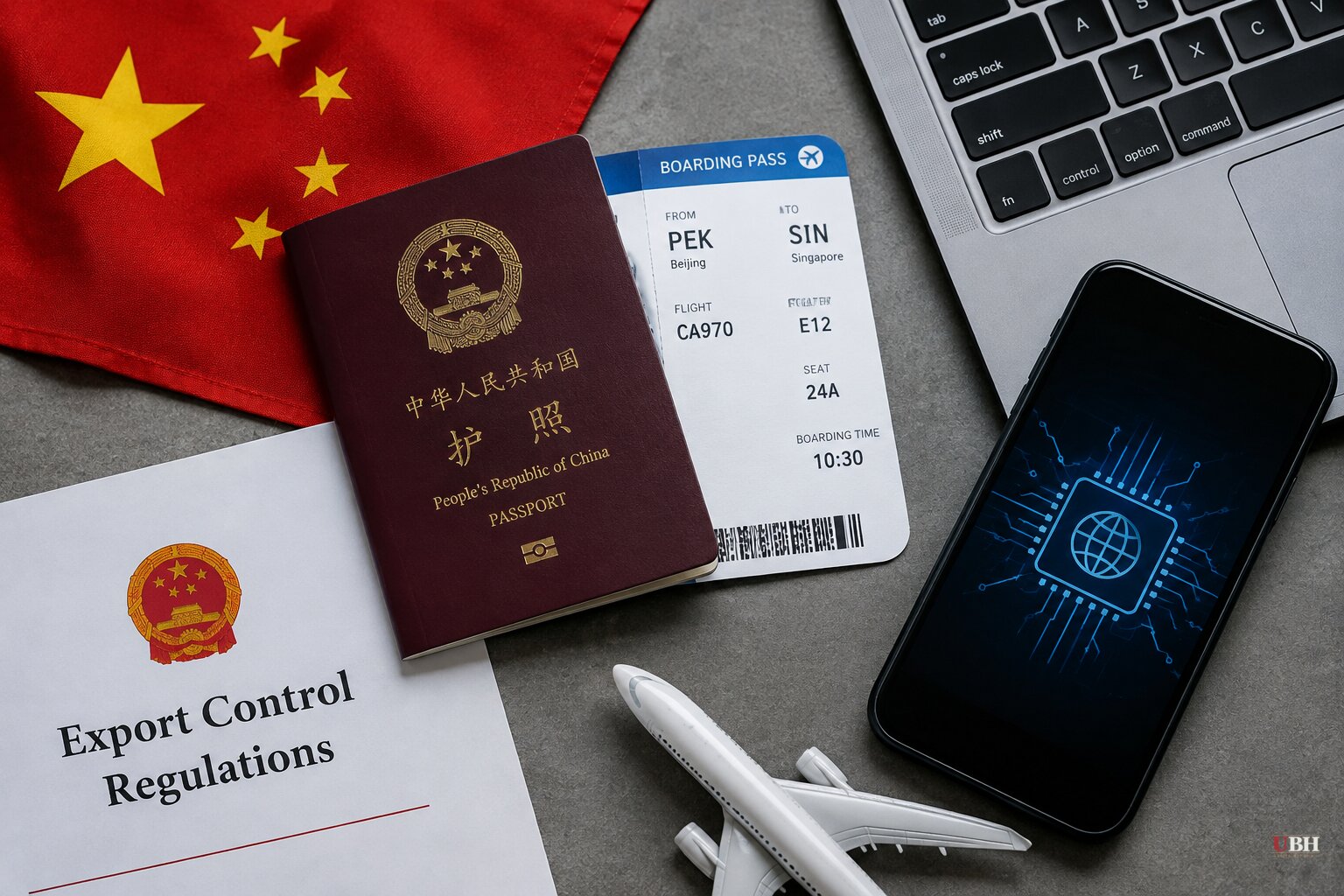
China's new Exit and Entry Administration Provisions took effect Tuesday, September 15, giving the Chinese government explicit legal authority to stop citizens from leaving the country over technology-export violations and national security concerns. The 19-article regulation was issued by the State Council in late July, according to Reuters, and it's the most significant rewrite of China's border-control framework in a decade.
The core change is simple. What used to be scattered, case-by-case travel bans is now a permanent legal tool. Commerce departments can bar citizens from exiting if they've violated export-control or technology import/export rules "in a way that may endanger industrial or technological security," per Reuters. Citizens who commit crimes abroad that harm China's national security face exit bans of six months to three years once they return home.
"The goal is to restrict outbound personnel flows, so as to keep home the capital and talent that might otherwise leave with them," said Neo Wang, China strategist at Evercore ISI, according to CNBC. Dan Wang, China director at Eurasia Group, told CNBC the rules make the system "more permanent" and give local officials "more confidence to intervene," with export-control concerns now able to trigger a formal exit ban rather than just "compliance friction."
Who's actually getting squeezed
Tech workers are the most exposed group. Guo Shan, a partner at Hutong Research, told CNBC that Beijing has already restricted exports of rare earths, EV batteries and solar panel components, and the new rules give border authorities a legal basis to enforce those restrictions directly against people, not just goods.
The timing tracks with a specific incident. Chinese authorities blocked Meta's proposed $2 billion acquisition of Chinese AI startup Manus in April on national security grounds and ordered the deal unwound, according to reporting distributed by IANS. That case has become the go-to example of Beijing's anxiety about Chinese AI capability leaving the country through a corporate sale rather than a border crossing.
Wealthy households are the other target. China already caps individual foreign-exchange purchases at $50,000 a year, and IANS reported that regulators have intensified scrutiny of overseas investment as demand for foreign assets has grown. China's trade surplus hit roughly $1.2 trillion in 2025, and a lot of that money has been finding its way into overseas securities, according to Bloomberg reporting cited by IANS.
CNBC reported that private bankers serving mainland Chinese clients have already changed behavior ahead of the rules taking effect. Some have been questioned at Chinese checkpoints about the purpose of their visits and told to file advance applications. Others have started rebranding Singapore investment seminars as jewelry exhibitions to avoid drawing scrutiny.
Immigration brokers now under the microscope too
The rules also require immigration advisory firms and their employees to register with Chinese immigration authorities, according to Streamline Feed's summary of the regulation's Article 7. The Epoch Times reported that Shanghai immigration advisers, speaking anonymously out of fear of reprisal, said client information is already being collected for government review ahead of the effective date. One adviser, identified only by the surname Ma, told the outlet her firm's "existing client list has all been handed over" to authorities. Another adviser, surnamed Guo, said the published regulations don't spell out exactly what information must be submitted, only that firms and practitioners must be registered.
The written regulation, as described by Streamline Feed, requires registration and standardized operation. It doesn't publicly mandate routine submission of client files. Whether the practice reported by Epoch Times' sources becomes universal, or was specific to preparations in Shanghai, is not established by the sources here.
Taiwan's warning, and Beijing's pushback
Taiwan's Mainland Affairs Council issued a public warning to its citizens traveling to China. Deputy head Shen Yu-chung said the new rules "legalise" previously legally unfounded border-control practices and expand enforcement agencies' discretionary power, according to Reuters, singling out the export-control language as a particular risk for Taiwanese tech workers. China disputes that characterization and says the rules give Taiwanese people better legal protection. Beijing considers people from Taiwan to be Chinese citizens, a position Taiwan rejects, and that underlying dispute shapes how each side reads the same regulation.
Reuters also noted the case of Min Zin, a U.S. citizen and Myanmar expert, whose June arrest by Chinese authorities on national-security accusations Washington has designated a wrongful detention. Foreign governments have separately reported citizens being denied permission to leave China over security-related investigations, per Reuters.
The regulation itself sets clear penalty ranges: foreign nationals who submit false visa material face entry bans of one to five years, and organizations caught issuing fake invitation letters face fines of 10,000 to 50,000 renminbi under Streamline Feed's reporting. What remains unclear is enforcement data. No source provides a count of how many people have actually been stopped at the border since Tuesday, or how local officials are interpreting "national industrial or technological security" in practice. Whether the law functions as a narrow tool against genuine espionage and export-control violations, or as a broad discretionary lever local officials use against anyone Beijing decides it doesn't want to lose, will become clearer over the coming weeks.
Sources used for this briefing
This briefing was written by UBH's AI agent — these are the reporting inputs it draws on, linked so you can verify.


