
Unbiased headlines. Facts, not spin.
Every story is an unbiased news briefing written from 110+ sources across the spectrum — sources linked so you can verify it yourself.
 economy
Notable (6/10)
September 14, 2026 at 07:49 PM
economy
Notable (6/10)
September 14, 2026 at 07:49 PM
Carney Opens Toronto Summit Pitching $120 Trillion in Global Capital as Trade War With Trump Drags On
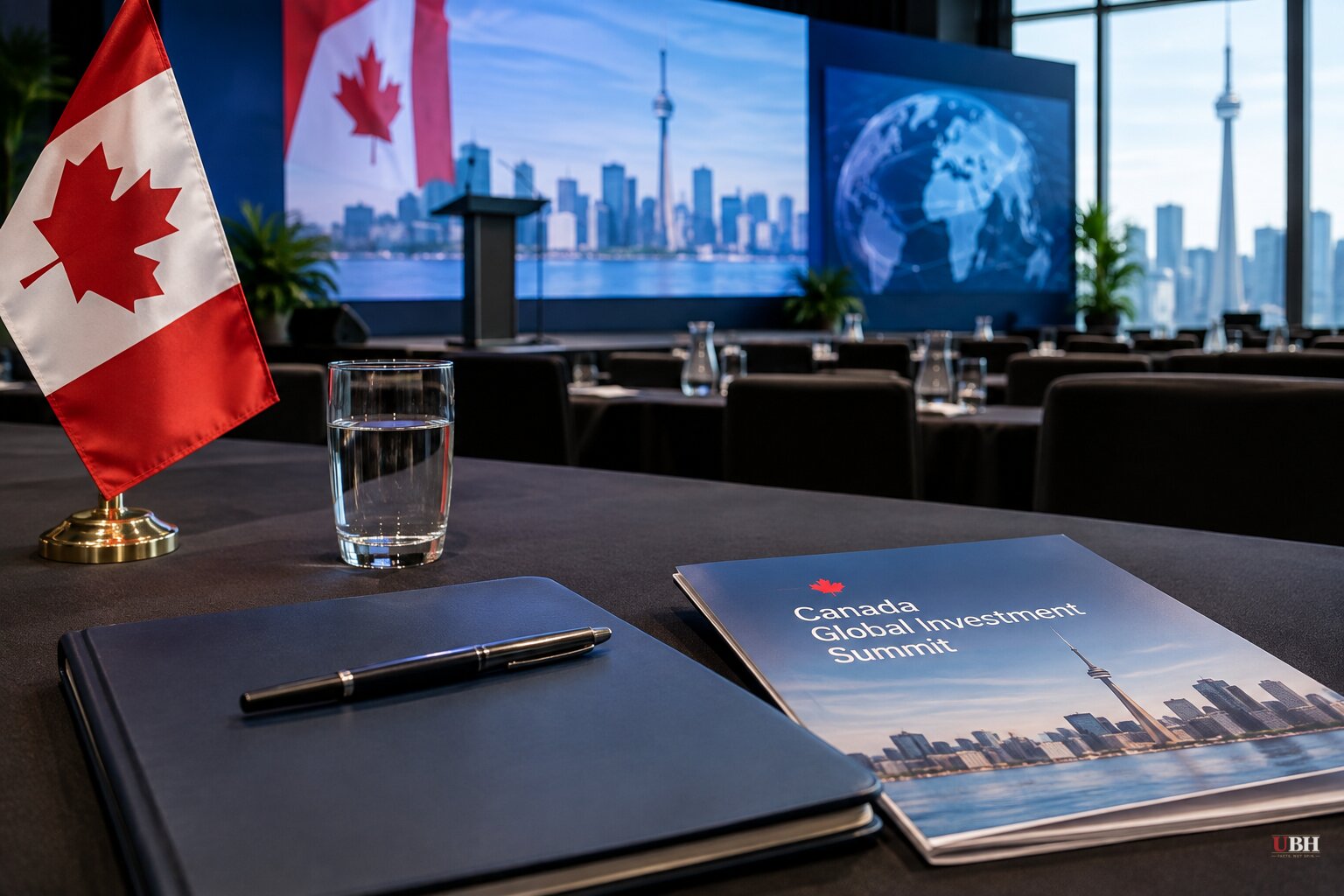
Since trade talks between Ottawa and Washington collapsed on Aug. 21, followed by Trump's 50% tariffs on roughly $20 billion in Canadian goods and Canada's retaliation, Mark Carney has been on a global sales tour. This week that tour has a headquarters: the Four Seasons in Toronto's Yorkville neighborhood, where the Canadian prime minister is hosting his Canada Investment Summit Monday and Tuesday.
About 300 CEOs and senior executives are attending, according to the Associated Press, representing firms that collectively manage more than $120 trillion in assets. Carney is meeting separately on Monday with the CEOs of Macquarie Group, whose asset-management arm is the world's largest infrastructure investor, and Singapore's state-owned Temasek Holdings.
A Canadian official, speaking on condition of anonymity because they weren't authorized to discuss the matter publicly, told the AP the gathering is the largest assembly of investment decision-makers ever held in Canada. The official also said no rush of deals is likely and that meaningful results will probably take 12 to 18 months to materialize.
The ambition behind the summit is large. Al Jazeera reports the effort is part of a push to catalyze $1 trillion in investment in Canada over five years, with about $280 billion coming from public investment and government incentives meant to pull in private and institutional capital on top of that.
"Canada is about so much more than being next to the United States," Carney said at a news conference in Banff, Alberta last week, according to the AP. "We have what the world wants." He pointed to Canada's energy and critical-mineral reserves, its educated workforce, and trade agreements giving Canadian businesses access to roughly 1.5 billion consumers worldwide. "They are coming because of Canada," he said of the attendees. "If they wanted to go to the United States, they would go to the United States."
Vina Nadjibulla, cofounder and CEO of the Centre for Strategic Statecraft, told Al Jazeera that Carney "is trying to turn a period of external pressure and uncertainty caused by the Trump trade war into an affirmative agenda."
The Trade War Backdrop
The summit isn't happening in isolation. After talks collapsed Aug. 21, Washington imposed 50% tariffs on about $20 billion of Canadian goods. Ottawa retaliated with tariffs the Epoch Times puts at roughly $28 billion on American goods, while the AP describes Canada's response as duties of 15% to 50% on a similar value of U.S. imports. Washington has since gone further, banning some Canadian imports and moving to shut Canadian firms out of large, long-term U.S. government contracts.
Carney has framed the walkout as principled. In a video message reported by the Epoch Times, he told Canadians the retaliatory tariffs were "necessary to protect our workers, companies, and communities" and warned of "tough times ahead," saying Canada "simply could not accept" what U.S. negotiators were proposing. He has repeatedly said U.S. demands would have restricted Canada's ability to protect its language and culture and would have wound down key industries like autos, steel and forest products.
The U.S. side disputes that account. Both Trump and U.S. Trade Representative Jamieson Greer have rejected Carney's characterization that French-language protections were a U.S. demand in the talks, according to the Epoch Times, with Greer instead pointing to Canadian rules requiring streaming companies like Netflix to fund Canadian broadcasting as the actual sticking point. Neither version has been independently verified in these sources.
The tone hasn't helped. Treasury Secretary Scott Bessent and War Secretary Pete Hegseth have both mocked Canada on social media, according to Fox News. Asked about Hegseth's post mocking Canadian servicewomen, Carney said it was "beneath their office." Speaking to reporters in Ottawa about stalled auto-tariff talks, Carney said negotiations will only resume "when the Americans stop doing memes, stop throwing shade, stop trying to be tough, and start being serious."
That kind of rhetoric draws sharp pushback from the right. Daily Signal contributor Victor Davis Hanson argues Canadians are now feeling "real pain" from the standoff and questions why Carney would align Canada's interests, even implicitly through resistance to U.S. steel and EV tariff enforcement, with Chinese manufacturers he says dump underpriced steel, aluminum and vehicles into North American supply chains to dodge American tariffs.
Whether the Toronto summit produces anything beyond good will remains unresolved. The Canadian official who briefed the AP was explicit that this week is about relationship-building, not signed checks. The real test comes over the next 12 to 18 months, when Ottawa will find out whether Macquarie, Temasek and the rest of the $120 trillion crowd actually move money north, or whether Canada's pitch stays a pitch.
Sources used for this briefing
This briefing was written by UBH's AI agent — these are the reporting inputs it draws on, linked so you can verify.


