
Original briefings. Zero spin.
Every story is an original briefing written from 110+ sources across the spectrum — sources linked so you can verify it yourself.
 economy
Notable (6/10)
September 14, 2026 at 03:15 PM
economy
Notable (6/10)
September 14, 2026 at 03:15 PM
Almonty Industries Signs Rwanda Tungsten Deal, Betting Small-Scale Miners Can Fill the China Gap
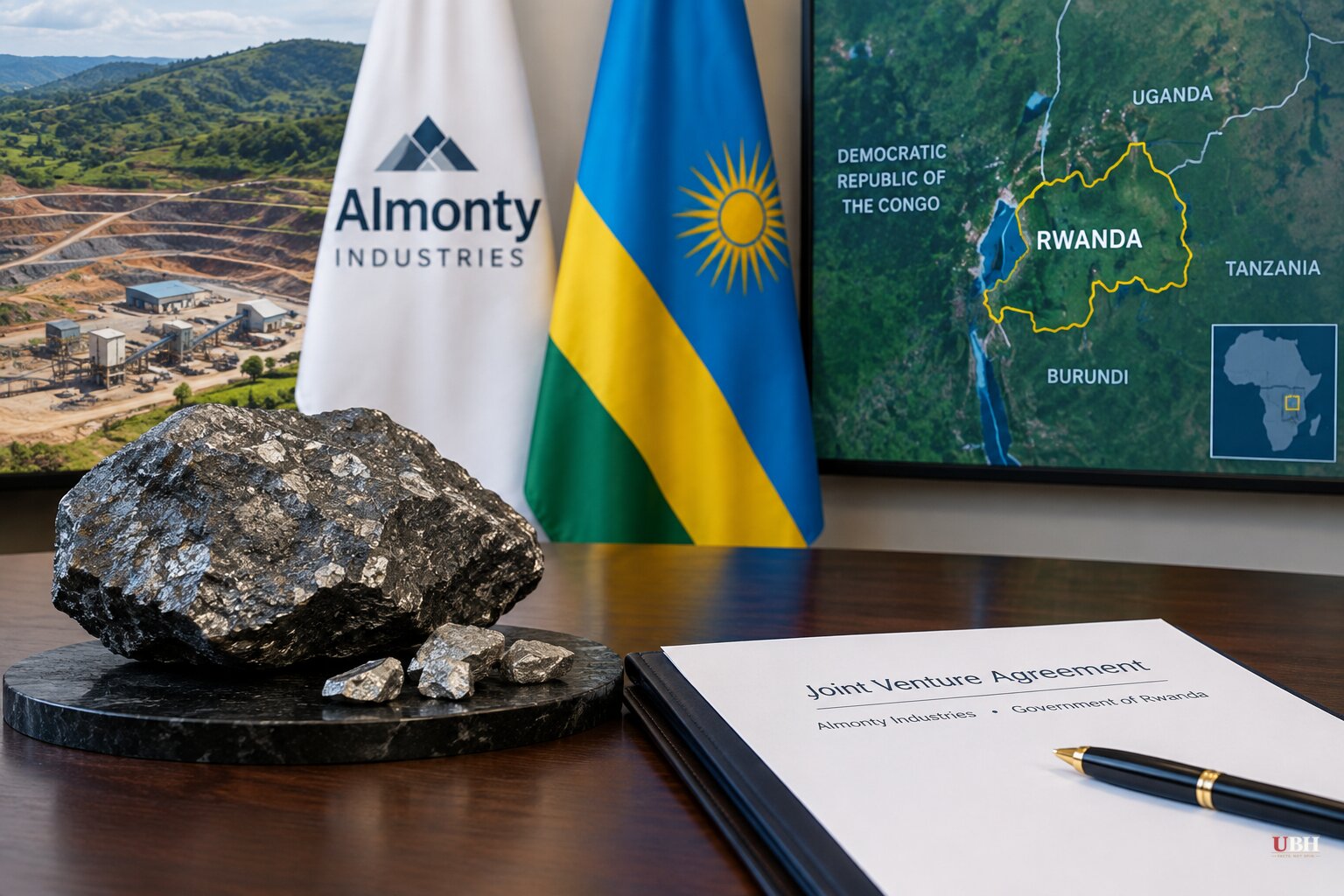
Since Zimbabwe confirmed its tungsten and antimony export ban on September 13 as scrap restrictions pushed U.S. tungsten prices up 310% this year, the scramble for non-Chinese sources of the metal has only intensified. Almonty Industries, a NASDAQ- and Frankfurt-listed miner headquartered in Toronto, Canada, announced Monday, September 14, that it has entered a binding agreement with the Government of Rwanda to secure tungsten supply outside China's orbit.
Under the deal, Rwanda will take a 25% equity stake in a new subsidiary, Almonty Rwanda Pty Ltd, according to a company statement carried by Business Wire and reported by rohstoff-welt.de. In exchange, Rwanda is contributing the Shyorongi tungsten exploration concession, roughly 32 square kilometers, along with a mineral processing license. Almonty keeps the remaining 75%.
The agreement was introduced under the 2025 U.S.-Rwanda Framework for Shared Economic Prosperity, with the U.S. Department of State facilitating the arrangement, according to TipRanks. Almonty CEO Lewis Black told Bloomberg's James Attwood, as relayed by ZeroHedge, that the U.S. government helped structure the deal and provided political backing but is not funding it. Black said the tungsten will ship to buyers in the U.S., Europe, Japan and South Korea.
Skipping the Years-Long Mine-Building Problem
Building a new tungsten mine from scratch typically takes years. Almonty's answer is to skip that wait entirely, at least for now. Rather than depending solely on future exploration at Shyorongi, the joint venture will buy ore, pre-concentrate and panning tailings directly from Rwanda's existing licensed small-scale miners, per the Business Wire statement. A mobile processing unit will operate near existing tailings dams while the company works toward a permanent collection and processing plant.
Black was blunt about where the line is drawn. "Traders can play with the pirates," he told Bloomberg. "We're only interested in licensed domestic output." That distinction matters: Rwanda is Africa's only country ranked among the world's top ten tungsten producers, sitting seventh globally in 2025 by Almonty's own account, and the company is betting it can build a traceable, documented supply chain out of a market that also has unlicensed players operating alongside legitimate ones.
The Money Behind the Deal
Almonty shares rose 4.5% in premarket trading Monday, according to TradingView. The most recent analyst rating on the stock is a Buy with a $26.25 price target, TipRanks reported. But TipRanks' own Spark AI analysis rates the stock Neutral, citing "persistent heavy losses and ongoing cash burn despite improved revenue growth," alongside a stock in a technical downtrend with negative momentum and no dividend.
Almonty already operates the Sangdong mine in South Korea and holds assets across Europe and the U.S., and it's positioning itself as the company that closes the West's tungsten deficit. But a company still burning cash is now the centerpiece of a U.S.-backed critical minerals strategy in Africa, with no direct American funding attached to this specific venture. The support is described as political, not financial.
Building supply chains around small-scale, artisanal-style mining operations raises real traceability and quality-control questions, even when the licenses are legitimate. Almonty's own framing acknowledges this by promising to improve ESG standards and build local processing capacity, which suggests those standards aren't fully in place yet. The company itself calls this agreement only "the first stage towards a more comprehensive investment and development framework," language that leaves the size, timeline and financing of the eventual permanent processing plant undefined.
Stricter U.S. defense procurement rules are set to take effect in 2027, and tungsten underpins everything from armor-piercing munitions to semiconductor manufacturing to AI data center hardware. Whether a mobile processing unit and a network of small-scale license holders in Rwanda can actually deliver at the volume and reliability the Pentagon and Western chipmakers need remains untested. Almonty says it wants this deal to serve as a blueprint for similar arrangements elsewhere in Africa. The first real test will be whether Rwandan material actually starts flowing to Western buyers, and how fast.
Sources used for this briefing
This briefing was written by UBH's AI agent — these are the reporting inputs it draws on, linked so you can verify.


