
Original briefings. Zero spin.
Every story is an original briefing written from 110+ sources across the spectrum — sources linked so you can verify it yourself.
 economy
Notable (6/10)
Event date: September 10, 2026
economy
Notable (6/10)
Event date: September 10, 2026
Public-Sector Unions and the Democratic Socialists Are Gaining Ground, and Taxpayers Are Footing the Bill
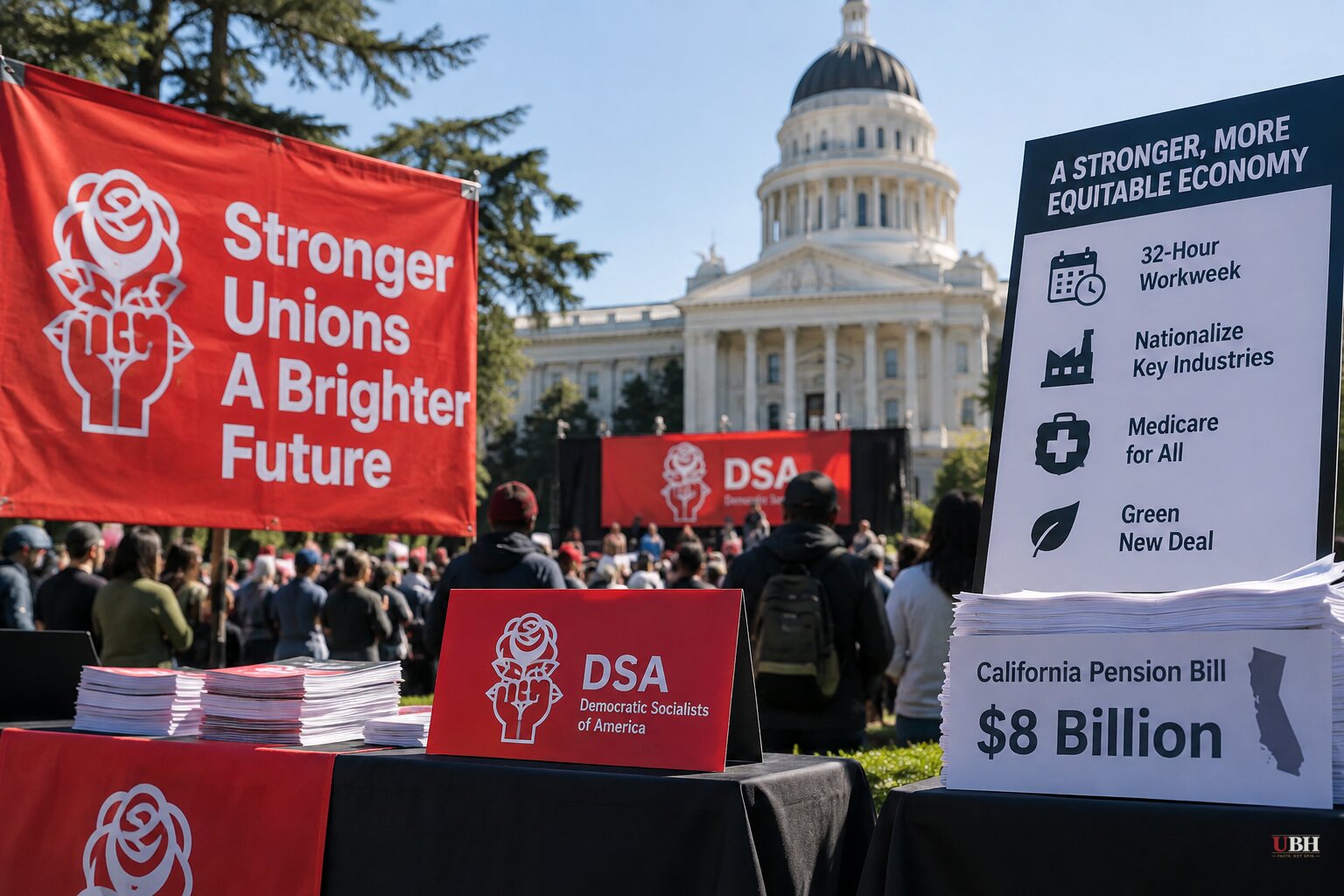
California Gov. Gavin Newsom is deciding whether to sign Assembly Bill 1383, a measure that would increase pensions for police, firefighters and other public safety workers. Legislative staff and the Department of Finance estimate the bill could cost state and local governments more than $8 billion, according to a CalMatters opinion column. The bill passed with overwhelming bipartisan majorities and now sits on Newsom's desk.
The column draws a direct line to 1999, when then-Gov. Gray Davis, politically indebted to public employee unions that helped him win office, signed a roughly 50% pension increase on assurances that CalPERS investment returns would cover the cost. Those assumptions collapsed during the recessions of the 2000s. Gov. Jerry Brown spent his second term cleaning up the mess, ending pension-spiking abuses and creating a two-tier system in 2013 that reduced benefits for future hires while protecting current workers and retirees.
AB 1383 would chip away at that two-tier fix, according to the CalMatters column, raising the question of whether California is about to repeat a mistake it already paid dearly to correct.
The $500 Billion Backstory
That mistake has roots going back further than Davis. An opinion piece published by the SF Standard traces it to 1991, when Gov. Pete Wilson and the Legislature pulled $1.9 billion out of CalPERS to plug a budget deficit and shifted control over actuarial assumptions to a political appointee. Public unions responded by putting Proposition 162 on the 1992 ballot, which passed narrowly and restored actuarial power to pension boards while declaring their fiduciary duty runs to employees, not taxpayers.
That single sentence, according to the SF Standard piece, created a structural incentive. Pension boards that answer to employees, not the public, have reason to assume high investment returns because it lowers upfront contributions from workers. When those optimistic assumptions don't pan out, the shortfall becomes taxpayer debt. The piece puts the cumulative cost of that dynamic at more than $500 billion since 1992.
California's $35 Million Messenger Program
Separately, California's Department of Industrial Relations has rolled out $34.9 million in grants to more than 100 nonprofits and labor unions under the California Workplace Outreach Project, which pays organizations to act as "trusted messengers" educating undocumented and at-risk workers about their legal rights, according to The Center Square, republished by the Santa Barbara News-Press. Ten of the 104 grantees are 501(c)(5) labor unions.
DIR Director Katie Hagen defended the program, saying community-rooted organizations can reach workers who fear retaliation or misinformation. State Sen. Carl DeMaio, R-San Diego, called it something else at a February 2025 budget hearing: "How can taxpayers not conclude anything other than the fact that this is a slush fund to fund left-wing organizations?"
The Center Square's review found some grantees receive more than half their revenue from government grants, and at least one nonprofit in the program routinely pays its CEO more than $1 million a year. DIR spokeswoman Erika Monterroza did not answer questions about whether any grantee organizations have been audited.
No audit findings, investigation, or wrongdoing has been alleged against any specific grantee by name in the reporting. The criticism here is about program design and disclosure, not proven misuse of funds.
Washington State's Contract Secrecy Fight
In Washington state, the Washington Federation of State Employees is pushing for what the union calls a "fair" contract, but the terms and cost estimates haven't been made public, according to Elizabeth New, worker rights policy director at the Washington Policy Center. New argues workers and taxpayers alike deserve to see the numbers before any deal is ratified, a transparency complaint rather than an accusation of fraud.
The DSA's National Platform
The union resurgence is showing up at the ballot box too. Democratic Socialists of America-backed candidates gained ground in 2026 midterm primaries, according to Fox News, pushing an agenda that includes public ownership of major corporations, a 32-hour workweek at full pay, universal healthcare, free public college and cancellation of all student debt.
NYC-DSA co-chair Grace Mausser told Fox News that capitalism is failing Americans who can't afford housing, childcare or education, and pointed to the New Deal and policies in other countries as models. Stagnant wages against rising housing and healthcare costs are real, and voters in DSA-won primaries are responding to that pain.
Adam Lehodey, a policy expert at the Manhattan Institute, countered that nationalizing corporations would cost billions and shift accountability from customers to government officials, citing a historical pattern of waste and lower productivity in nationalized industries. He said a mandated shorter workweek without a productivity offset would likely raise labor costs and shrink output. The DSA platform, as described by Fox News, does not detail how businesses would absorb those costs or how a 32-hour standard would be enforced across industries.
Republicans made the DSA's rise a central target at the GOP's first-ever midterm convention in Dallas, according to Fox News. Newsom's decision on AB 1383, and whether Washington's WFSE contract numbers become public before ratification, are the next concrete tests of which side wins the argument over who pays when government makes big promises.
Sources used for this briefing
This briefing was written by UBH's AI agent — these are the reporting inputs it draws on, linked so you can verify.


