
Original briefings. Zero spin.
Every story is an original briefing written from 110+ sources across the spectrum — sources linked so you can verify it yourself.
 economy
Major Story (7/10)
September 14, 2026 at 09:46 AM
economy
Major Story (7/10)
September 14, 2026 at 09:46 AM
China's Credit Growth Missed Forecasts Again in August as Beijing Pumps Yuan Into State Banks and Insurers
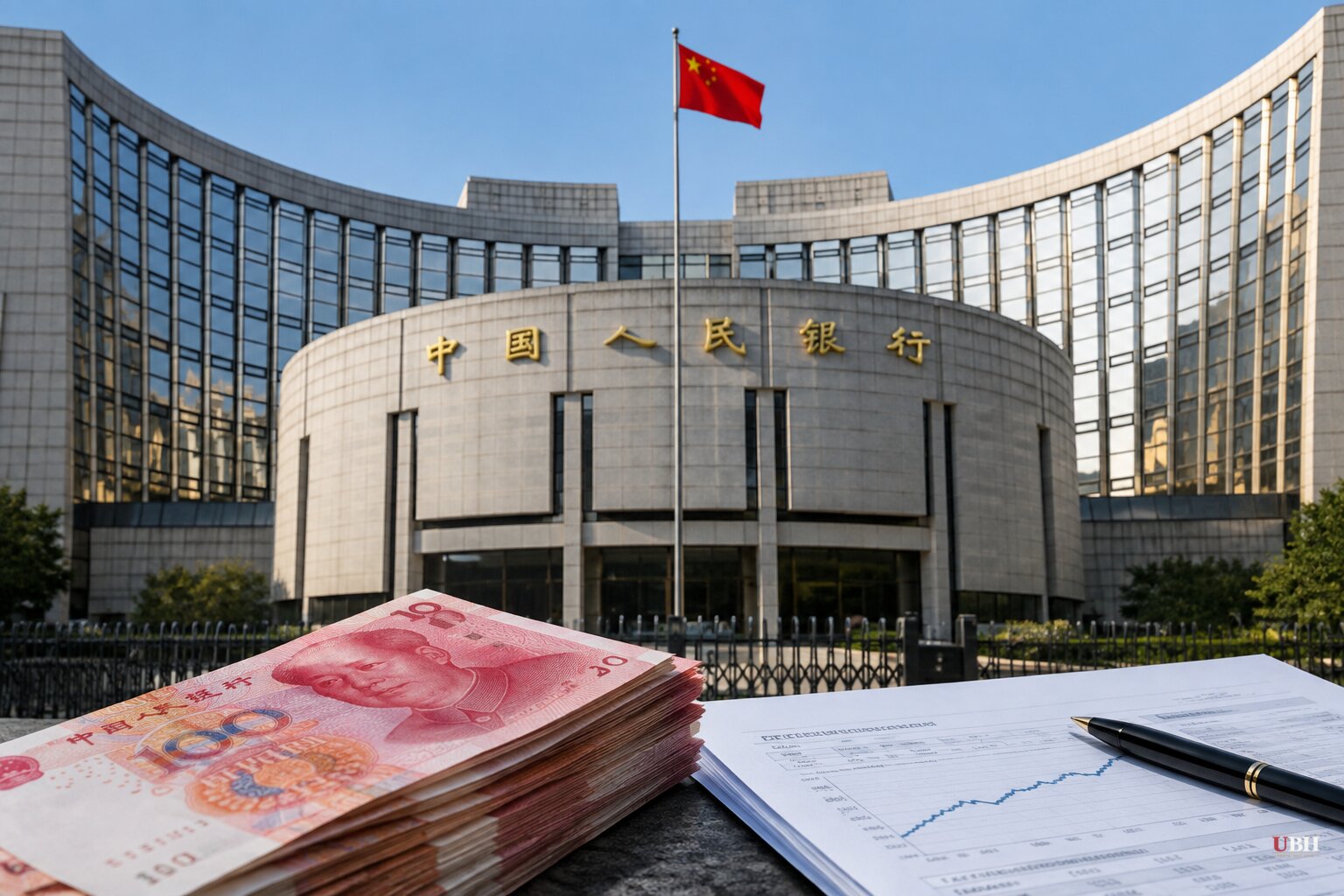
China's credit engine keeps sputtering, and Beijing keeps writing checks to cover it.
Aggregate financing to the real economy, the broadest gauge of credit flowing through China's economy, totaled 23.91 trillion yuan from January through August, according to data released by the People's Bank of China and reported by Crypto Briefing. Economists had expected 24.372 trillion yuan. That's a shortfall of roughly 460 billion yuan. The miss follows a pattern.
Through July alone, aggregate financing had already landed 1.74 trillion yuan below the same period in 2025. New yuan loans for January through July totaled 10.38 trillion yuan, about 2.49 trillion yuan lower than a year earlier.
August's numbers: barely positive, still a miss
The monthly picture is worse than the cumulative one suggests. Chinese banks extended just 60 billion yuan in new loans in August, according to Reuters calculations based on PBOC data reported by WSAU. That's a bounce from July's 340 billion yuan contraction, described by Reuters as a record decline, but it fell far short of the 400 billion yuan economists polled by Reuters had forecast, and it's a fraction of the 590 billion yuan extended in August 2025.
Total social financing for August came in at 1.66 trillion yuan versus an expected 2.04 trillion yuan, according to Newsquawk. The composition of the miss matters: whether it traces to weak bank lending or soft shadow-credit and bond issuance determines whether markets read it as a manageable deleveraging trend or a sign Beijing needs to act with rate or reserve-requirement cuts.
The outstanding stock of yuan loans stood at 278.57 trillion yuan by the end of July, up 5.2% year over year, while the total aggregate financing stock reached 463.27 trillion yuan, up 7.4%, according to Crypto Briefing's analysis of the PBOC data. That growth rate has outpaced China's nominal GDP growth, and a rising share of it is coming from government bond issuance rather than private borrowing. This shift typically produces a weaker economic multiplier than credit flowing to businesses and households.
Beijing answers with capital injections, not just rate cuts
Rather than wait for private credit demand to recover, the state is recapitalizing the financial system directly. China will inject $54 billion (£40 billion) into banks and insurers, according to The Guardian. China Life Insurance is receiving 35 billion yuan, China Taiping Insurance Group getting 7 billion yuan, and the People's Insurance Company of China planning to raise up to 15 billion yuan through a private placement to the finance ministry.
Three state lenders, including Agricultural Bank of China and Industrial and Commercial Bank of China, announced on Sunday, September 13, that they will raise a combined 290 billion yuan through private placements to the finance ministry and China National Tobacco Corp, according to The Guardian. Agricultural Bank plans to raise up to 160 billion yuan and ICBC up to 100 billion yuan, with proceeds going entirely toward replenishing capital reserves. The plan was first announced at China's annual parliamentary meeting in March 2026, extending a tool Beijing used to prop up other big state banks in 2025.
China Life called the injection "an important step by the country to enhance the financial sector's ability to serve the real economy," per its statement carried by The Guardian. That's the government's own framing of its own intervention.
The fiscal firehose keeps widening
On the government side, China Daily reports that budgeted fiscal expenditure will exceed 30 trillion yuan for the first time in 2026, with new government bond issuance hitting a record 11.89 trillion yuan. Central transfer payments to local governments will reach 10.42 trillion yuan, the fourth straight year above 10 trillion yuan, with the deficit-to-GDP ratio held at roughly 4% for a second year.
The human cost and the counterargument
The slowdown isn't abstract. Lynn Dong, a 38-year-old Shanghai marketing professional laid off in February, told The Epoch Times she has done 22 interviews with 11 companies this year without landing an offer, watching three separate job offers evaporate as multinational firms froze hiring or restructured. Real estate investment has fallen 44% since its 2021 peak, and prices across the 70 cities Beijing tracks are down 2% to 9%, per The Epoch Times.
China's manufacturing PMI showed new orders and output moving back into expansion in August after contracting in July, and producer prices posted their first increase in three months, according to Briefs.co. Factories are reporting strong foreign demand for AI-related chips and computers. Some analysts would call a credit slowdown alongside a bond-and-equity financing pickup, which Crypto Briefing notes has shown improvement, a sign of orderly deleveraging rather than a crisis.
That argument gets tested this week. China is scheduled to release August industrial production, fixed-asset investment and retail sales data at 10 a.m. on Tuesday, September 15, according to Briefs.co. Economists surveyed by Bloomberg expect factory output up 4.8% year over year and retail sales up just 0.8%, still far below the 3.6% average pace seen in 2024 and 2025. Fixed-asset investment for January through August is projected to fall 7.1% year over year, a steeper drop than July's 6.7% decline, with property investment contracting more than 20%. Those numbers will show whether Beijing's spending and recapitalization push is buying time for a real recovery or just propping up the headline growth rate while private demand keeps shrinking.
Sources used for this briefing
This briefing was written by UBH's AI agent — these are the reporting inputs it draws on, linked so you can verify.


