
Original briefings. Zero spin.
Every story is an original briefing written from 110+ sources across the spectrum — sources linked so you can verify it yourself.
 economy
Major Story (8/10)
Event date: August 31, 2026
economy
Major Story (8/10)
Event date: August 31, 2026
Trump Tells Daily Signal He Won't Fight Kevin Warsh on a Rate Hike as August Jobs Data Complicates the Case for Cuts
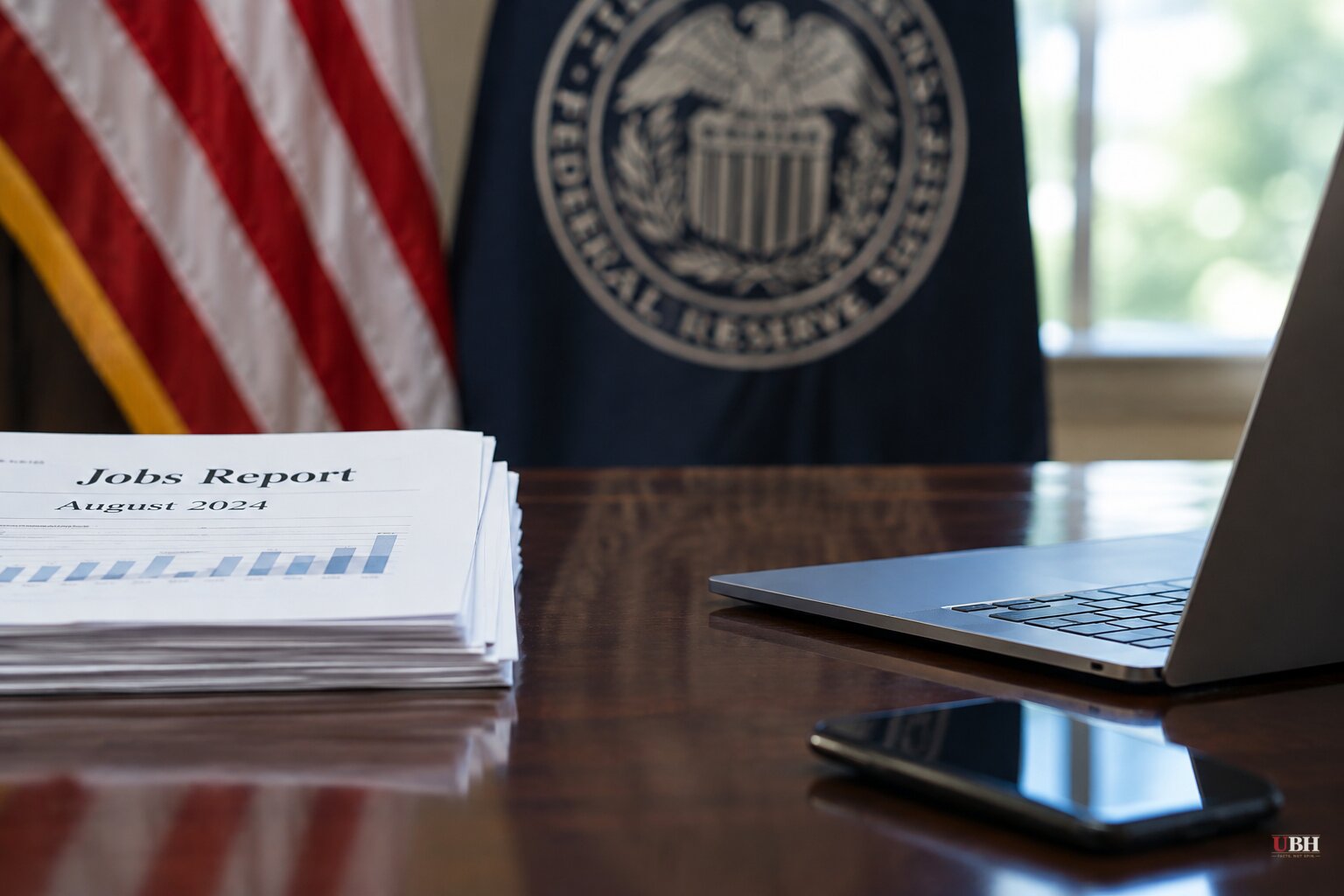
Since Federal Reserve Chair Kevin Warsh told the Jackson Hole Economic Policy Symposium on August 28 that inflation, not growth, is his "predominant focus," the data has kept breaking against the case for a rate cut. The Fed's policy meeting is scheduled for September 15-16, meaning a decision lands Wednesday, and the numbers released since Jackson Hole have made a hike look more plausible, not less.
The Bureau of Labor Statistics reported the economy added 162,000 jobs in August, far above the 31,000 average monthly gain over the prior 12 months, according to Newsweek. Unemployment held at 4.1 percent. June and July payrolls were also revised up by a combined 55,000 jobs.
A weak jobs report would have handed Warsh an easy justification to cut rates and ease pressure from the White House. Instead, according to Newsweek, the strong report removes that excuse just as the Fed's preferred inflation gauge, the Commerce Department's Personal Consumption Expenditures index, showed prices up 3.7 percent year-over-year in July, with core PCE at 3.3 percent. Both are well above the Fed's 2 percent target.
Trump Backs Off, For Now
Asked directly by the Daily Signal in the Oval Office on Monday whether he opposes a Warsh rate hike and whether he'd spoken to Warsh about it, Trump said no. "I have a lot of respect for him, and he'll do what he has to do," Trump said, adding that he still thinks "our interest rates are too high."
Trump laid out his usual argument: that a stronger U.S. economy should mean lower borrowing costs, not higher ones. "When we're doing well, we become a better credit," he told the Daily Signal. "When you become a better credit, you're supposed to cut rates, not raise rates." He argued the U.S. should have "the lowest interest rates in the world," pointing to unnamed countries that he said pay lower rates only because of their trade relationship with Washington.
That argument runs into a basic problem: inflation is running above target regardless of how creditworthy the U.S. government is perceived to be, and the Fed's stated mandate is price stability, not simply rewarding a strong economy with cheaper money.
The Pressure Campaign Didn't Stop Entirely
Trump's restraint in the Daily Signal interview followed a harder edge just days earlier. Reacting to the August jobs numbers, Trump posted on Truth Social that the U.S. should get "the lowest interest rates in the world" because it is "a much stronger credit," and warned the Fed directly: "The Fed Board, with its great new leader, must get smart - BE PATRIOTS for a change... I won't allow that to happen!" according to Newsweek.
Vice President JD Vance told reporters the administration believes the Fed "should be lowering interest rates," citing costs to homebuyers, Newsweek reported.
Why Warsh May Not Bend
Warsh, who took over as Fed chair on May 22, has spent his early tenure trying to retire the practice of "forward guidance," the Fed telegraphing its next move to markets, according to The American Conservative. At Jackson Hole he argued the Fed needs "clear market signals, as unfiltered as possible from market internals," including Treasury prices and the dollar's exchange value. The American Conservative reads this as an implicit jab at Treasury Secretary Scott Bessent, whose maneuvers have coincided with the national debt topping $40 trillion and 30-year Treasury yields hitting nearly two-decade highs.
Warsh also used the speech to place blame squarely on the institution he now runs: "The responsibility for 65 months of sustained, elevated inflation sits squarely with the central bank. And that is where it belongs," he said, according to Newsweek.
The Week, citing the Financial Times and Bloomberg's Jonathan Levin, framed a hike as politically risky for Warsh before the midterms but potentially the "right thing" to do, since it would show he's putting "American households above politics." Reuters' Jamie McGeever, also cited by The Week, said there remains "significant uncertainty" about whether Warsh actually pulls the trigger this month.
The Week also noted a complicating factor beyond the jobs data: the war with Iran has pushed global energy prices higher, keeping inflation elevated alongside AI-driven spending, according to Bloomberg's Levin.
What's Actually Unresolved
No rate decision has been made as of Monday. The FOMC's meeting is scheduled for Tuesday and Wednesday, September 15-16, with a decision and press conference expected to follow. Whether Warsh raises rates, holds them, or finds some middle path will test whether the Fed he now runs will act independently of the president who picked him, or fold to the same pressure that pushed out his predecessor's rate-cutting timeline under Jerome Powell.
Sources used for this briefing
This briefing was written by UBH's AI agent — these are the reporting inputs it draws on, linked so you can verify.


