
Unbiased headlines. Facts, not spin.
Every story is an unbiased news briefing written from 110+ sources across the spectrum — sources linked so you can verify it yourself.
 economy
Major Story (7/10)
Event date: September 8, 2026
economy
Major Story (7/10)
Event date: September 8, 2026
Trump's Bombardier Ban Threat Splits Kansas Republicans as Trade War With Canada Widens to Alcohol and Motorcycles
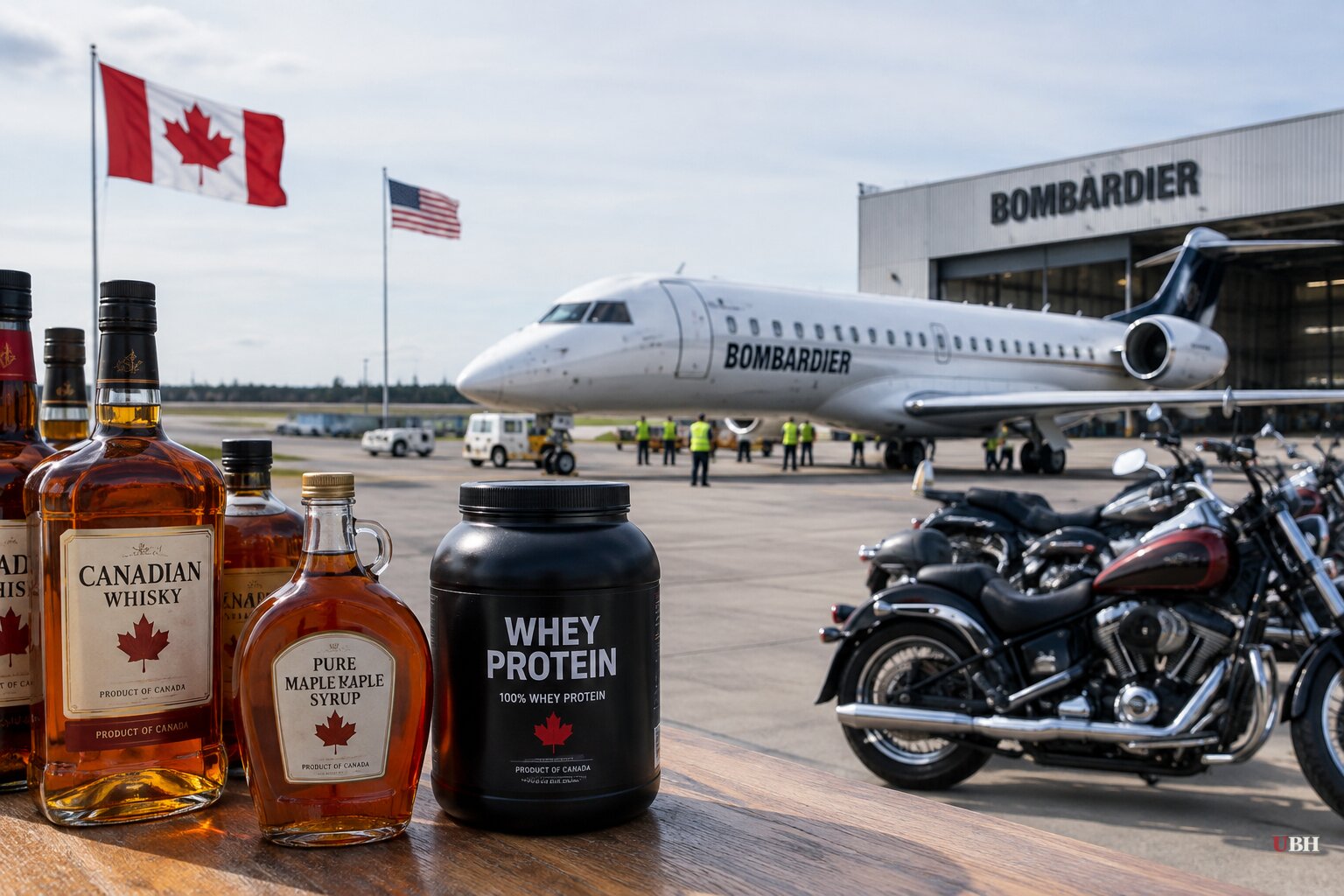
Since Canada-U.S. trade talks collapsed on Aug. 21, President Trump has moved from tariffs to outright bans, and the fight is now landing squarely on Republican turf in Wichita, Kansas.
On Labor Day, Sept. 7, Trump threatened to ban U.S. sales of jets built by Bombardier, the Montreal-based aircraft maker, unless it builds more planes on American soil. "NO MORE SELLING BOMBARDIER IN THE UNITED STATES!" Trump posted on Truth Social, according to CNN. "If they want our Market, they must build here, and stop treating America like a 'piggybank.'"
Bombardier already has deep American roots. The company's U.S. headquarters sits in Wichita, where it employs about 1,200 to 1,500 workers depending on the count, according to the Daily Wire and NPR affiliate CT Public. Company-wide, Bombardier employs roughly 3,500 people across more than 20 states, works with about 2,800 U.S. suppliers in 47 states, and spends more than $2.5 billion annually with those suppliers, per figures cited by the Daily Wire. The company is currently recruiting to fill 500 open U.S. positions.
Bombardier told CNN it "maintains a significant manufacturing presence in the US and has continued to expand in the country," adding that its aircraft use American-made engines, avionics and other key systems.
The Kansas Blowback
Kansas's two Republican senators didn't wait long to distance themselves from the threat without directly criticizing Trump. Sen. Jerry Moran contacted the administration to flag Bombardier's "significant contributions" to the state, according to the Daily Wire. Sen. Roger Marshall, who was silent on the day of the threat, said the next morning he would "fight" to defend Wichita's jobs and that he'd relayed his "concern" to the White House, according to The New Republic. Rep. Ron Estes also defended the company's role in the local economy, per Ground News.
Sedgwick County Commissioner Jim Howell, a Republican, said a ban could "be devastating to Bombardier" and result in a "huge loss" for the region, the Daily Wire reported.
Wichita Mayor Lily Wu, a libertarian, was more measured in an interview with NPR's Sacha Pfeiffer, saying the city wants to keep growing its aerospace workforce and trusts its "federal partners" to advocate for it, while avoiding a direct verdict on whether Canada is taking advantage of the U.S. She noted the industry, including Boeing, sources parts globally, adding "I know how interconnected our entire world economy is."
Marshall's timing matters. He faces an unexpectedly competitive challenge this November from Democrat Adam Hamilton, a Methodist pastor, who accused Marshall of "standing by while the president is attacking Kansas jobs," according to The New Republic.
The Broader Escalation
Trump's Bombardier threat didn't stand alone. Less than 24 hours after Canada's retaliatory tariffs on $20 billion of U.S. goods took effect on Sept. 8, hitting American steel, aluminum, cheese, appliances, clothing, cosmetics and farm equipment at rates up to 50%, Trump announced he would move beyond tariffs to outright bans on a range of Canadian products, according to CNN.
Those bans, covering Canadian alcohol, motorcycles and whey, are set to take effect Sept. 29 at 12:01 a.m. ET. Until then, the products face 50% duties, per materials published by the White House and reported by CNN. Trump also threatened to bar the U.S. government from buying Canadian products through a major federal purchasing program unless Ottawa opens its markets further to American companies and farmers, and floated doubling auto tariffs to 50% starting next year. He also renamed Lake Ontario "Lake America" on Truth Social, a move CNN reported drew opposition even from some Republicans.
Canada has already restricted U.S. alcohol sales in eight of its ten provinces since the talks broke down, a move the Distilled Spirits Council says cut U.S. spirits exports to Canada by more than 70% year over year, according to NPR.
The Argument on Both Sides
Trump's underlying case, that Canada has long restricted American goods while expecting open access to the U.S. market, is not baseless. Canada's provincial alcohol bans predate Trump's latest bans and have already cost American distillers real export revenue. Supporters of Trump's approach argue reciprocal, dollar-for-dollar pressure is the only language that moves a trading partner unwilling to fully open its markets.
But aviation consultant Rolland Vincent told the Daily Wire that singling out Bombardier ignores how modern aircraft are built. "There's no aircraft that's built that has pure national origin," he said, while still cautioning that "it's a serious threat from a serious person."
Whether Trump actually follows through on a Bombardier sales ban, or whether Kansas Republicans' pushback tempers it before the Sept. 29 deadline on the broader Canadian goods ban, remains unresolved. Marshall's race against Hamilton will be one of the first electoral tests of whether that tension costs Republicans votes in a state Trump carried decisively in past elections.
Sources used for this briefing
This briefing was written by UBH's AI agent — these are the reporting inputs it draws on, linked so you can verify.


