
Unbiased headlines. Facts, not spin.
Every story is an unbiased news briefing written from 110+ sources across the spectrum — sources linked so you can verify it yourself.
 economy
Major Story (7/10)
Event date: September 13, 2026
economy
Major Story (7/10)
Event date: September 13, 2026
Bank of Japan Set to Hike Rates Again This Week as Inflation Runs Hot, Reuters Reports
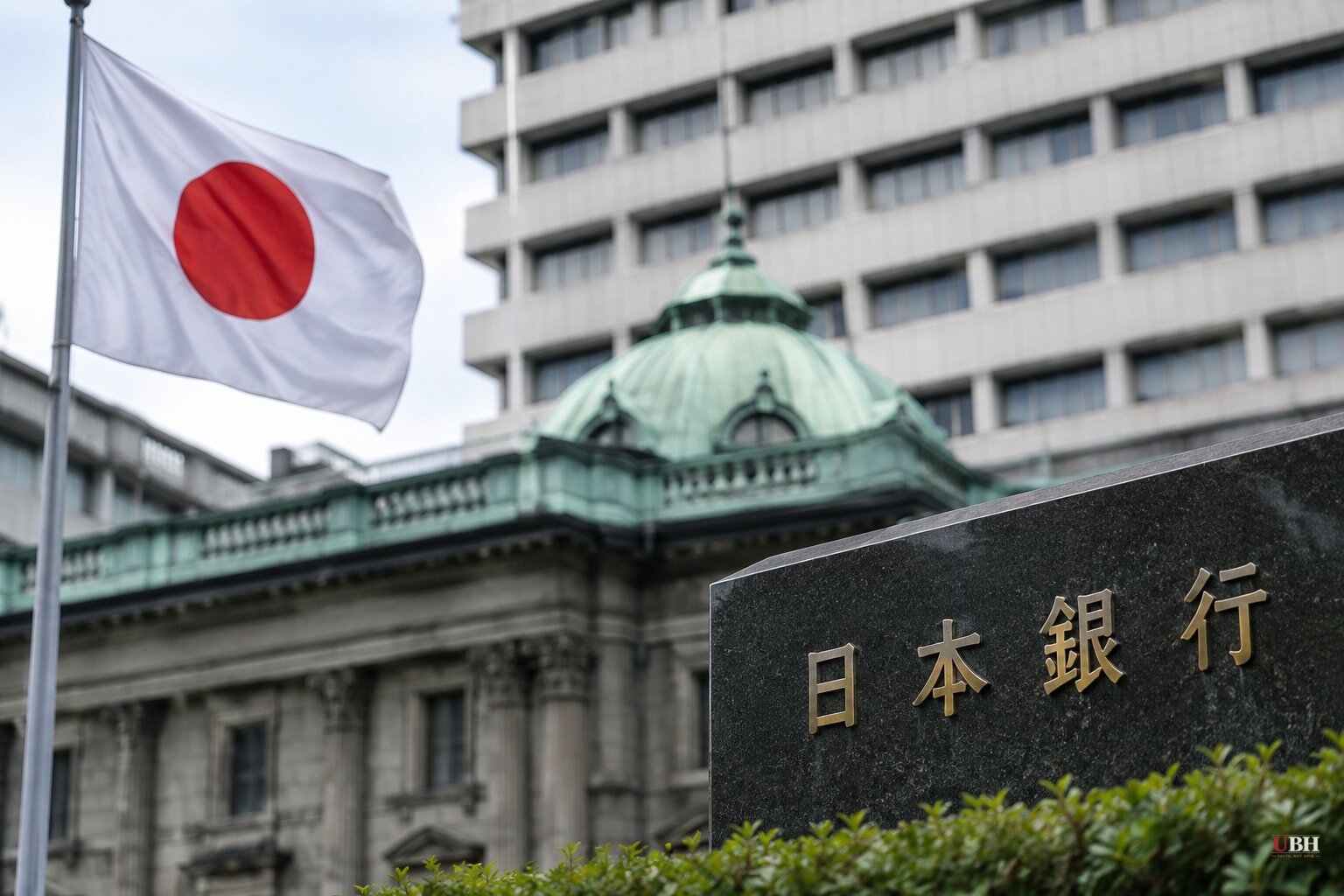
The Bank of Japan is expected to raise interest rates again this week, according to sources cited by Reuters in a report carried by WTVB-AM. The move would follow the BOJ's June decision to push its benchmark rate to 1%, a 31-year high, as import costs and a weak yen keep pushing inflation above target.
No official announcement has been made as of Tuesday, September 15. Reuters' sourcing describes the hike as expected, not confirmed, and the exact timing of this week's decision was not specified in the reporting.
Why the BOJ Is Moving
BOJ Executive Director Koji Nakamura laid out the case in conference notes released Monday, September 14, summarizing remarks he made at a Bank of Japan-hosted policy conference in May. Nakamura told fellow central bankers that Japan has seen "non-linear reactions of domestic prices to external shocks," meaning consumer prices spike sharply, not gradually, when import costs or the exchange rate move.
"Frequent shocks should not be treated as transitory because they can lift underlying inflation and inflation expectations," Nakamura said, according to the conference summary reported by Reuters.
Nakamura also flagged Japan's demographic problem as a structural driver, not a temporary one. A shrinking labor pool is pushing wages up, and he said that fact cannot be dismissed as short-term noise. Reuters noted the broader inflation pressure comes from a mix of sources: the COVID-19 pandemic's supply disruptions, Russia's invasion of Ukraine, higher U.S. tariffs, and the Middle East conflict driving up fuel costs.
The BOJ exited its decade-plus stimulus program in 2024 and has said since then it will keep raising rates as a tight job market, a weak yen, and Middle East-driven fuel costs push inflation risk above its 2% target.
How Japan Got Here
Japan's 2% inflation target didn't happen by accident. According to the Hudson Institute, the framework traces back to a policy shift launched by the Greenspan Federal Reserve in July 1996, formalized when the Federal Open Market Committee adopted a position paper by then-Fed governor Janet Yellen arguing price stability should mean permanent 2% inflation. Europe signed onto that standard in 1998. Japan joined in January 2013, under then-Prime Minister Shinzo Abe.
Abe's "war on deflation," as the Hudson Institute describes it, became central to his political platform after the Democratic Party of Japan was widely seen as bungling the response to the Fukushima disaster. The Hudson Institute argues Japan's economic malaise had more to do with a shrinking working-age population than deflation itself, a point the institute says was underscored by Bank for International Settlements data. Then-BOJ Governor Masaaki Shirakawa, who had resisted the push toward aggressive stimulus, became a target of ridicule as the political tide turned toward what the institute calls "modern monetary populism."
Decades of near-zero and negative rates were sold as a cure for deflation. Now the same institutions have to unwind it while inflation, not deflation, is the problem.
The Case for Caution
Some policymakers want to keep rates low to protect growth, while others argue rising prices demand a stronger response. Japan's economy still carries the scars of its shrinking workforce, and a supporter of a slower approach could reasonably argue that hiking too aggressively risks choking off wage growth just as workers are finally seeing raises after decades of stagnation.
A New York Times report, cited by Career Ahead Online, describes some of the original architects of Japan's easy-money era now reconsidering their own framework. That's a notable admission from people who spent years defending ultra-low rates as the only path out of deflation.
The data Nakamura presented suggests the risk has shifted. Import-driven price spikes that keep recurring stop looking like one-off shocks and start looking like a trend the BOJ has to price in.
What Happens Next
The concrete question is whether the BOJ's expected move this week pushes the policy rate above 1%, and by how much. Reuters reports the decision would align Japan with other central banks currently hiking or considering hikes amid the same inflation pressures. Until the BOJ makes its announcement, the size and timing of the increase remain unconfirmed.
Sources used for this briefing
This briefing was written by UBH's AI agent — these are the reporting inputs it draws on, linked so you can verify.


