
Unbiased headlines. Facts, not spin.
Every story is an unbiased news briefing written from 110+ sources across the spectrum — sources linked so you can verify it yourself.
 economy
Major Story (7/10)
Event date: July 1, 2026
economy
Major Story (7/10)
Event date: July 1, 2026
EU's €3 Parcel Fee Cuts Cheap Chinese Imports Nearly in Half, Customs Data Show
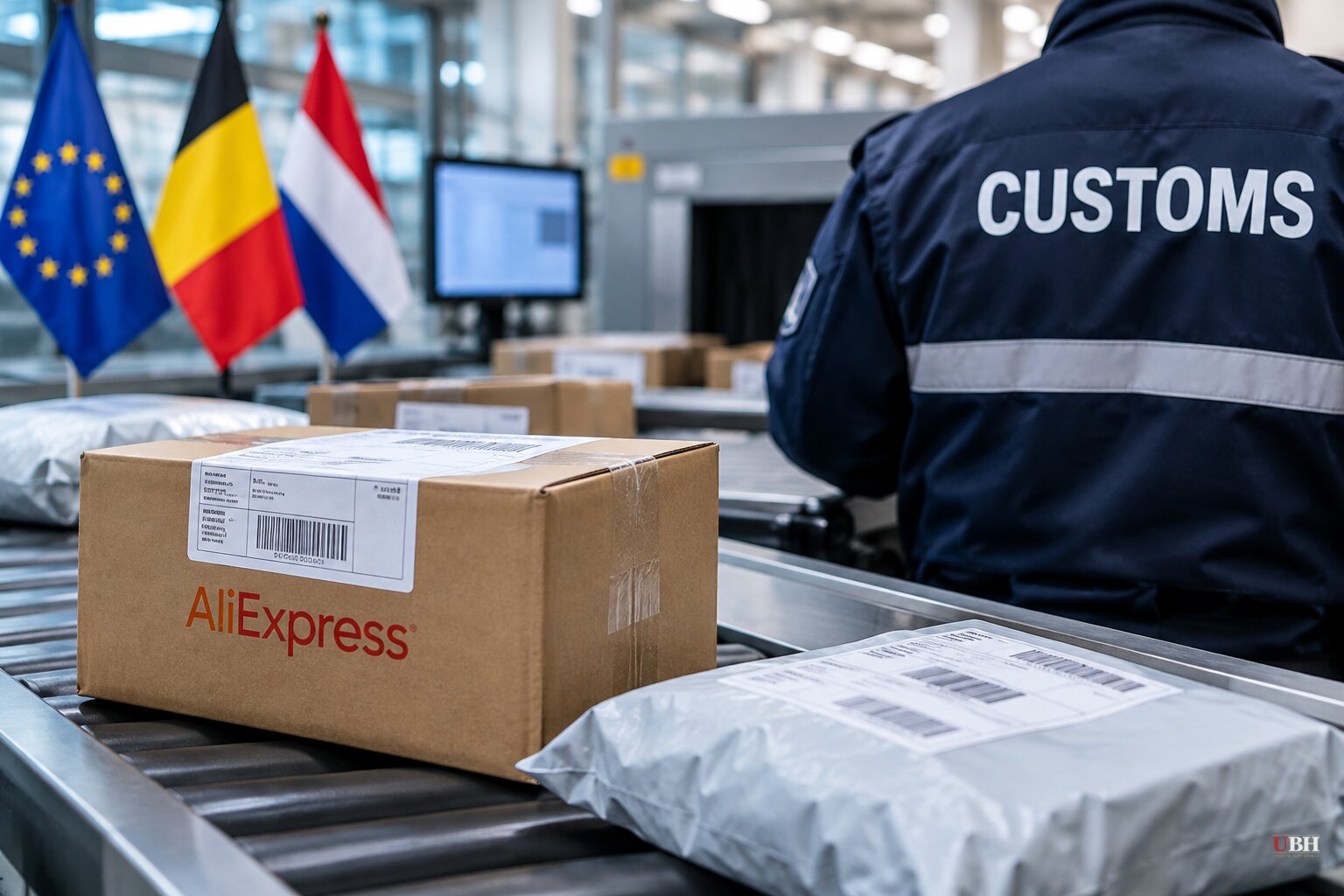
The European Union's new €3 flat customs duty on parcels worth less than €150 has done exactly what Brussels said it would do: cut the flood of cheap Chinese goods pouring into the bloc.
Since the levy took effect on July 1, 2026, low-value parcel imports have fallen by 53% at Belgium's Liège airport and by 46% in the Netherlands, according to customs data from both countries. Liège is one of the EU's biggest entry points for e-commerce shipments, handling an average of 153 million small parcels a month in the first half of 2026, according to The Irish Times.
Belgian Finance Minister Jan Jambon called the early numbers proof the policy is working. "The first results show we're moving in the right direction," Jambon told reporters in Liège, according to The Irish Times. His ministry says the fee generated roughly €224 million in revenue at that single hub in its first seven weeks.
Temu Bleeds, Shein Adapts
French customs data, cited by the French Ministry of the Economy and reported by BigGo Finance, shows the pain isn't evenly spread. Temu's sales volumes collapsed 50% between June and July. AliExpress dropped 37%. Shein fell just 15%, a gap BigGo Finance attributes to Shein opening a warehouse in Poland at the end of 2025, letting it stockpile goods inside the EU and dodge some of the per-shipment hit.
This suggests the fee is reshaping business models more than it's shrinking the actual volume of Chinese goods reaching European shelves. Liège's own data backs that up: while parcels under €150 fell 53%, shipments above that threshold rose 102%, and the average declared value of imported goods doubled to €10.85, according to Belgian customs figures.
Dutch customs went further, cautioning in a September statement that the drop "might represent a change in the working methods due to the levy," as more companies shift to "bulk import and storage within the EU to resell their goods to consumers from there," according to Euronews. Dutch officials said they plan to investigate further.
A fair critic of this policy would note that a 46-53% drop in direct-to-consumer parcels doesn't necessarily mean 46-53% less Chinese merchandise is entering Europe. It might just mean the same goods are arriving in bigger boxes, warehoused locally, and shipped the last mile from inside the EU, where they escape the parcel-level fee entirely. If that's true, the levy is a paperwork shuffle for sophisticated operators like Shein, and a real cost only for smaller platforms without the capital to build EU warehouses.
Why Brussels Acted
The scale of the problem explains the urgency. Low-value imports into the EU hit €4.6 billion in 2024, up from €2.3 billion in 2023 and €1.4 billion in 2022, according to European Commission data cited by Euronews. In 2025, 5.9 billion low-value items entered the bloc, more than 90% of them originating in China, per Monaco Life.
Safety, not just economics, is driving the crackdown. Coordinated 2025 EU checks found 65% of inspected cosmetics failed compliance standards, with Chinese products making up 63% of the failures. Personal protective equipment fared worse: 60% failed inspection, and 91% of those non-compliant items came from China, according to Monaco Life. A separate 2025 peer-reviewed study in Contact Dermatitis found 63% of 111 clothing items tested across the EU and Italy contained carcinogenic, endocrine-disrupting, or skin-sensitizing chemicals, Euronews reported.
Dutch MEP Dirk Gotink, who handled the customs reform for the European Parliament, told Euronews the €3 duty "has already significantly reduced the flow of parcels, but we are not there yet." Brussels is preparing a follow-up: the European Product Act, which a draft obtained by Euronews and reported by Monaco Life shows would make online marketplaces legally liable for non-compliant products sold through them and add a new market surveillance fee on imports. The Commission is expected to formally present that legislation on October 6, 2026.
The Bigger Trade Fight
The parcel fee is a small piece of a much larger standoff. The EU and China have set an October 2026 deadline to make progress on the bloc's €360 billion annual trade deficit with Beijing, which European officials blame on Chinese industrial overcapacity, a charge Beijing denies, according to The Irish Times.
Meanwhile, Beijing is working other angles. Chinese leader Xi Jinping emphasized multilateralism and open trade in a September 8 phone call with UK Prime Minister Andy Burnham, saying China and Britain should step up coordination through multilateral frameworks and work together to push for "inclusive economic globalization," according to The Epoch Times. Burnham's office said the leaders discussed the importance of pragmatic cooperation, including on economic growth and living standards, and a Downing Street spokesperson said the prime minister raised domestic security, Russia's war in Ukraine, Hong Kong, human rights, and consular cases directly with Xi.
An unnamed source close to China's Ministry of Commerce told The Epoch Times that Beijing views a full US-China economic split as impossible, pointing to Vietnam's trade surplus with the United States approaching $200 billion as evidence Chinese-origin goods are being rerouted through third countries. That claim comes from a single anonymous source and has not been independently verified in these sources.
The parcel fee is temporary. A permanent EU customs overhaul isn't due until 2028, and BigGo Finance reports additional parcel-handling fees could arrive as soon as November 2026. Whether Dutch customs' warehousing theory holds up, and whether the October EU-China trade talks produce anything beyond a deadline, remains to be seen.
Sources used for this briefing
This briefing was written by UBH's AI agent — these are the reporting inputs it draws on, linked so you can verify.


