
Unbiased headlines. Facts, not spin.
Unbiased Headlines is an independently owned news organization. We bring you the facts, not opinions, written fresh from 110+ named sources. Sources linked so you can verify it yourself.
 economy
Major Story (7/10)
Event date: November 1, 2026 ·
China Vows 'Necessary Measures' After US Sanctions Two Chinese Firms Over Cuba Ties
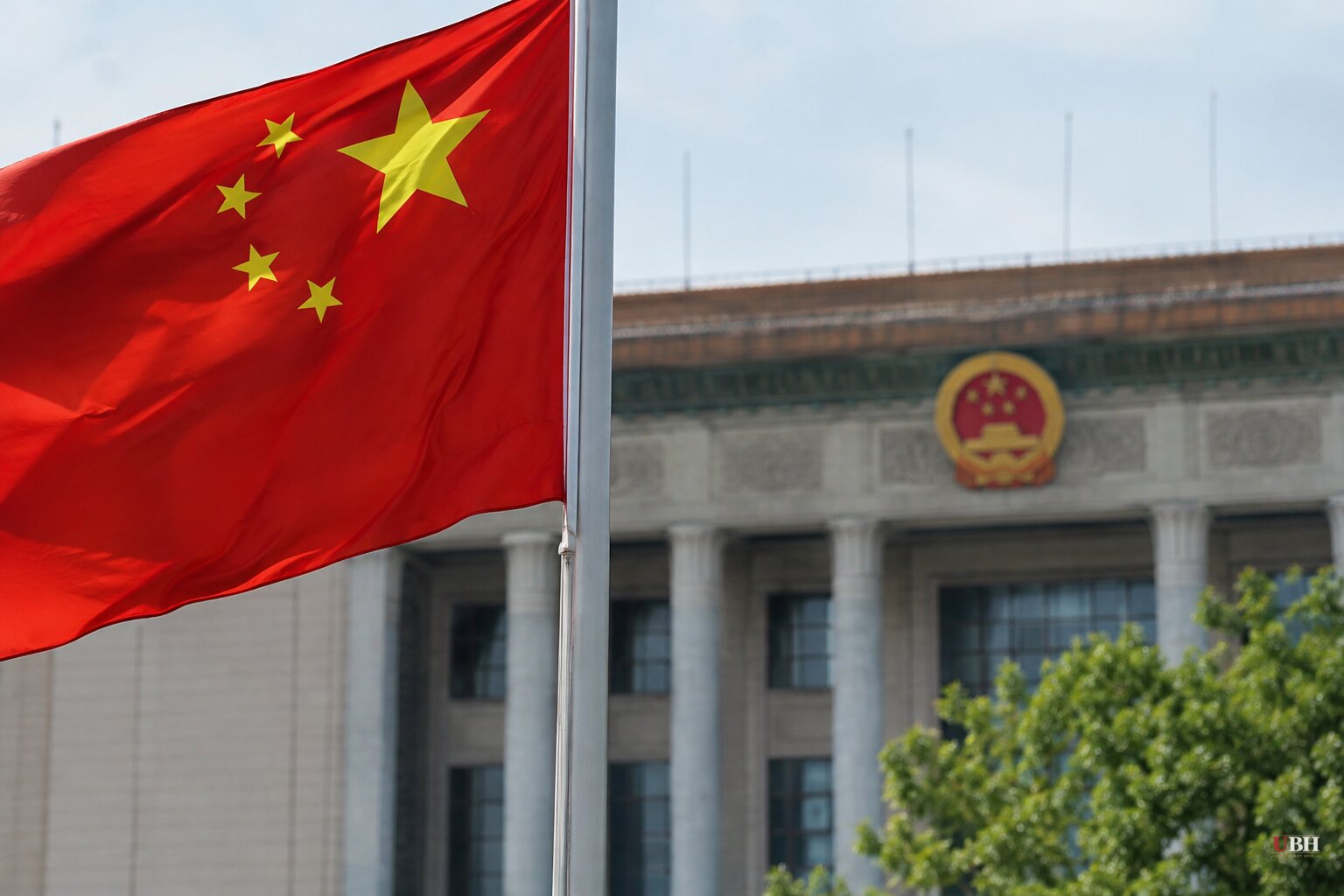
Since the State Department sanctioned five Chinese companies tied to ex-Google engineer Linwei Ding on Oct. 19, the U.S.-China sanctions fight has moved to a second front: Cuba. On Friday, Nov. 6, Beijing said it will protect its companies after Washington named two of them on Thursday.
The Cuba designations
Foreign Ministry spokesman Guo Jiakun answered at a regular briefing. He said China "firmly opposes" the sanctions and will take "all necessary measures" to safeguard Chinese enterprises' legitimate rights and interests. He did not say what those measures are.
The State Department announced the penalties on Thursday. They hit CEIEC (China National Electronic Import and Export Company) and Beijing H&C Technologies. Washington accuses both of supplying electronics, military components and surveillance equipment to Cuba's armed forces.
According to the State Department, the goods moved through a Cuban company, Sociedad Mercantil Duna S.A. The U.S. sanctioned Duna in August for allegedly facilitating weapons imports from China and Russia.
The package covers eight entities, two individuals and five vessels identified as blocked property. It rests on Executive Order 14404, which President Trump signed May 1, 2026. Secretary of State Marco Rubio said the administration "will not remain idle" while Cuba's government directs the island's resources to its military elite.
CEIEC is not new to U.S. sanctions lists. The Treasury's Office of Foreign Assets Control put it on the Specially Designated Nationals list in November 2020 over surveillance technology supplied to Venezuela's state-owned CANTV.
CiberCuba, a Cuban-focused outlet, describes this as the first time Washington has explicitly named Chinese companies in its Cuba pressure campaign. That campaign has included an oil blockade and threats of military intervention since January, the outlet reports.
Beijing's position
Guo called China's cooperation with Cuba "open and aboveboard." He rejected what he called "illegal unilateral sanctions" and "long-arm jurisdiction" that lack a basis in international law or authorization from the UN Security Council.
He also said China supports Cuba in defending its sovereignty and opposing outside interference. CiberCuba reports that China has committed $80 million in aid and 90,000 tons of rice to Cuba this year.
The U.S. position is the opposite. Washington says these firms armed and wired a government it is trying to squeeze, and it has now put Chinese names on the list.
The earlier round: Linwei Ding
The Cuba action follows a separate fight over trade secrets. On Oct. 19, the State Department sanctioned five Chinese companies connected to Ding, founder of Shanghai Zhisuan Technology.
The department said Zhisuan "has knowingly engaged in, or benefitted from, significant theft of trade secrets of United States persons" on or after Jan. 5, 2023. It said the startup incubator MiraclePlus gave Zhisuan seed capital for an ownership stake. The other three sanctioned entities are linked to MiraclePlus.
The legal record is mixed. Ding was charged in 2024 with stealing AI trade secrets from Google while secretly working with two China-based companies. A federal jury in San Francisco convicted him in January on several counts of economic espionage and theft of trade secrets.
A judge later dismissed the economic espionage charges and sentenced him to 12 months in prison. The Justice Department is appealing that dismissal.
China's Commerce Ministry reacted on Oct. 20, calling the sanctions "egregious" and saying they "severely harm" Chinese businesses. It said China's AI progress has "nothing to do with the so-called 'stealing of trade secrets.'" The ministry credited long-term investment in basic research and "independent scientific and technological innovation."
Beijing's draft trade-secret rules
On Oct. 26, China released a 10-article draft, the Special Provisions on the Protection of Chinese Trade Secrets. Public comment is open until Nov. 24.
The draft would let the ministry investigate foreign companies, organizations or individuals accused of infringing Chinese trade secrets in international trade if the conduct is judged to threaten China's sovereignty, security or development interests. Possible penalties include limits on imports and exports of goods and technology, restrictions on trade in services and new investment, entry bans, and the restriction or revocation of work permits and residency. Fines are also possible.
Beijing has not said the draft is a response to the Oct. 19 sanctions. Sun Kuo-hsiang, a professor of international affairs at Taiwan's Nanhua University, told The Epoch Times the sequence points that way. "The United States sanctioned five Chinese companies on Oct. 19 on the grounds of trade secret theft. Beijing threatened on the 20th to take necessary measures, and released the draft on the 26th," he said. He said the timing shows Beijing can retaliate in kind and adds leverage in negotiations.
Shen Ming-shih of Taiwan's Institute for National Defense and Security Research said the draft is meant to show a "tough stance" and "increase its bargaining leverage." He added that it would give China a legal basis for future trade-secret and cross-border litigation disputes.
The draft has drawn concern over its breadth. It does not clearly define what counts as a threat to China's national interests, and it sets no thresholds for when a violation triggers national security measures.
What comes next
Beijing has now promised "necessary measures" twice in under three weeks without naming any. The first public test is the Nov. 24 close of comment on the trade-secret draft. The Justice Department's appeal in the Ding case is also pending. Whether China answers the Cuba designations with action against U.S. firms, or leaves them as rhetoric, remains unannounced.
Sources used for this briefing
7 links from 7 independent newsrooms (syndicated copies of the same report count once)
These are the sources it draws on, linked so you can verify.


