
Unbiased headlines. Facts, not spin.
Unbiased Headlines is an independently owned news organization. We bring you the facts, not opinions, written fresh from 110+ named sources. Sources linked so you can verify it yourself.
 energy
Major Story (8/10)
China Orders PetroChina, Sinopec and CNOOC to Expand Output as Iranian Crude Supply Runs Out
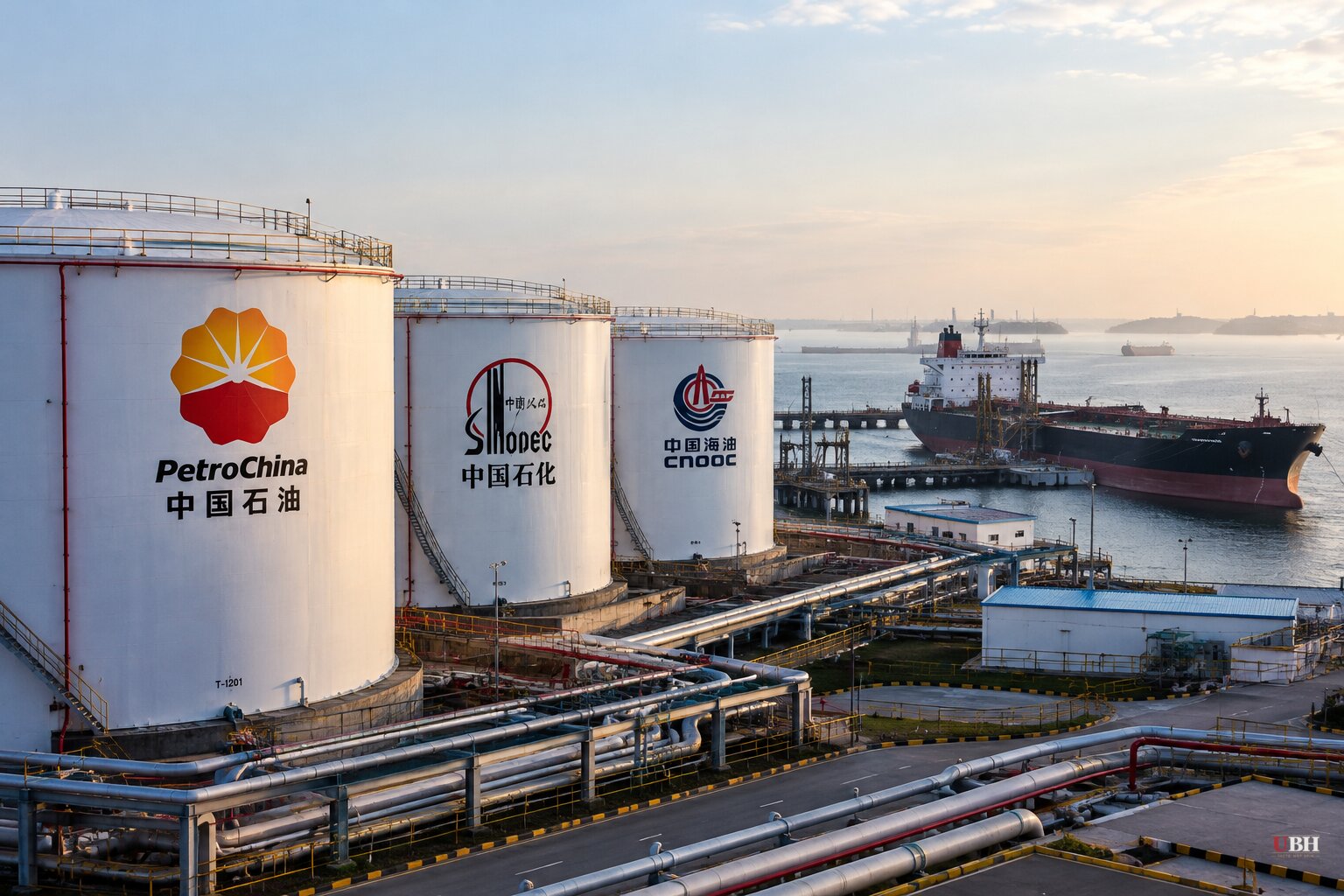
China wants more oil out of its own ground. The National Energy Administration has called on PetroChina, Sinopec, CNOOC and other domestic producers to expand production capacity, raise investment and speed up national oil and gas supply bases, according to a directive issued after an October 21 meeting.
The order asks for steady growth in crude output and rapid growth in natural gas. It lands as Iranian crude, long a discounted staple for Chinese refiners, has effectively vanished from the water.
Iranian barrels disappear from China's books
Kpler data show that Iran delivered more than 1.55 million barrels per day to China from January through May. From June through September the average fell to less than half of that. By mid-October, the volume of Iranian oil afloat outside the U.S. blockade line had reached zero.
The collapse shows up in China's customs figures, though not under Iran's name. Chinese customs have reported zero monthly imports of Iranian oil since 2020. Kpler and TankerTrackers have said most Iranian cargoes to China are recorded as Malaysian, with some declared as Iraqi, Omani or Emirati.
In September, China recorded just 276,000 barrels per day of Malaysian-origin oil. The 2025 average was nearly 1.3 million, and some earlier months hit 2 million, roughly four times Malaysia's own production, according to an analysis by Iran International based on Kpler data. That analysis projects the figure could fall toward the 2017 level of 130,000 barrels per day as early as this month or next if current trends hold.
The stockpile is doing the work
China entered the war in February holding an estimated 1.3 billion to 1.4 billion barrels in commercial and strategic inventories. When Brent topped $100, Chinese refiners cut imports and drew down storage rather than bid for expensive cargoes. June imports ran an estimated 4.4 million barrels per day below the 2025 average.
September numbers show the draw continuing. Refiners processed about 13.99 million barrels per day. Domestic fields supplied 4.43 million and imports 9.03 million. Analysts estimate the 530,000-barrel-per-day gap came out of storage. It was the fourth month in five that China tapped inventories.
The cushion is still thick. EA Crude Oil Inventories put onshore stocks at about 1.192 billion barrels in the week ending October 19. That is 162 million barrels below the early-May record but only 13 million below the same week last year.
Replacement barrels cost more
Oil is still flowing out of the Gulf. Kpler data cited by The Wall Street Journal put Middle East exports of crude and products at 24 million barrels per day, above prewar levels. China's imports from Oman, the UAE, Qatar, Saudi Arabia and Iraq averaged 2.9 million barrels per day in September, up from under 2 million in May. They remain below the more than 3.8 million recorded in February.
Vortexa said on October 22 that China's imports of non-Iranian Middle Eastern crude are set to reach their highest level since the start of the U.S.-Iran war.
The cost is the problem. Independent Chinese refiners that leaned on cheap Iranian crude now face pricier supply from the Middle East and Africa. The Brent-Dubai spread flipped positive on October 19 as freight and insurance ate a larger share of Mideast crude values, according to Quantum Commodity Intelligence. Kpler has pointed to longer journeys and logistics inefficiency around the Strait of Hormuz adding to a surge in supertanker rates. UK Maritime Trade Operations reported four more attacks on ships in the strait on October 12.
Washington says the pressure stays
The Trump administration has been open about the aim. Energy Secretary Chris Wright said on September 7 that the U.S. will keep pressure on Iranian energy exports until Tehran changes its policies or government. Treasury Secretary Scott Bessent said the same day that Iran was running short of crude it could sell to China.
China's position cuts the other way. OilPrice.com's analysis is that Beijing has handled the crisis better than most big importers because it bought and stored crude when prices were low, and it has so far kept most of its inventory buffer. That is an analyst's reading, not a Chinese government statement.
Beijing has not said the directive responds to the blockade. China has pushed for more domestic energy output for years, and the 2025 figures show the scale: a record of about 216 million tonnes of crude and more than 260 billion cubic metres of gas. Even so, China imported more than twice as much oil as it produced in September.
On the same day as the producers' meeting, Chinese state media said China and Russia agreed to support companies seeking to widen oil-sector cooperation. No supply volumes or new commitments were announced.
What to watch
Domestic drilling cannot close a gap of this size quickly. The next set of customs data will show whether recorded Malaysian-origin imports keep sliding toward 130,000 barrels per day, and whether the stockpile draw of roughly 530,000 barrels per day holds steady or widens as Iranian supply stays at zero.
Sources used for this briefing
7 links from 7 independent newsrooms (syndicated copies of the same report count once)
These are the sources it draws on, linked so you can verify.


