
Unbiased headlines. Facts, not spin.
Unbiased Headlines is an independently owned news organization. We bring you the facts, not opinions, written fresh from 110+ named sources. Sources linked so you can verify it yourself.
 energy
Major Story (7/10)
Rystad: LNG Importers Will Pay At Least $39 Billion More in 2026 for 60.7 Million Fewer Tonnes
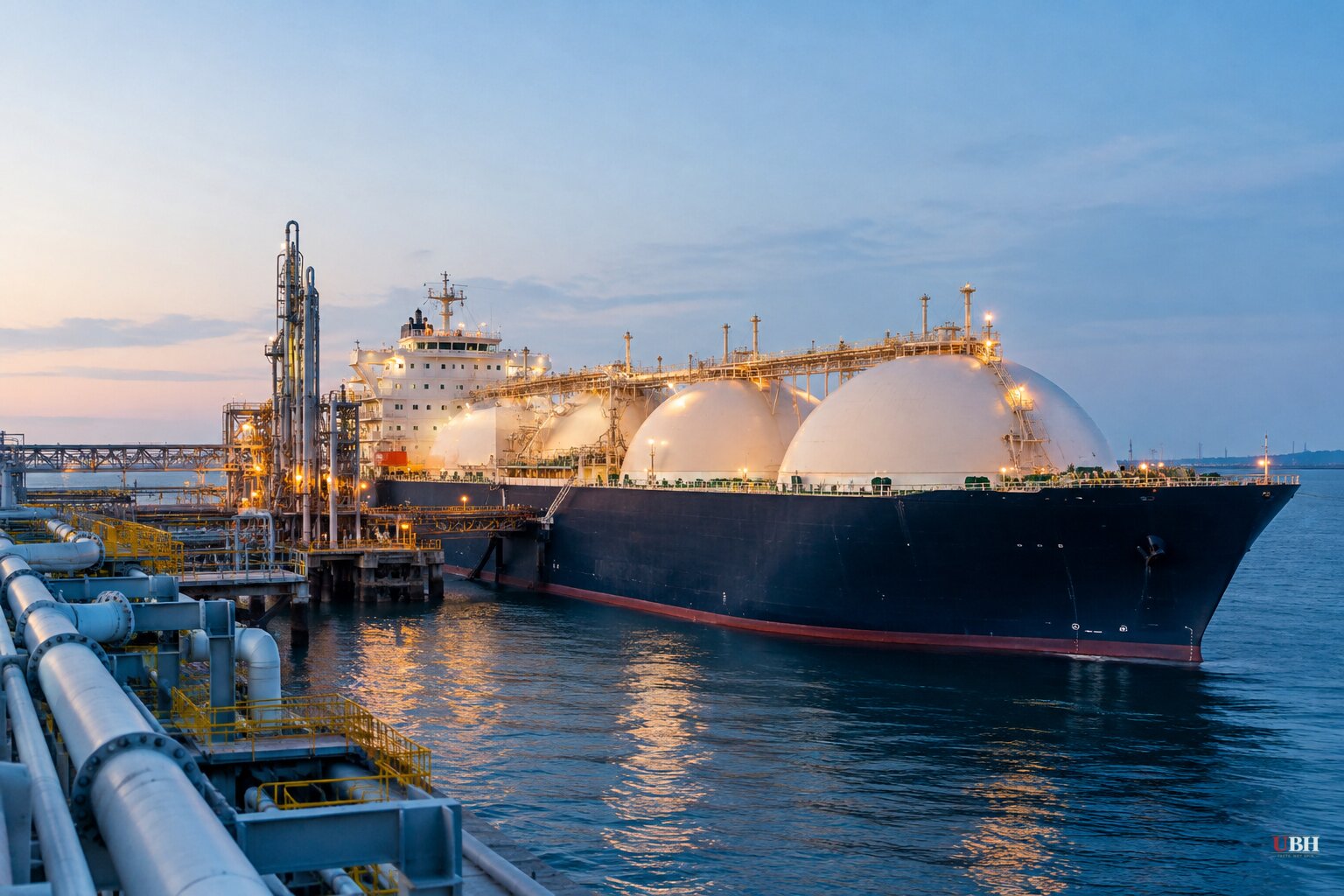
Since the Iran war began in late February, the focus has been on crude and gasoline. A new Rystad Energy analysis puts a price on the gas side: at least $39 billion in extra costs for LNG importers this year.
Rystad estimates total 2026 spending on contracted and spot LNG at $256.3 billion. Its pre-conflict estimate was $217.8 billion. That works out to about 18% more money for 60.7 million fewer tonnes of fuel.
A modeled scenario, not a bill already paid
The number rests on an assumption. Rystad's model has Qatari and UAE LNG deliveries unavailable from March through the end of 2026. Both countries ship through the Strait of Hormuz.
If Gulf LNG exports recover sooner, the final cost and the lost volumes would come in lower. Rystad describes the $39 billion as a minimum under its disruption case.
That sits awkwardly beside the oil picture. Crude flows through Hormuz have rebounded, even as the cost of moving crude out of the Gulf has jumped. Rystad's LNG scenario assumes no such recovery for Qatari and UAE gas.
Europe pays the most
Europe's LNG bill rises by at least $12 billion, or 18%, even though its demand falls by 24 million tonnes. Rystad says Europe could lose 20.6 million of the 24.7 million tonnes of Qatari LNG that had been scheduled for delivery in 2026.
The continent was already leaning heavily on spot purchases before the war. That leaves little room to buy more that way. Rystad projects Europe's spot share of imports rises by only 5.49% against pre-war estimates after demand destruction is counted. In practice, Europe is paying more and burning less.
East Asia holds up better
Spot purchases make up just 14.5% of East Asia's LNG imports. A wider set of supply contracts outside the Middle East, plus lower demand, limits the damage.
East Asia has the largest nominal exposure to Gulf contracts. Even so, it faces the smallest relative cost increase of any region outside the Middle East, at 9.7%.
South Asia is adjusting mostly by importing less, and Rystad says Pakistan is cutting more sharply than India. Egypt and Brazil are the main drivers of price and volume growth in Africa and South America. Middle Eastern buyers are cutting demand.
Rystad's own summary of the lesson: "The crisis exposes a fundamental weakness in gas security: diversifying pricing benchmarks can help manage costs, but it does not guarantee physical supply."
The household bill
The LNG figures arrive as the war's costs reach American households. Moody's Analytics chief economist Mark Zandi estimates the conflict has cost U.S. consumers about $265 billion since late February, or roughly $2,000 per household. He puts the energy portion, including heating, at about $1,100 per typical family and says it is growing about $50 a week at current prices.
AAA data show the national gasoline average at $4.34 a gallon, against $2.98 before the war. A CNN review of AAA figures found the country has now logged 165 days this year at or above $4. That is the most in any year since AAA began tracking in 2000, topping the 158 days of 2022.
The White House pushed back on Zandi in a statement to CNN, calling him "a Democrat donor who is frequently wrong – including predicting multiple recessions that never happened." Trump has argued that higher gas and diesel prices are a small price for keeping Iran from a nuclear weapon.
The domestic-policy argument
Not everyone accepts the war as the main explanation for what Americans pay. A Fox News opinion column by a New York writer argues the war explains the timing of high heating bills but not the vulnerability to them.
The column points to the country's 130 operable refineries, down from 301 in 1982, with no major new refinery built since 1976. It also cites the loss of the Philadelphia Energy Solutions plant, about 335,000 barrels a day.
Its sharpest example is the Constitution Pipeline, which would carry Pennsylvania gas 124 miles, 99 of them through new right-of-way in New York. The state denied the water permit in April 2016, and courts upheld the denial. The company tried again in 2025, then withdrew in November after three notices that its application was incomplete.
The columnist also blames New York City's Local Law 97, which fines large buildings that exceed emissions limits that tighten sharply in 2030, and the closure of nuclear and coal plants in Democratic-run states.
The column does not address how much any of this would have cushioned a global price spike. Oil trades on a world market, a point the column itself concedes.
What comes next
Rystad's totals depend on Qatar and the UAE staying offline through December. Whether Qatari and UAE LNG cargoes resume before then, and how much of the winter heating demand is met by replacement supply, will decide whether the $39 billion becomes a floor or an overestimate.
Sources used for this briefing
7 links from 6 independent newsrooms (syndicated copies of the same report count once)
These are the sources it draws on, linked so you can verify.


