
Unbiased headlines. Facts, not spin.
Unbiased Headlines is an independently owned news organization. We bring you the facts, not opinions, written fresh from 110+ named sources. Sources linked so you can verify it yourself.
 energy
Major Story (8/10)
Saudi Aramco and Singapore Announce Crude Storage Plan as Brent Holds Near $115
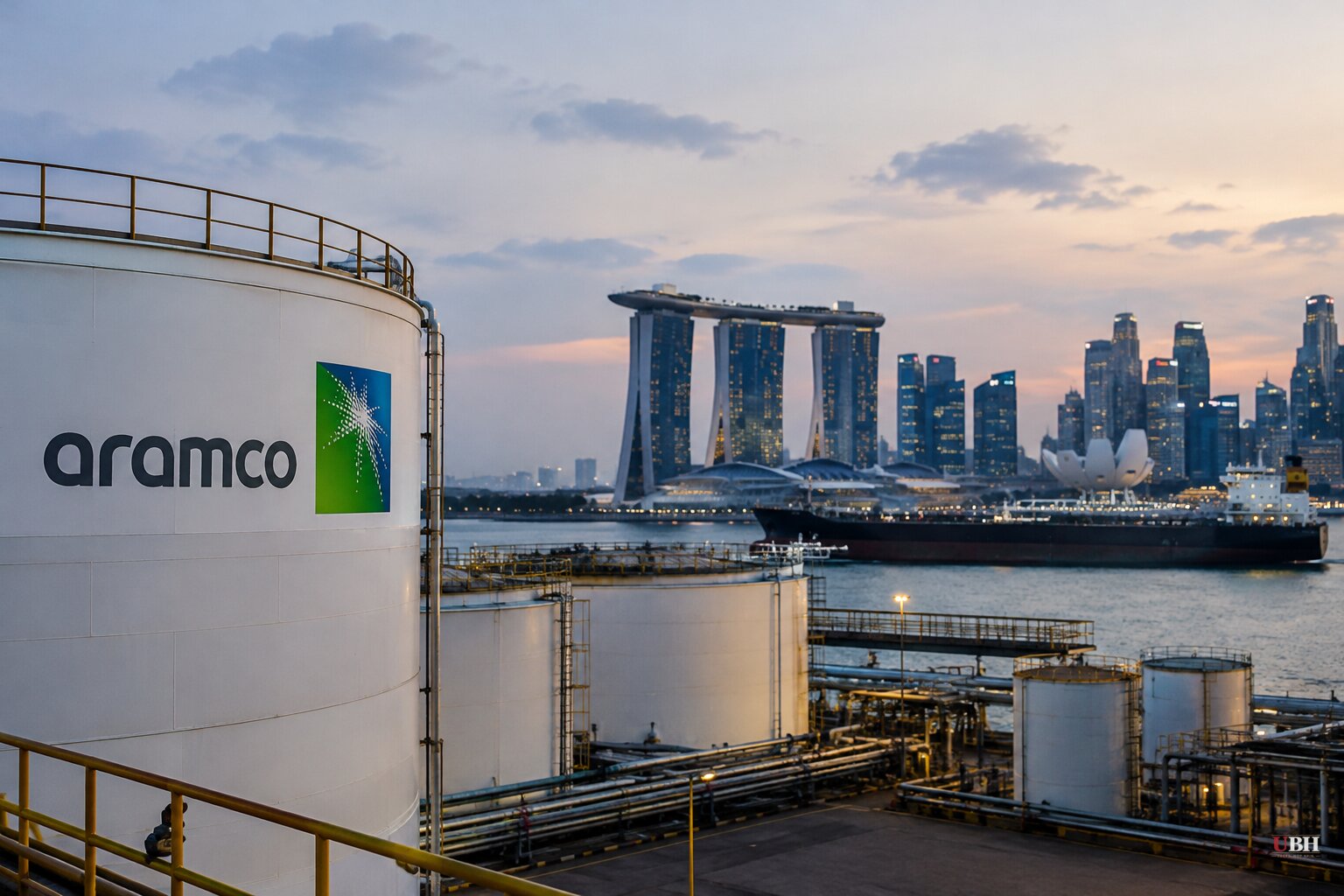
Singapore's Ministry of Energy, Trade and Industry and Saudi Arabia's Ministry of Energy announced today, Oct. 26, that they intend to set up a crude oil storage facility on Jurong Island. Saudi Aramco is expected to begin storing oil in the Jurong Rock Caverns in the second half of 2027.
The Energy Market Authority and JTC Corporation signed a memorandum of understanding with Aramco during Singapore International Energy Week. The two governments said the stored crude would support Singapore's energy security during supply disruptions and make Aramco's supply chain in Southeast Asia more resilient.
An MoU is a statement of intent, not a finished facility. The oil is still roughly a year away.
Aramco wants more storage abroad
The Singapore deal follows remarks by Aramco CEO Amin Nasser in an Oct. 22 interview with Al Arabiya Business TV. Nasser said the company and the Kingdom are seeking partnerships with other countries to expand strategic oil reserves.
His reasoning: global oil demand could jump by 3 million barrels per day once the war's disruptions end. Nasser said that recovery depends on how the situation in the Middle East evolves.
Aramco has not said which other countries it is talking to, how much crude it wants to store, or when those deals might close.
Output still far below pre-war levels
The International Energy Agency's data shows Saudi production stayed below 7 million barrels per day for much of the first six months of the war. Before fighting began, the Kingdom produced more than 10 million. It recovered to nearly 8 million in September.
Nasser said Aramco can respond to damage to its facilities more than six times faster than the industry average. He credited inspection drones and a supply chain in which about 90% of repair materials are made in Saudi Arabia or held in the country. Those are the company's own claims.
Houthi strikes continue
The attacks put direct pressure on Saudi infrastructure. The Houthis of Yemen have fired waves of missiles and drones at Saudi airports and oil facilities. In one earlier wave, Saudi officials said the top three floors of Aramco's headquarters in Dhahran were damaged, including offices used by Nasser and other executives. The Saudi energy ministry said a fire broke out on the upper floors.
Sources in Saudi Arabia told Reuters the building has not been abandoned, though some functions moved to other offices and some employees were told to work from home.
Over this past weekend, the Houthis said they struck pumping stations on Saudi Arabia's East-West crude pipeline and Riyadh airport. Saudi Arabia said on Sunday it intercepted more missiles and drones.
Houthi military spokesman Yahya Saree called the strikes a "harsh and painful" response to Saudi airstrikes in Yemen. He said operations "towards Saudi depths will continue in the coming days, targeting Saudi enemy airports and oil facilities."
Senior Houthi official Mohamed al-Bukhaiti told the Associated Press the group would discuss a ceasefire, possibly with Oman mediating. His conditions: Saudi forces withdraw from Yemen and Riyadh ends economic pressure on the movement. "We're ready for a comprehensive end of the war and the blockade from both sides, not just a temporary ceasefire," he said.
The AP noted that Saudi Arabia is also hitting oil targets in Yemen, including a fuel depot near Sanaa that Saudi forces allege was supporting military operations.
Ahmed Nagi of the International Crisis Group told the AP that both sides are using similar strategies. "The Houthis are betting on pressure, while the Saudis are betting on time," he said.
Oil prices stay elevated
Brent crude futures were down $2.03, or 1.7%, at $114.70 a barrel at 10:37 a.m. ET today. West Texas Intermediate was down $2.60, or 2.5%, at $100.71.
Prices fell on hopes of easing hostilities between the United States and Iran. They stayed near six-month highs because of the attacks on Saudi Arabia. On Friday, prices settled more than $3 higher. Brent finished last week up 6% and WTI up 2.3%.
PVM Oil Associates analyst John Evans said any dip toward last week's lows "will find grateful buyers." He added that this correction has "nowhere near reached any sort of levels where bulls might abandon hope."
Mediation and shipping risk
Qatari mediators traveled to Tehran on Sunday to try to de-escalate tensions in coordination with the United States, according to an official briefed on the matter. Saudi Arabia, along with Turkey and Pakistan, was set to hold talks with Iranian officials in Tehran. Riyadh said it was important to open channels for negotiations.
The U.S.-Israeli war with Iran began Feb. 28. Shipping through the Strait of Hormuz and the Bab el-Mandeb Strait remains disrupted. According to the Washington Institute for Near East Policy, which has tracked maritime security incidents since 2017, October has been the worst month for attacks on commercial shipping in the Strait of Hormuz and nearby waters.
An oil spill from a strike-damaged tanker off the coast of the United Arab Emirates has widened, according to satellite images, forcing more beach closures. IEA head Fatih Birol reiterated supply concerns today.
The Tehran talks involving Saudi Arabia, Turkey and Pakistan are the next test of whether the attacks on Saudi energy infrastructure ease. Aramco's Singapore storage will not receive its first crude until the second half of 2027.
Sources used for this briefing
7 links from 7 independent newsrooms (syndicated copies of the same report count once)
These are the sources it draws on, linked so you can verify.


