
Unbiased headlines. Facts, not spin.
Unbiased Headlines is an independently owned news organization. We bring you the facts, not opinions, written fresh from 110+ named sources. Sources linked so you can verify it yourself.
 energy
Major Story (8/10)
IEA's Birol Repeats Warning as Brent Holds Near $115; Dakar Rally Pulled From Saudi Arabia
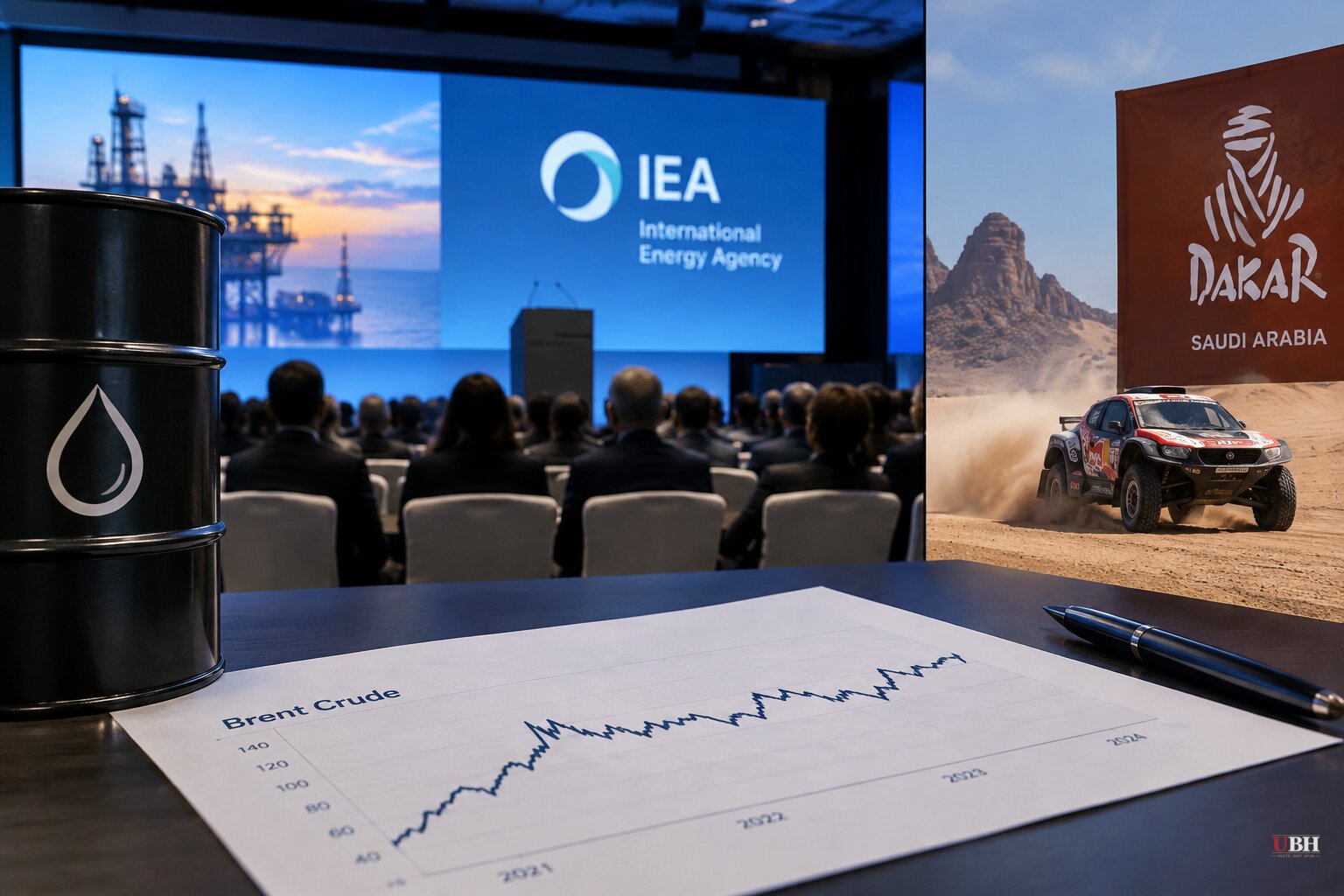
Since the Iran war began in late February, energy markets have not returned to normal, and the weekend added two new data points: oil near its six-month high and the Dakar Rally leaving Saudi Arabia.
On Monday, Oct. 26, International Energy Agency executive director Fatih Birol told the Singapore International Energy Week conference that he does not expect 2027 to look like the period before the war. "I am afraid I don't see any credible pathway that the markets will go next year, where we were before this war has started," he said.
That repeats the message he gave remotely to an investment summit in Istanbul on Friday, Oct. 23, where he said he was "not optimistic about normalization in 2027."
Oil prices and the diesel problem
Brent crude futures hit as high as $117 a barrel on Friday after more Houthi attacks in Saudi Arabia. That was the highest level in nearly six months. The contract eased to about $115 on Monday, still roughly 59% above its pre-war level.
"Oil prices are flirting with $120 a barrel and the prices for products are even much higher," Birol told a press conference. He declined to forecast where crude goes next.
He said near-$120 oil is "having a major impact on trade deficits" in many parts of the world. For some countries, Europe among them, he said the price is "maybe not so high and affordable" a burden.
His bigger worry is refined fuel. Diesel prices have roughly doubled from pre-war levels, Birol has said, owing mainly to the Iran war and partly to attacks on Russian refineries. Winter normally pushes diesel demand up, and several large refineries are scheduled for maintenance.
In California last week, on Oct. 21, diesel was posted at $7.69 a gallon at a station outside Taft in Kern County.
Gas, reserves and nuclear
Europe faces a hard winter on gas, Birol said. European countries have chosen to cut Russian gas imports. Qatar and the United Arab Emirates cannot export gas as they did before the war.
On emergency stocks, Birol has said IEA members agreed in March to release 400 million barrels and hold roughly 1.6 billion barrels in reserve. The agency's 32 members, he said, "will not hesitate to look into the option of releasing further stocks" if needed.
He also predicted a "strong comeback" for nuclear power. An IEA survey found 90 gigawatts of nuclear capacity under construction, the highest in four decades.
There is a counterpoint in the flow data. A recent Kpler reading put the seven-day average of oil leaving the Middle East, including via Hormuz, the Red Sea and the Gulf of Oman, above its pre-war average at just over 24 million barrels a day. Tanker crossings of the Strait of Hormuz remain well below pre-war levels, but restored Saudi pipeline exports have helped keep a lid on prices.
Birol called judging the crisis by crude alone "myopic," noting that crude has not reached the $200 some analysts predicted at the start of the war. "We don't use crude oil, we use products," he said.
Peter McGuire, Australia CEO of Trading.com, told Times Now Digital that Asian energy markets "give off some steam" Monday as President Donald Trump ruled out any imminent military strikes on Iran. Brent was still above $110 a barrel.
Dakar Rally leaves Saudi Arabia
The Amaury Sport Organisation and the Saudi Motorsport Company said in a statement on Sunday, Oct. 25, that the January 2027 Dakar Rally will be held "in a different territory" because of "recent developments in the region." A new location will be announced in the "coming days."
Organisers plan a return to Saudi Arabia in 2028 for the rally's 50th edition. Specialist race media have reported Morocco and Spain as options. A Moroccan route would put the Dakar in Africa for the first time since 2007.
Organisers had hoped to keep the race in the country with a new northern route. That became impossible after a series of attacks this month on King Khalid International Airport in Riyadh. The attacks killed 18 people and injured hundreds more. Fighting between Yemeni government forces and Houthi fighters has also intensified on multiple fronts.
Other events have already been displaced this year:
- The Formula One grand prix in Jeddah was cancelled.
- The Bahrain race was called off and rescheduled under the same name in Malaysia.
- The final World Rally Championship round in Saudi Arabia next month has been scrapped.
- The WTA Finals, due in Riyadh next month, move to Indian Wells, California.
- An exhibition tennis event featuring Novak Djokovic, Carlos Alcaraz and Alexander Zverev is postponed to late December.
- Saudi Arabia called off its flagship investor conference a week before it was due to begin.
The F1 races in Qatar on Nov. 29 and Abu Dhabi on Dec. 6 remain on the calendar, as does the Qatar MotoGP round next month. All three are the subject of intense internal debate, according to Al Jazeera.
The next concrete marker is the Dakar organisers' announcement of a replacement host, due within days. The Qatar and Abu Dhabi decisions come before the end of the F1 season.
Sources used for this briefing
8 links from 7 independent newsrooms (syndicated copies of the same report count once)
These are the sources it draws on, linked so you can verify.


