
Unbiased headlines. Facts, not spin.
Unbiased Headlines is an independently owned news organization. We bring you the facts, not opinions, written fresh from 110+ named sources. Sources linked so you can verify it yourself.
 energy
Major Story (8/10)
Event date: October 19, 2026 ·
Brent Slips to $115.16 in Early Asian Trading as Houthis Say They Hit Saudi Airport and Oil Facilities
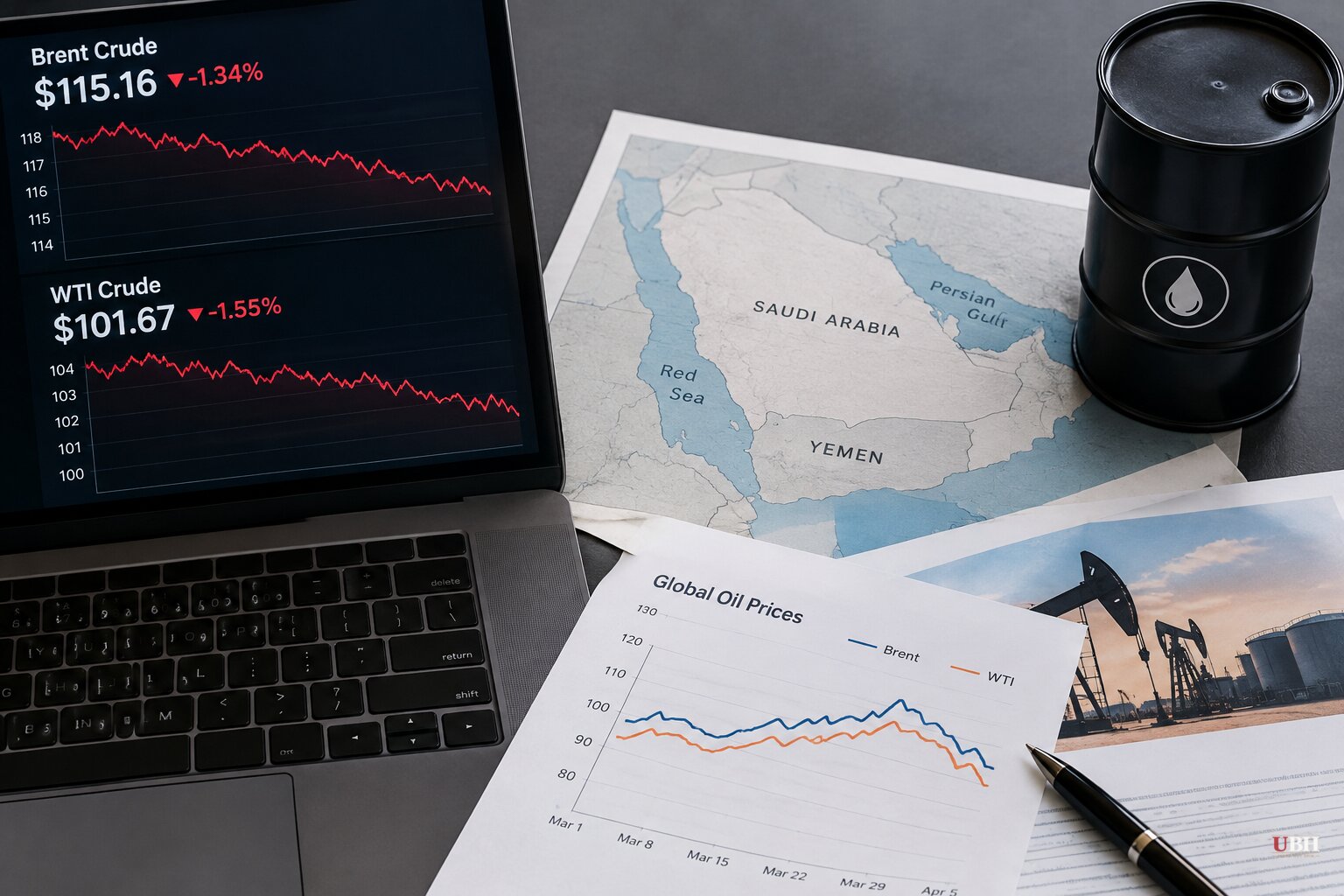
Since Brent climbed about 6% last week to its highest level in six months, the market has turned to a weekend of fresh attacks on Saudi Arabia and a sharper public debate over Iran. In early Asian trading, at 0018 GMT Monday, Brent futures were down $1.56, or 1.34%, at $115.16. US crude futures were down $1.60, or 1.55%, at $101.67.
Those figures are a pullback from Friday, when prices settled nearly $3 higher after Houthi attacks in Saudi Arabia stoked energy supply concerns. They are not a reversal. Brent finished last week up 6% and WTI up 2.3%.
Houthi attacks on Saudi Arabia continue
The Houthis said they attacked a Saudi airport and oil facilities on Saturday. They also said they hit Riyadh's King Khalid International Airport in response to Saudi airstrikes in Yemen.
Saudi Arabia said on Sunday that it intercepted more missiles and drones. The kingdom restarted partial operations at its main airport that same day, after damage from an earlier round of Houthi attacks. The Houthis have vowed to keep targeting the facility.
Trump, Tehran and the midterm calendar
Trump said in a Fox News interview that the time is approaching to decide whether to make a deal with Iran or pursue a military response. He has also suggested he could resume attacks on Iran after the midterm elections on Nov. 3, according to Bloomberg.
Iranian Foreign Minister Abbas Araghchi pushed back. He said the US would not attempt an attack if it acted rationally.
Bloomberg also reported that the US has expanded the withdrawal of diplomatic personnel from across the region, and that Iran is reportedly preparing retaliation against Israel and the United Arab Emirates. That second claim is unconfirmed.
AJ Bell's head of financial analysis, Danni Hewson, cited speculation of renewed US-Israeli strikes after the midterms. Jorge Leon, head of geopolitical analysis at Rystad Energy, said the market is pricing in the risk of heightened military tension after the election. Even if supply improves, he said, that risk could keep crude elevated.
How far analysts say this can run
Brent is up about 90% this year. Its 14-day relative strength index rose above 74 on Oct. 23, and a reading above 70 is generally treated as overbought.
Vivek Dhar, an analyst at Commonwealth Bank of Australia, said prices need to reflect the risk of supply disruption from broader fighting in the Middle East. He said Brent may need to reach $150 a barrel before demand weakens sharply in emerging Asian economies.
A move toward de-escalation could cut the other way. Analysts cited by Times of India said a credible step in that direction could trigger a sharp correction. They also said disruption to energy facilities or shipping through the Strait of Hormuz could push Brent toward $120.
Ajit Mishra, senior vice president of research at Religare Broking, called the near-term bias bullish but highly headline-driven. He advised traders not to chase sharp rallies.
Supply and spillover
The International Energy Agency's October Oil Market Report said global supply rose in September but that renewed hostilities have threatened the recovery of Middle Eastern output. The agency said higher freight and crude procurement costs have squeezed refinery margins. It also said interruptions to fuel exports have tightened diesel and other refined product supplies.
The energy squeeze has reached importers. Pakistan's benchmark KSE-100 fell 2,006.67 points, or 1.21%, to 163,924.32 on Thursday, Oct. 22. Market reports linked part of the drop to oil prices and geopolitical tension. Pakistan relies heavily on imported petroleum and LNG.
In Europe, the FTSE 100 fell 0.5% to 10,699.33 on Oct. 22, with energy stocks benefiting from higher oil.
Higher energy prices have also fueled concerns over inflation and the outlook for interest rates. US stock futures declined on Friday as energy prices rose.
What comes next
The US Federal Reserve's upcoming policy decision is another factor investors will watch as crude enters a potentially volatile week. The Nov. 3 midterms are the date Trump's Iran comments and market pricing are now tied to.
The Houthis have said they will keep targeting the Saudi airport. Another strike on it or on oil infrastructure would test whether Monday's modest pullback holds.
Sources used for this briefing
7 links from 7 independent newsrooms (syndicated copies of the same report count once)
These are the sources it draws on, linked so you can verify.


