
Unbiased headlines. Facts, not spin.
Unbiased Headlines is an independently owned news organization. We bring you the facts, not opinions, written fresh from 110+ named sources. Sources linked so you can verify it yourself.
 energy
Major Story (7/10)
Democrats Send Document-Preservation Letters to Big Banks and Ports Over Trump's Russian Diesel Deal
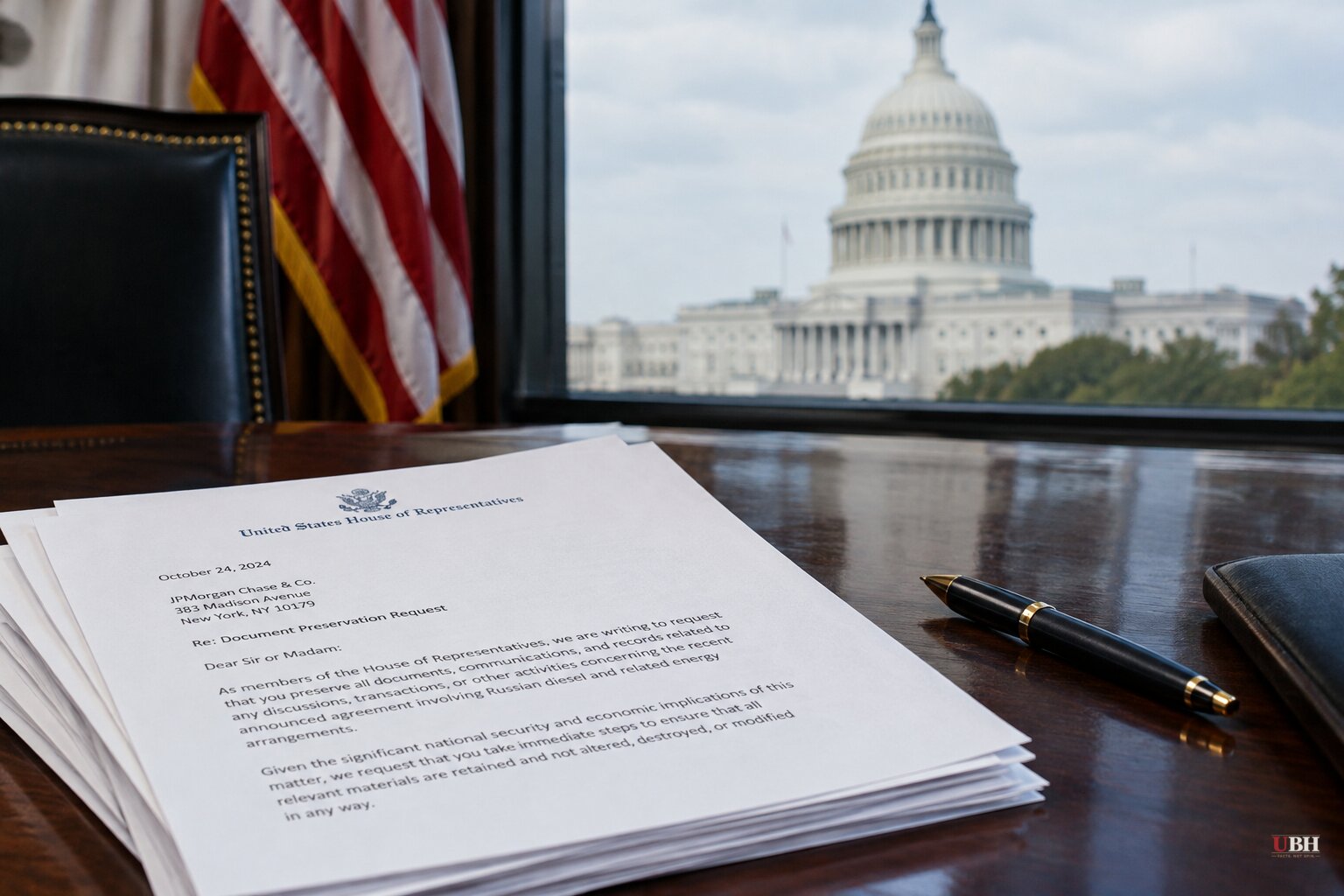
Since Trump announced the Russian diesel deal on Oct. 9, the fight over it has moved from statements to subpoena groundwork. Democrats in both chambers have sent letters to major banks and port operators asking them to preserve every document tied to the arrangement.
The letters are dated Saturday, Oct. 24, and were made public today, Oct. 26. Recipients include JPMorgan Chase, Bank of America, Citigroup and Morgan Stanley. The port list includes the Port Authority of New York and New Jersey and the Texas ports of Houston, Beaumont and Corpus Christi.
Who signed
Sens. Chris Coons, Elizabeth Warren and Ron Wyden signed, along with Rep. Gregory Meeks.
Each holds a post that matters if the midterms go their way. Coons is positioned to chair the Senate Foreign Relations Committee if Democrats take the chamber. Warren is the lead Democrat on Banking, and Wyden holds the equivalent post on Finance. Meeks would likely lead House Foreign Affairs.
"The potential arrangement to import Russian diesel also raises significant national security concerns, given that it would finance Russia's brutal and illegal war against Ukraine," the lawmakers wrote. They added that any importation "raises significant legal questions and may be subject to legal action, as well as congressional" investigation.
Axios reported that the letters also urge the companies not to facilitate shipments, including to other markets. Axios also reported that Democrats see probing the administration's Russia dealings as a potential top priority if they win control of Congress. Midterm elections are Nov. 3.
What the deal is
Trump announced the agreement on Truth Social after a call with Vladimir Putin on Friday, Oct. 9. He said more than 300,000 tons of diesel would ship immediately, another 500,000 tons in November and a million tons in December. He said Russia could deliver another 3 million tons starting next year, depending on the condition of its refineries.
The Treasury Department issued a temporary license suspending certain sanctions so Russian export shipments can begin. Russian Deputy Prime Minister Alexander Novak has said Russia is ready to supply any volume of diesel for export.
The U.S. retail diesel average stood at $6.28 a gallon on Oct. 9, according to the Energy Information Administration. Trump promised prices would come down "IN RECORD NUMBERS, AND FAST."
The administration's case
The White House pitch is lower prices. Trump told reporters the fuel is "going to be released into the world for the world market because the world market suffers with high prices." He has said the Russian diesel does not have to land in the United States to help American consumers.
That framing sits awkwardly with the Democrats' letters, which are aimed at imports into U.S. ports and at the banks that would finance them. The administration has also pitched the deal as a way to show Russia the economic benefits of better relations with Washington.
Opposition is not only Democratic
On Oct. 11, Republican Sens. Susan Collins, Lisa Murkowski, Thom Tillis and John Curtis joined Democrats Jeanne Shaheen, Richard Blumenthal and Ron Wyden in a statement demanding Trump "immediately reverse course." They argued the deal runs against the 2022 law banning Russian energy imports. They also said the administration did not consult Congress or submit the explanation the statute requires.
Tillis went further on NBC's Meet the Press. Asked whether Trump is breaking the law, he said, "I believe that he may be." He added: "I do believe there's a legitimate case for saying the president's not following the law." Host Kristen Welker noted the Senate passed the 2022 ban 100 to 0.
Skepticism about the economics is also coming from the Russia hawks. John Hardie, deputy director of the Russia Program at the Foundation for Defense of Democracies, told Fox News Digital that easing pressure on Moscow before securing a reciprocal energy ceasefire "could encourage Putin to hold out for further concessions." He said the arrangement would be easier to defend as part of a mutual truce on energy infrastructure strikes. In his account, Trump instead pressed Ukraine to halt its refinery strikes without getting matching restraint from Putin.
Energy analysts have also questioned whether the volumes involved would meaningfully move prices. Fox reported that Russia continued striking Ukrainian energy infrastructure after Trump declared an energy ceasefire.
What remains open
A preservation letter is not a subpoena, and the signers have no power to compel anything today. No charges have been filed, and no court has ruled on whether the Treasury license complies with the 2022 ban.
The legal question Tillis and Shaheen raised, whether the administration needed to go through Congress first, is unresolved. So is whether the banks and ports will ever be asked to hand over what they are now being told to keep. That depends largely on who controls the committees after Nov. 3.
Sources used for this briefing
7 links from 6 independent newsrooms (syndicated copies of the same report count once)
These are the sources it draws on, linked so you can verify.


