
Unbiased headlines. Facts, not spin.
Unbiased Headlines is an independently owned news organization. We bring you the facts, not opinions, written fresh from 110+ named sources. Sources linked so you can verify it yourself.
 health
Major Story (8/10)
Event date: September 4, 2026 ·
health
Major Story (8/10)
Event date: September 4, 2026 ·
China Fines and Detains At Least 10 People Over Social Media Posts Questioning Flood Death Toll
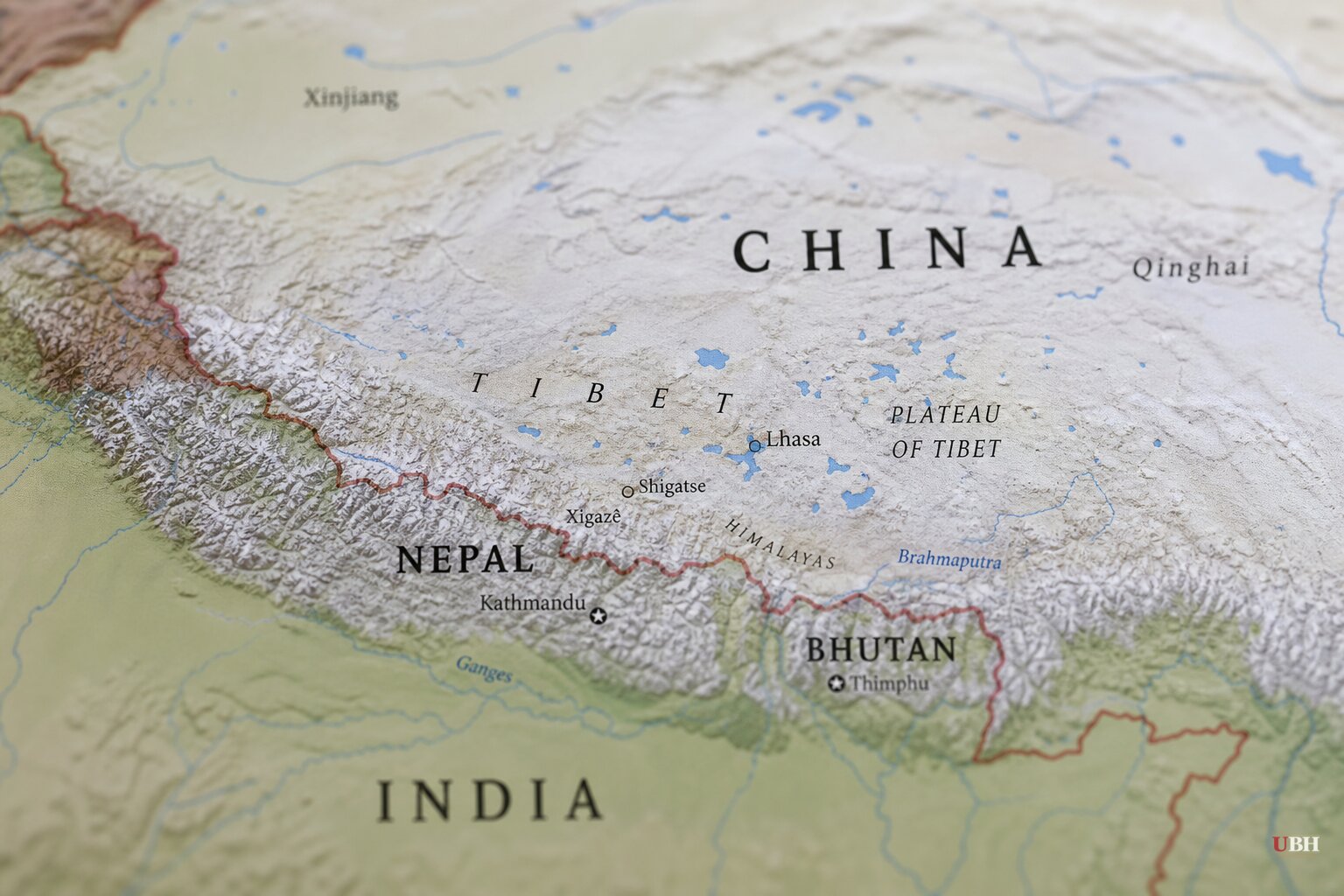
Since flash floods tore through the Nepal-China border on Aug. 26, killing more than 1,300 people and leaving nearly 5,000 missing on the Nepali side, the gap between how the two governments have handled the disaster has only widened. Nepal's death toll has held above 1,300. China's official figure, as of the most recent count reported by NPR, sits at just over 40 dead and more than 500 missing in Tibet's Gyirong County.
Beijing is enforcing that gap in a new way. According to the Associated Press, as carried by Breitbart, at least 10 people across China have been detained or fined for social media posts that questioned the government's official account of the disaster. China's death toll has been updated only once every few days, most recently rising from 21 dead and 541 missing on a Wednesday update to 31 dead and 531 missing by the following Friday, before climbing past 40 in subsequent counts.
Two governments, two playbooks
Nepal published lists of names, ages and nationalities of missing foreigners within days of the collapse, according to NPR. The Nepalese army posted footage of helicopter rescues and pulled survivors from hydropower tunnels on camera. Journalists, domestic and foreign, were allowed into disaster zones, mass burial sites and government aid camps, according to Breitbart's reporting on the AP account, with the main restriction being a journalist accreditation requirement.
China took five days just to disclose that the 261 foreigners missing in Tibet came from 23 countries, NPR reported. Access to Gyirong County has been restricted almost entirely to Xinhua News and CCTV, China's two state media outlets. It took more than a week of repeated requests from multiple international outlets before Beijing allowed any foreign journalists in, and even then, only a small, carefully arranged group got access. NPR said it was not among them.
"Xinhua and CCTV have total information dominance," David Bandurski of the Taipei-based China Media Project told NPR, adding that these outlets are expected to "guide public opinion." Bandurski said censorship controls in China have tightened over the last decade to levels he called "unprecedented."
What rights groups are alleging, and what's unproven
Ryan Fioresi of the DC-based International Campaign for Tibet told NPR that Tibetans in the worst-hit areas were relocated to "tightly controlled holding areas" with communications to the outside world "extremely limited and curtailed," which he said is hampering rescue efforts. Fioresi also said the real casualty count in Tibet could be "much higher" than the dozens Chinese officials have reported.
Those are allegations from an advocacy group focused on Tibetan rights. No outlet in these sources has confirmed an alternative death toll for the Chinese side of the border, and China's closed information environment makes independent verification difficult by design, which is the core of the complaint from groups like ICT.
China's government disputes the characterization entirely. Foreign ministry spokesperson Guo Jiakun told reporters in Beijing, per NPR, that China has been "open, transparent and timely in information release," and said "smear and disinformation is most unwelcome at a time of disaster response." China's foreign ministry did not respond to NPR's separate request for comment on the specific claims from Fioresi and Bandurski.
Where coverage diverges
The Epoch Times went further than the wire reporting, framing Beijing's conduct as a five-decade governance pattern of treating disasters as political threats rather than humanitarian ones, and noted Chinese state media and the Chinese Embassy in Kathmandu quickly blamed the glacier collapse's origin on the Nepali side of the border before independent seismic analysis was complete. That framing is the outlet's own interpretation of Beijing's motives, not a claim attributed to a named on-the-record source in the same way Bandurski's or Fioresi's comments are.
Separately, on the physical cause of the disaster itself, the U.S. Geological Survey revised its initial read of a 4.4-magnitude earthquake, concluding after reviewing seismic and satellite data that no earthquake occurred at all. The signal came from a glacier and rock collapse that registered as a magnitude 5.2 event, according to Fox News' reporting on USGS and the Kathmandu-based International Centre for Integrated Mountain Development, which said Trishuli River water levels rose 27 feet in a half hour.
No independent journalist or humanitarian group has been granted unrestricted access to Gyirong County, so there is no way for outside observers to confirm or refute China's death toll, the fate of the roughly 500 people it still lists as missing, or Fioresi's claim about relocated Tibetans. The U.S. State Department has said it deployed a disaster response advisor to the region and pledged $500,000 in relief funding through Catholic Relief Services. Whether that assistance extends to families still waiting for information on the Chinese side is not addressed in any of the current reporting.
Sources used for this briefing
7 links from 5 independent newsrooms (syndicated copies of the same report count once)
These are the sources it draws on, linked so you can verify.


