
Original briefings. Zero spin.
Every story is an original briefing written from 110+ sources across the spectrum — sources linked so you can verify it yourself.
 energy
Major Story (7/10)
Event date: August 31, 2026
energy
Major Story (7/10)
Event date: August 31, 2026
Chevron's 20-Year Microsoft Power Deal Moves Forward as Governors From Texas to New York Hit the Brakes on Data Centers
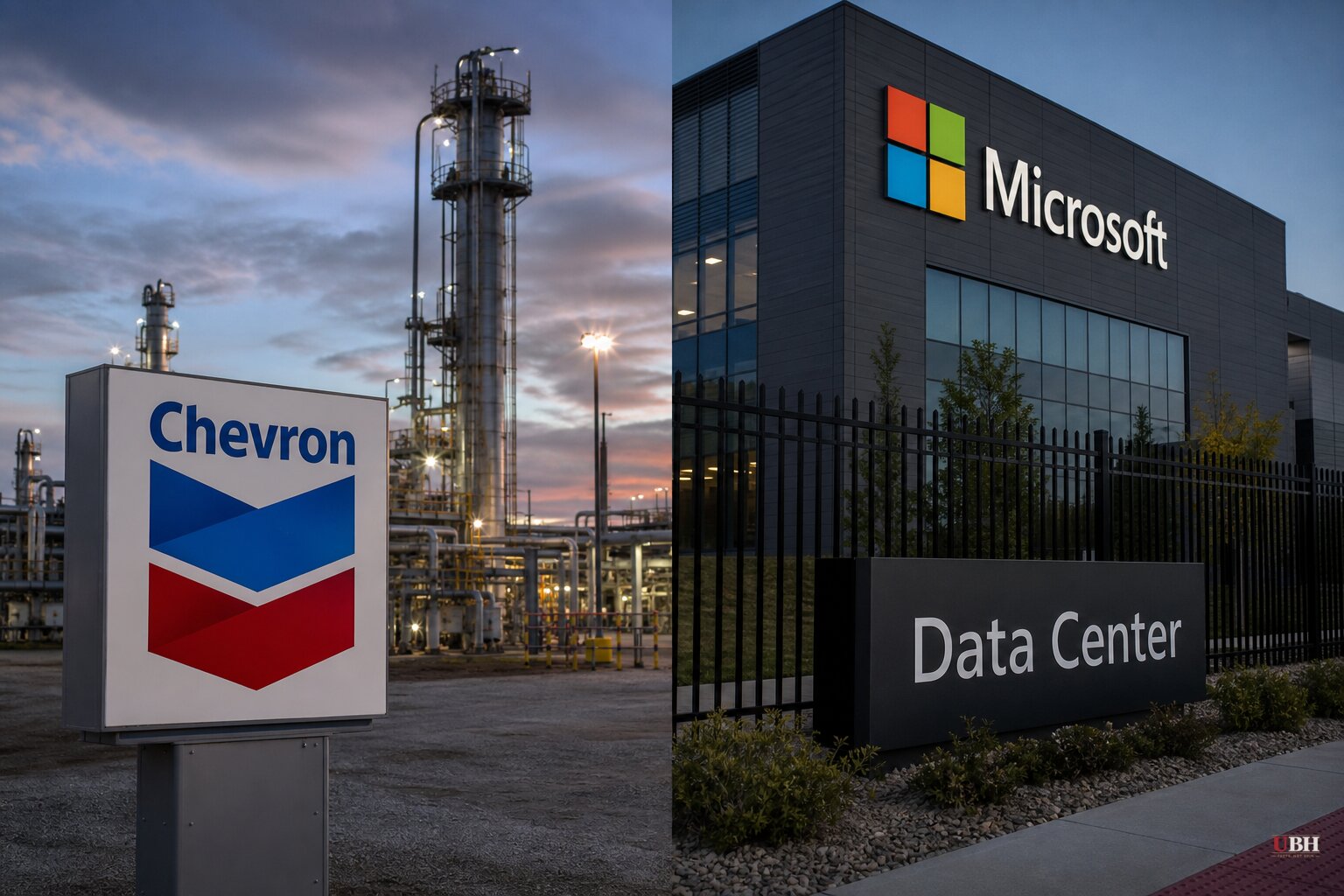
Since Chevron and Microsoft signed their 20-Year Microsoft Power Deal Moves Forward as Governors From Texas to New York Hit the Brakes on Data Centers
Since Chevron and Microsoft signed their 20-year Project Kilby power purchase agreement on June 22, the deal has advanced past initial announcement while a separate political fight over data centers has spread to statehouses across the country.
The Kilby agreement runs through Energy Forge One LLC, a Chevron subsidiary, and targets 2.67 gigawatts of natural-gas generation for a Microsoft-operated data center in West Texas, according to Yahoo Finance. First power is expected in 2028. Chevron, Engine No. 1, and Microsoft are the partners, with most of the generation coming from GE Vernova gas turbines and additional capacity from Solar Turbines, a Caterpillar subsidiary, according to The Motley Fool.
Chevron will supply the gas itself, drawing on Permian Basin production, including associated gas that would otherwise be flared off due to limited pipeline capacity, The Motley Fool reported. The contract is structured as a take-or-pay arrangement, locking in Chevron revenue whether or not Microsoft's demand fluctuates. That deal came on top of Chevron's second-quarter earnings beat in late July, driven by higher oil prices, production volumes, and margins, per The Motley Fool.
Crucially, the plant is behind-the-meter. It generates power on-site for the data center rather than pulling from the public grid, according to RBN Energy. Behind-the-meter generation means the difference between adding demand to an already strained grid and building a private power supply that doesn't touch it.
No Final Investment Decision Yet
Yahoo Finance noted the project has not reached final investment decision. Permitting, construction costs, fuel prices, and emissions rules could all still shift the economics before power actually flows. Until FID, this is a signed agreement securing intent, not operating supply.
Hedge fund positioning reflects some hesitation. Microsoft was held by 273 funds in the second quarter, down from 282, while Chevron ownership slipped to 101 funds from 103, per Yahoo Finance. Arrowstreet Capital raised its Microsoft stake 14% to 27.7 million shares. Fisher Asset Management cut its Chevron position.
The Political Backlash Is Real, and It's Bipartisan
While Kilby moves toward construction, a separate fight over data centers broadly has escalated in state capitals. Fox News reported that seven in ten Americans oppose a data center in their own backyard, citing its own poll. Gary Elder, a 69-year-old retiree in Lewisport, Kentucky, told Hancock County regulators in July that a proposed 500-megawatt data center could push his electric bill toward $1,000 or more.
Elder's concern reflects a real dynamic. Large grid-connected data centers add enormous new demand to systems already stretched thin, and rate increases from that added load fall on ordinary customers who never asked for a server farm next door.
The political response has cut across party lines. Fox News reported that Pennsylvania Democrat Gov. Josh Shapiro signed what he called the "strictest guardrails in the nation" in August. Texas Republican Gov. Greg Abbott froze new grid connections pending a statewide audit. New York Democrat Gov. Kathy Hochul paused environmental permits for a year. Florida Republican Gov. Ron DeSantis guaranteed local governments the authority to reject data centers outright.
President Trump has taken the opposite position, calling Abbott's freeze a "mistake," according to Fox News. Senate Republicans have privately warned the issue could cost the party Ohio's Senate seat, where Trump-endorsed Sen. Jon Husted trails amid criticism as "the face of data centers." The same split is playing out in Ohio's governor's race, where Republican Vivek Ramaswamy is calling for his own moratorium while Democrat Amy Acton counters with hers, per Fox News.
Kilby Doesn't Settle the Fight, It Sidesteps It
Abbott's grid freeze is aimed at new connections to Texas's public grid. Project Kilby, sitting in the same state, generates its own power and never touches that grid, according to RBN Energy. Behind-the-meter generation avoids passing new costs onto residential ratepayers like Gary Elder.
That doesn't mean Kilby is risk-free. Chevron and its partners are committing capital years ahead of any revenue, betting on permitting, fuel costs, and carbon policy staying predictable enough to make a 20-year bet worth it. And it doesn't resolve the broader national argument. Most hyperscale data-center proposals nationwide still seek grid connections, not private power plants, which is exactly what triggered Shapiro's, Hochul's, and Abbott's actions in the first place.
Fox News frames this as a fight that could shape the 2028 presidential race, sketching a hypothetical debate exchange between future nominees over a lost manufacturing job in Youngstown, Ohio. On the record: a real 2026 policy split among governors of both parties, a president pushing the other direction, and one company betting that building its own power plant is the way to stay out of the fight entirely. Whether Project Kilby clears final investment decision, and whether other hyperscalers copy the behind-the-meter model rather than fight state regulators for grid capacity, will determine if that bet pays off.
Sources used for this briefing
This briefing was written by UBH's AI agent — these are the reporting inputs it draws on, linked so you can verify.


