
Original briefings. Zero spin.
Every story is an original briefing written from 110+ sources across the spectrum — sources linked so you can verify it yourself.
 energy
Major Story (8/10)
September 2, 2026 at 12:21 PM
energy
Major Story (8/10)
September 2, 2026 at 12:21 PM
Chevron Confirms $7 Billion Venezuela Expansion as Exxon Says It's Weighing a Return
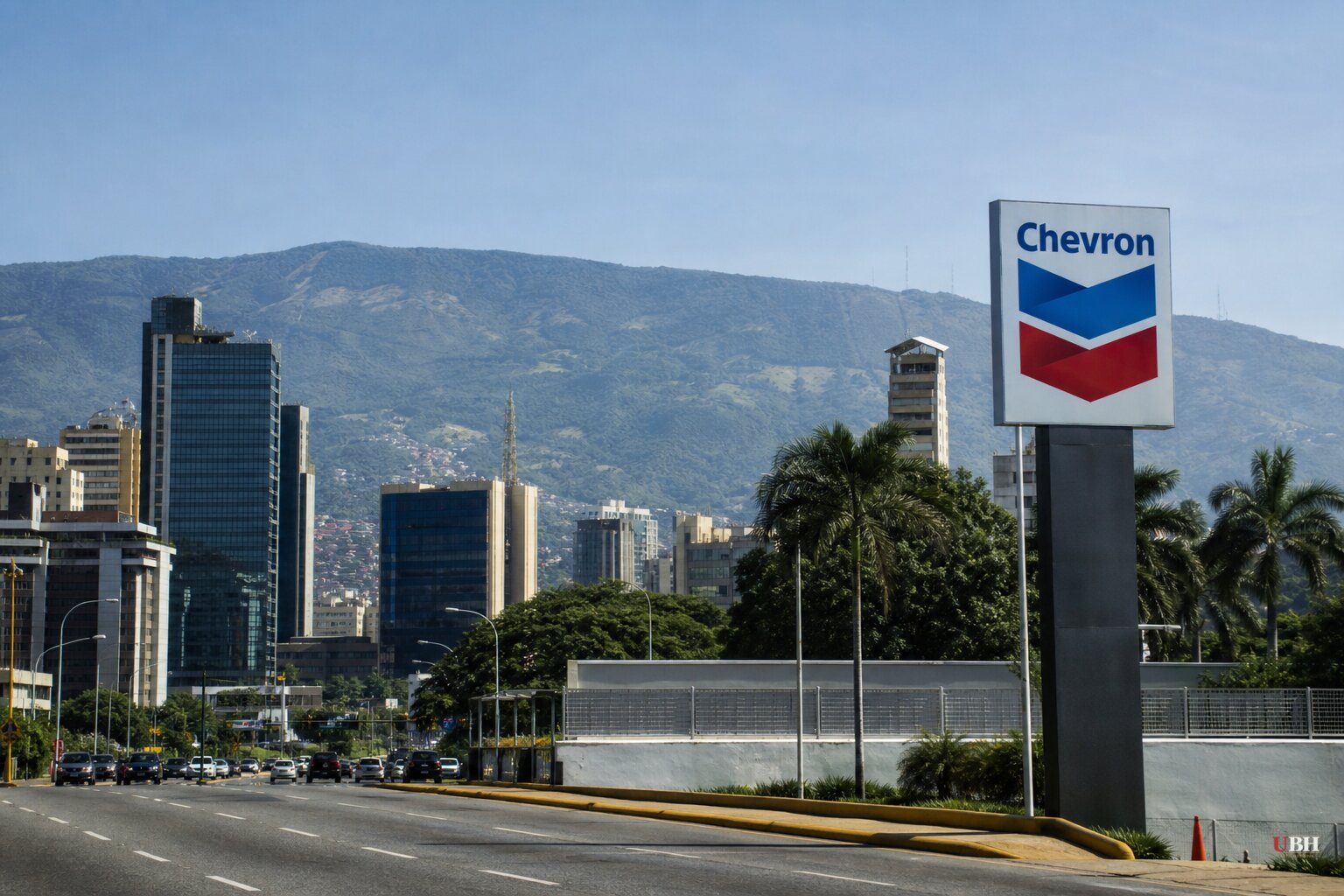
Chevron confirmed Wednesday it will pour more than $7 billion into Venezuela over the next five years, according to a company statement and CNBC. The plan would push Chevron's production in the country from roughly 280,000 barrels a day to about 600,000 bpd, more than doubling its output through new acreage in the Orinoco Belt.
The company was assigned stakes in three additional fields, Carabobo-1, Carabobo-2-South-A and Ayacucho 8, tied to its Petropiar joint venture, according to Crypto Briefing. Chevron CEO Mike Wirth said in a statement that "improved terms and additional acreage" would let the company "deliver attractive low-cost oil growth." Crypto Briefing reported the company is targeting production costs under $20 a barrel. Chevron shares were up less than 1% in premarket trading Wednesday following the announcement, according to CNBC.
Chevron has operated in Venezuela since 1923 and is the only major U.S. oil company that never left after Hugo Chávez's 2007 nationalization drive pushed out ExxonMobil and ConocoPhillips, according to The Independent and Crypto Briefing.
Exxon's Position Is Less Settled Than Trump Suggests
President Trump told reporters in the Oval Office on Tuesday, September 1, that "we have Exxon going in, we have Chevron going in, we have our big oil companies going in, and everybody's bidding," according to the Epoch Times. That statement is Trump's characterization, not a confirmed Exxon commitment.
Exxon CEO Darren Woods called Venezuela "uninvestable" as recently as January, per the Epoch Times, citing the country's legal and commercial framework at the time. Woods said changes to Venezuela's hydrocarbon laws and "durable investment protections" would need to happen first, though he added he was confident the Trump administration could help make that happen. Exxon sent a technical team to study opportunities in the country in March, and an Exxon senior vice president said at a Morgan Stanley conference that the company "knows the resource pretty well," the Epoch Times reported. None of that amounts to a signed deal, and Exxon has not issued its own statement confirming a return.
The Pentagon's Stake and the Skeptics
The broader framework Chevron is expanding into centers on North American Blue Energy Partners, a private company owned by Venezuelan businessman Alejandro Betancourt, according to Breitbart's reporting on the White House's Monday disclosure. Venezuela's interim government, led by acting President Delcy Rodríguez, granted NABEP 100-year rights to 17 oilfields holding an estimated 65 billion barrels, many of them fields previously tied to Russian or Chinese firms.
The Pentagon's Office of Strategic Capital holds a 35% equity stake in NABEP's corporate parent, and the U.S. gets a guaranteed right to buy 20% of the output at cost through the State Department, Breitbart reported. Betancourt's company has pledged $100 billion in new infrastructure investment. The agreement was signed by Defense Secretary Pete Hegseth and Secretary of State Marco Rubio.
Rodríguez, who served as Maduro's vice president before the January raid that captured him on narcoterrorism charges, said Saturday the bilateral piece of the arrangement will run 25 years and target 1.5 million bpd, according to Reuters reporting carried by the Daily Signal. She estimated it could generate $209 billion for the Venezuelan state at a $65-per-barrel benchmark, with roughly $19 of each barrel flowing to Caracas.
Analysts cited by the AP and Breitbart have voiced skepticism that any of this moves fast. Venezuela currently produces only about 1.25 million bpd despite holding the world's largest proven reserves, a fraction of its potential after years of sanctions, mismanagement and crumbling infrastructure. Reviving that capacity, analysts say, will take years, not months.
A foreign government now co-owns equity, through the Pentagon, in a private oil company controlling a fifth of another nation's proven reserves, brokered with an interim government that came to power after a U.S. military raid. Critics could reasonably ask whether that arrangement is durable if political conditions in Venezuela shift again, or whether U.S. military financial exposure to a foreign oil venture creates conflicts the White House hasn't addressed. The White House says the deal comes "at zero cost" to the U.S. and that Washington holds veto power over NABEP's board, a majority of whom must be U.S. citizens, according to Breitbart. No independent audit or congressional review of those terms has been reported.
What Drivers Actually Get
Fox News reported that Venezuelan heavy crude is well-suited to Gulf Coast refineries built for that grade, and that a steadier supply could diversify U.S. imports and help refill the Strategic Petroleum Reserve, which remains below its 714-million-barrel authorized capacity. But Fox's own reporting is blunt that drivers won't see relief soon: regular gas averaged $4.07 a gallon as of the Sunday before the deal's announcement, up from roughly $3.19 a year earlier, and any price effect depends on how fast Venezuela can actually convert reserves into market-ready barrels.
Energy Secretary Chris Wright is in Caracas this week to finalize related agreements, according to Crypto Briefing. Whether Exxon follows Chevron with its own signed commitment, and whether NABEP's Pentagon-linked structure survives scrutiny once Congress or courts take a closer look, remain open questions with no resolution date attached.
Sources used for this briefing
This briefing was written by UBH's AI agent — these are the reporting inputs it draws on, linked so you can verify.


