
Original briefings. Zero spin.
Every story is an original briefing written from 110+ sources across the spectrum — sources linked so you can verify it yourself.
 energy
Notable (6/10)
Event date: September 2, 2026
energy
Notable (6/10)
Event date: September 2, 2026
Canadian Diesel Margins Hit Record 119.4 Cents a Litre While Alberta Eyes Venezuela's Oil Ambitions Warily
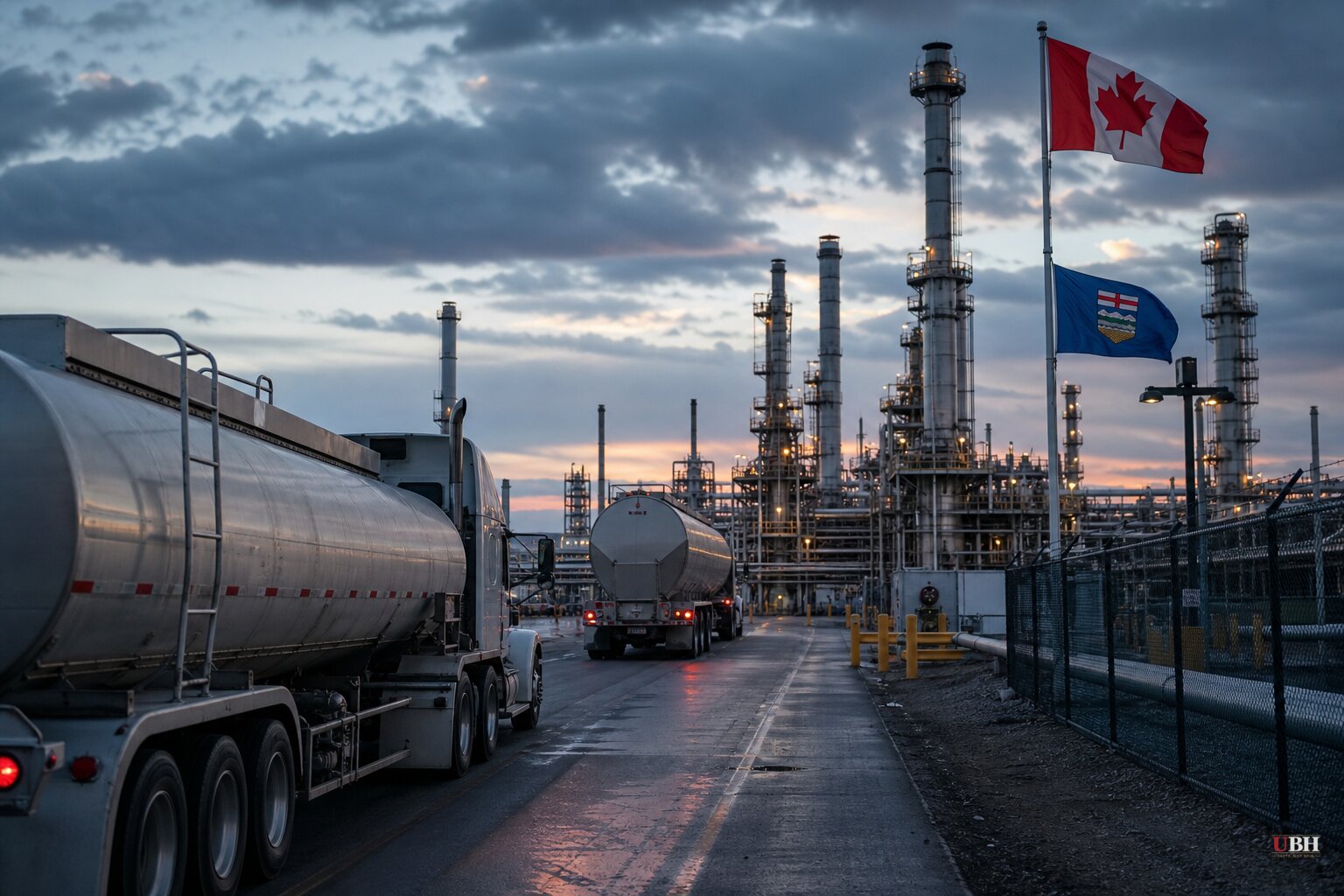
Diesel Margins Break the Record Books
Canadian refineries are earning more off a litre of diesel than at any point on record. The average refining margin hit 119.4 cents a litre on Aug. 19, according to data from Kalibrate Canada reported by the Edmonton Journal. That figure was also picked up by the National Post and Financial Post Magazine, though it traces to the same underlying data rather than separate reporting.
Diesel has sold for more than $2 a litre all summer, roughly 55% higher than a year ago. Charles St-Arnaud, chief economist at Servus Credit Union, told the Edmonton Journal the squeeze traces to knocked-out Russian refining capacity and blocked shipments tied to the Strait of Hormuz. Traders have taken to calling the combination "Crackageddon," St-Arnaud said, and he warned the crunch could stretch into 2027.
Ukraine's Drones Are Part of the Equation
The Russian side of the squeeze isn't easing. OilPrice reported that Ukrainian drone strikes on Russian refineries continue, further constraining gasoline and diesel production there. Meanwhile the Wall Street Journal has reported that tanker-tracking firms have not been able to verify Washington's claims that tanker traffic near the Strait of Hormuz has normalized. Global fuel supply, diesel especially, remains constrained on both fronts.
Oil Sands Maintenance Pulls More Crude Off the Market
On top of that, Canadian crude supply itself is about to tighten further. Rystad Energy told Bloomberg that Canadian oil sands production could drop by 300,000 barrels a day in September as major operators head into seasonal maintenance. Normally that kind of dip gets absorbed by drawing down stored crude. This year storage is at its lowest level in 12 months, according to the Rystad data.
Canada typically ships 4 million barrels a day of heavy crude to U.S. refiners. Pipeline operators have already stopped rationing space on their lines, a signal they expect lower September demand. OilPrice noted there is no realistic replacement for that lost Canadian barrel, even with Venezuela's exports rising.
The Venezuela Deal and Alberta's Long-Term Worry
Separately from the immediate diesel squeeze, President Donald Trump has announced a deal for the United States to develop Venezuelan oil reserves, according to the Edmonton Journal. The agreement covers 17 future oilfield developments holding more than 60 billion barrels of proven reserves and is expected to draw close to US$100 billion in investment.
Alberta oilpatch leaders see that as a long-term threat, not an immediate one. Bob Geddes, president of Ensign Energy Services, and Kendall Dilling, president of the Oil Sands Alliance, both told the Edmonton Journal that a fully ramped-up Venezuela would compete directly with Canadian crude, which exported an average 3.9 million barrels a day to the U.S. in 2025. Premier Danielle Smith and industry executives are using the deal to push for a new West Coast pipeline that would let Alberta crude reach European and Asian buyers instead of relying almost entirely on the American market.
The Catch: Venezuela Isn't Ramping Up Fast
The data so far doesn't support an imminent surge. OilPrice reported that Venezuela exported 1.16 million barrels a day last month, down slightly from 1.2 million in June, and that state oil company PDVSA is drawing less from storage to make those numbers, a sign production itself hasn't meaningfully increased. A Reuters report cited in the same piece found Venezuela's July exports to the U.S. averaged 786,000 barrels a day, the highest since early 2019, up sharply from 284,000 barrels a day in January 2026. That's a real jump, but it's coming off a very low base, and the supermajors that once operated in Venezuela are reportedly still hanging back, wary of a political and fiscal environment that hasn't stabilized. Only smaller American service companies have signed deals so far, per OilPrice.
Alberta's competitive alarm is aimed at a 60-billion-barrel resource base that exists on paper and in investment pledges, not yet in barrels actually reaching the market. The case for new export capacity to Asia and Europe doesn't need an exaggerated Venezuela threat to stand on its own, given Canada's existing reliance on a single buyer.
What to Watch
The near-term question is whether September's 300,000-barrel-a-day maintenance cut collides with an already-thin storage cushion and pushes diesel prices even higher before Crackageddon eases. The longer-term question is whether Venezuela's production actually scales toward that 60-billion-barrel promise, or whether political risk keeps the majors on the sidelines long enough that Alberta's worry proves premature.
Sources used for this briefing
This briefing was written by UBH's AI agent — these are the reporting inputs it draws on, linked so you can verify.


