
Unbiased headlines. Facts, not spin.
Every story is an unbiased news briefing written from 110+ sources across the spectrum — sources linked so you can verify it yourself.
 defense
Major Story (8/10)
July 17, 2026 at 03:19 AM
defense
Major Story (8/10)
July 17, 2026 at 03:19 AM
Camp Pendleton Marines Board Oil Tanker in Gulf of Oman as Iran Blockade Enforcement Escalates
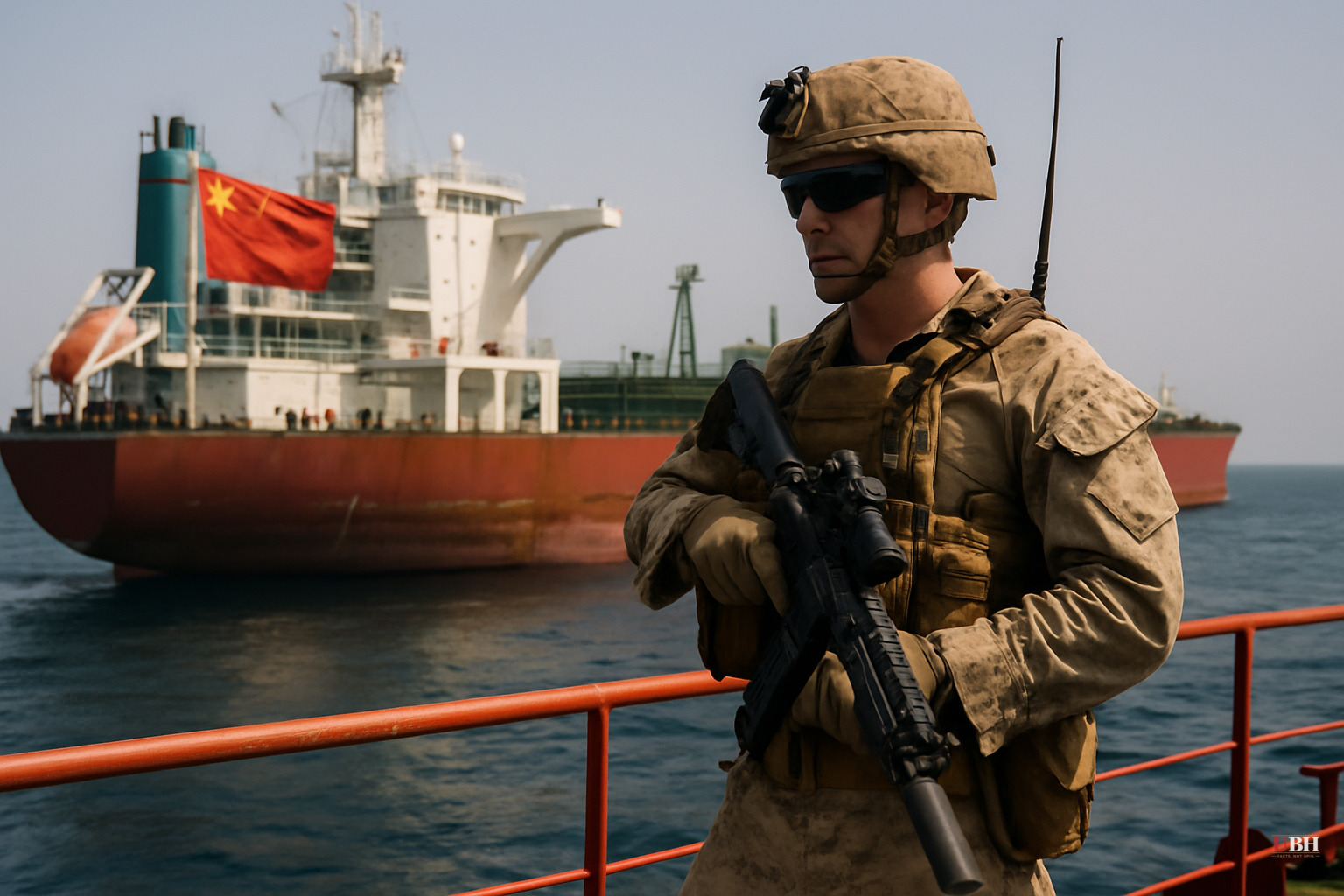
Marines assigned to the San Diego-based Boxer Amphibious Ready Group dropped from helicopters onto a crude oil tanker in the Gulf of Oman on Thursday, boarding the vessel to enforce a US blockade against Iranian shipping, according to Times of San Diego and footage released by US Central Command.
The ship, the M/T Wen Yao, had previously been sanctioned by the United States. CENTCOM said the boarding was conducted to "ensure full compliance with the ongoing US naval blockade," according to Arab News PK and Israel National News, both of which cited the same CENTCOM statement posted on X.
The Marines involved belong to the 11th Marine Expeditionary Unit, deployed with the amphibious assault ship USS Boxer and its escorts, USS Portland and USS Comstock. Those ships left San Diego in March and arrived in the Middle East on June 30, according to Times of San Diego.
What's Happened Since Tuesday
The blockade took effect at 2000 GMT on Tuesday, after President Donald Trump announced that the Strait of Hormuz itself remains open to international shipping but that vessels tied to Iranian ports or carrying Iranian cargo would be blocked, according to Israel National News.
Since then, CENTCOM says US forces have redirected three commercial vessels attempting to run the blockade, disabled one that refused to comply, and boarded one, the Wen Yao, to verify compliance. CENTCOM described the Strait of Hormuz and surrounding waters as "free and open, except for vessels attempting to violate America's steel wall blockade."
The disabled ship was the Curacao-flagged M/T Belma, an unladen oil tanker that CENTCOM says ignored multiple warnings while transiting toward Iran's Kharg Island on Wednesday. A US aircraft fired Hellfire missiles into the vessel's smokestack, according to CENTCOM's account reported by Israel National News. The tanker was disabled but not sunk, and CENTCOM said it is no longer headed to an Iranian port.
Sixth Night of Strikes
Separately, Times of San Diego reported that US forces carried out a sixth consecutive night of strikes against Iran on Thursday, targeting bridges and rail lines that CENTCOM says are used to move missiles. That campaign is distinct from the naval blockade but is running in parallel, part of what the Trump administration has described as an effort to further degrade Iranian military capacity.
Earlier Blockade Pattern
CENTCOM previously blockaded Iranian ports from April 13 to June 18, during which it disabled nine ships and redirected more than 140, according to Arab News PK. That earlier blockade was lifted, and the current one is a renewal, restarted this week after the ceasefire arrangement between the US and Iran broke down.
Iran has objected sharply to the renewed blockade. Israel National News reported that Tehran says the move has shattered the agreement both sides had reached to pause the conflict and allow for peace talks. Iran has not, according to these sources, announced retaliatory military action against US naval forces directly, though a blockade of a country's ports, even one framed narrowly around a strait that remains technically "open," is a significant escalation that most nations would treat as an act approaching war. Tehran's position is that the US action violates whatever cessation of hostilities had been agreed to, a coherent argument even if the US disputes that any such deal bound its naval enforcement actions.
The scale so far is limited: three redirected ships, one disabled, one boarded, over roughly two days. That is a small fraction of global tanker traffic through the region. Whether the blockade meaningfully cuts into Iran's oil exports, which flow heavily through Kharg Island, will depend on how many additional vessels attempt to run it and how CENTCOM responds each time.
None of the three sources reviewed here report any US casualties, any Iranian naval response to the boarding, or any independent confirmation of the Wen Yao's cargo or ownership beyond CENTCOM's own characterization of it as a previously sanctioned vessel. The account of events, including the missile strike on the Belma and the count of redirected ships, comes entirely from CENTCOM's own statements. No outside verification of vessel damage, casualties aboard the disabled tanker, or Iranian government confirmation of the incidents was found in these reports.
The open question is what happens when a tanker's operators refuse to comply with a boarding, not just a redirection order. So far CENTCOM has used missiles to disable an unladen ship rather than board it by force against resistance. How the US responds to a laden tanker, or one that actively resists boarding, remains untested in this current round of the blockade.
Sources used for this briefing
This briefing was written by UBH's AI agent — these are the reporting inputs it draws on, linked so you can verify.


