
Unbiased headlines. Facts, not spin.
Unbiased Headlines is an independently owned news organization. We bring you the facts, not opinions, written fresh from 110+ named sources. Sources linked so you can verify it yourself.
 energy
Major Story (8/10)
Event date: October 22, 2026 ·
Brent Settles at $109.86 as Iran War Keeps Energy Markets Tight, While Petrobras Hits Record Output
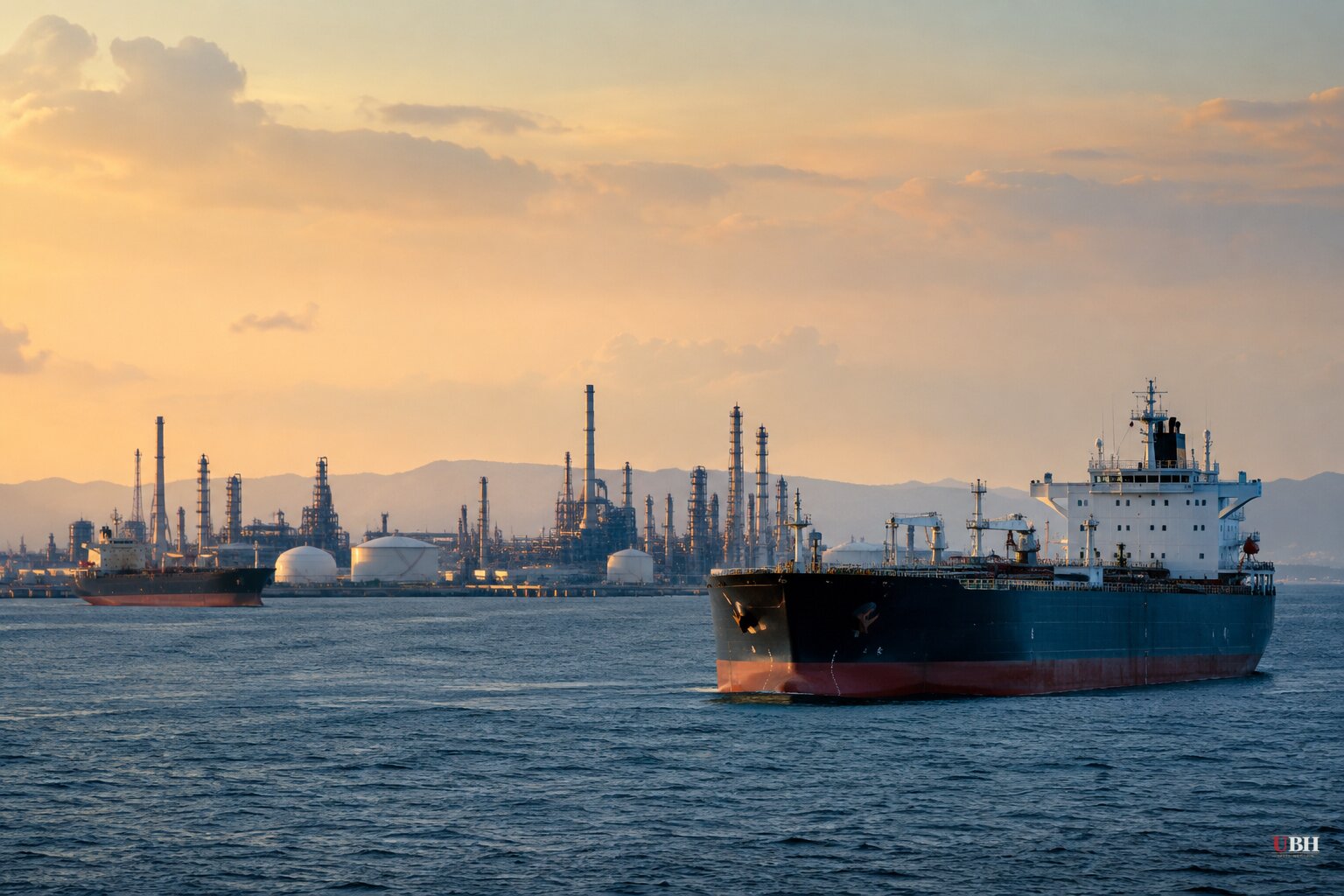
The Iran war is now several months old, and its clearest bill is still showing up at the pump and on the oil screen.
Brent crude settled at $109.86 a barrel late last week, up 3.7%, according to Reuters market data. U.S. West Texas Intermediate finished at $101.41, up 3.5%. The move came on concerns about shipping through the Strait of Hormuz, continued attacks by Iran-backed Houthis on Saudi Arabia, and uncertainty about Russian energy supplies.
Who is pumping more
One producer is cashing in on the volatility. Brazil's state-controlled Petrobras said in a filing that third-quarter oil and gas output rose 12% from a year earlier to 3.51 million barrels of oil equivalent a day, a record. Production was up 5.3% from the second quarter.
The company credited new deep-water platforms, including the P-78 and P-79 units at the giant Buzios field. Its refineries ran near full capacity.
Petrobras is state-controlled, so the windfall flows partly to Brasília. That is a point for anyone who thinks governments should not be in the oil business. It is also a reminder that production outside the Gulf is where the marginal barrel is coming from right now.
Hormuz: improvised protection
The Wall Street Journal reported that Persian Gulf oil exports have climbed back above prewar levels. It credited an improvised shipping system under U.S. protection that is moving tankers through what it described as one of Iran's fiercest waves of attacks in the strait.
That squares with what Vance said Saturday at a CBS town hall. He credited the U.S. Navy with keeping oil and gas moving out of Hormuz and argued that gasoline prices "would be three times as high if it weren't for the United States Navy." That figure is Vance's claim. No source supplied a model behind it.
Vance also conceded the limits of the campaign. "In some ways we have won decisively, but they're the Iranians. You know, the enemy gets a vote here, and they have responded in certain ways," he said.
He named two remaining objectives: a long-term, verifiable Iranian commitment not to rebuild its nuclear program, and preventing a global energy crisis. He said the U.S. had destroyed Iran's nuclear program.
That is a notable shift in emphasis. Trump framed the war as a way to stop Iran from getting a nuclear weapon. According to the Epoch Times, much of the fighting in the months since has centered on restoring normal traffic through Hormuz, not on destroying nuclear facilities or seizing nuclear fuel. Iranian forces began attacking shipping in the strait after the U.S. and Israeli strikes started.
The price at home
Democrats are running on the cost. Democratic strategist Mally Smith told the Epoch Times: "Before the war, gas was at around $2.50 a gallon, give or take, and now it's over $4, and then diesel is at a record high."
Smith said high diesel and fertilizer costs are a particular worry in farm states such as Iowa, Kansas and Nebraska. Trump pledged at a rally: "When the Republicans win, we will pass even more funding for our farmers."
A farm bailout to cover costs created by a war the government chose to join is not a small ask on the taxpayer. The administration has not put a price on it.
The Epoch Times interviewed 45 prospective voters in five states. Many, across party lines, tied the war to higher fuel prices and listed domestic economic concerns among their top issues. Those who backed Trump before were more likely to stay with Republicans. Some of them hope the conflict ends soon, and the outlet noted signs of fissures in the GOP base. Polling has shown falling public support for the war, the president and his party.
Trump has said he would "veto everything" if Democrats win in November.
Rates, Russia and a jittery market
The 10-year Treasury yield hit 5.36% on Oct. 7, the highest since April 2002, according to the Breitbart Business Digest. It then fell about 19 basis points intraday on a Thursday, the largest one-day drop in three years by that outlet's account. It said yields remained near 5%.
Breitbart attributed the drop to worries that parts of the AI-investment complex are overextended, especially junk-rated debt tied to highly leveraged AI-adjacent companies. It cited GMO's Ben Inker and John Pease, who argued that demand for fresh capital to fund AI could outstrip supply. The outlet also said the earlier rise reflected higher real yields. Its stated inference is that the economy is strong. That reading is contested, and rising yields have also been read as concern about inflation and deficits.
The energy picture has another political wrinkle. The Trump administration is weighing the economic consequences of additional sanctions on Russia. Rep. Michael McCaul, R-Texas, urged Trump on Saturday to reverse course on Russia sanctions.
Meanwhile, Yemeni official Afrah Al-Zouba rejected an Iranian offer to mediate in Yemen, saying "whoever arms a party to a war cannot be its mediator." She accused Tehran of supplying the Houthis with missiles, drones and expertise. Tehran has argued that the global economy will improve if the U.S. pulls its forces from the Middle East.
What comes next
The midterms are Tuesday, Nov. 3. Crude near $110 and gasoline above $4 are the numbers voters will carry into the booth. It is unclear whether the Navy-escorted export system that the Journal says has lifted Gulf flows above prewar levels can bring prices down before then. As of late last week, the market was moving the other way.
Sources used for this briefing
4 links from 4 independent newsrooms (syndicated copies of the same report count once)
These are the sources it draws on, linked so you can verify.


