
Unbiased headlines. Facts, not spin.
Unbiased Headlines is an independently owned news organization. We bring you the facts, not opinions, written fresh from 110+ named sources. Sources linked so you can verify it yourself.
 energy
Major Story (7/10)
Energy Department Offers Constellation Up to $5 Billion Conditional Loan for Nuclear Uprates at Eight Plants
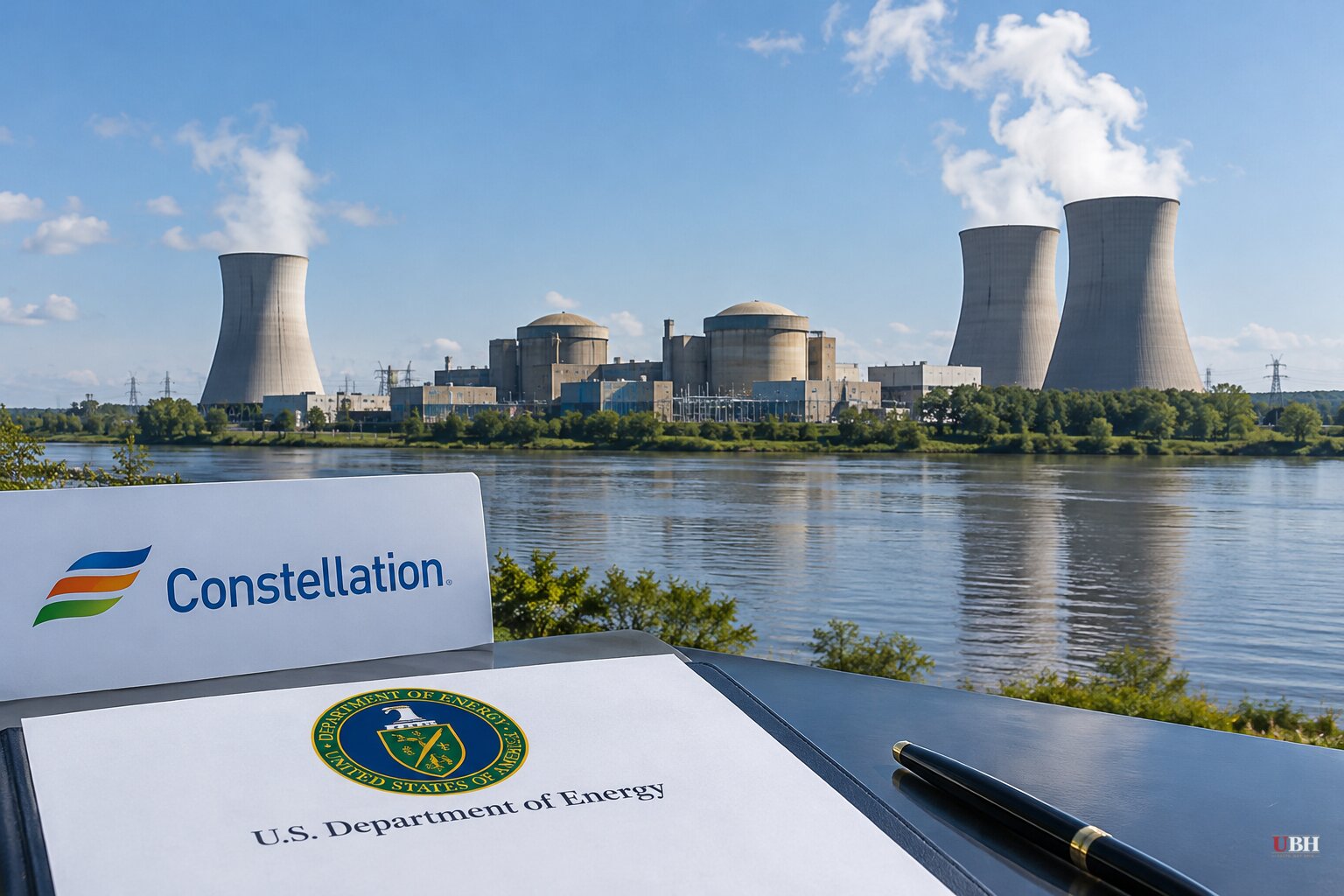
The U.S. Department of Energy announced Tuesday, Oct. 27, a conditional commitment of up to $5 billion in financing for Constellation Energy. The money is meant to add nearly 1.1 gigawatts of generating capacity by "uprating" existing nuclear reactors. It comes through the department's Office of Energy Dominance Financing.
It is a loan, not a grant. It is also not final. The commitment remains subject to due diligence and negotiation of definitive agreements, and it does not guarantee that every potential uprate goes forward.
Where the money would go
The eight plants named are Braidwood, Byron, Clinton, Dresden, LaSalle and Quad Cities in Illinois, Calvert Cliffs in Maryland and Limerick in Pennsylvania. Constellation says the financing could also support future uprates at other sites in its fleet.
Constellation, Nasdaq: CEG, is the largest nuclear operator in the country. It says uprates are among the fastest and cheapest ways to add dependable power because they require no new plants or transmission corridors. The department estimates the work would support more than 10,000 project-related jobs.
The company said the commitment "could lower financing costs" and let it deliver added capacity at greater scale. Asked which plants could move first and by how much, Constellation told Engineering News-Record that its release was "all we have to share at this time."
Big Tech has already claimed the power
This is not a speculative build. Constellation says 20-year agreements with Google and Amazon already incentivize more than $7 billion in investment to add roughly 1,080 megawatts. A separate Meta agreement supports a 30-megawatt expansion at Clinton.
On Oct. 6, Constellation announced a Google deal under which it will spend more than $4.3 billion to upgrade 11 reactors and add 890 megawatts by 2032. A separate 15-year agreement covers another 2,700 megawatts.
TechCrunch's reporting maps most of the new output to specific buyers. Google is the confirmed buyer for the Limerick plant and four of the Illinois plants. Amazon is buying from Calvert Cliffs. Meta is effectively buying the entire Clinton plant. By that count, most or all of the added power from seven of the eight plants is already spoken for by the three companies.
The affordability claim
Energy Secretary Chris Wright said the department is "accelerating President Trump's American nuclear renaissance and unlocking the full potential of our nation's nuclear fleet." The department framed the loan as supporting affordable, reliable power for homes and businesses.
Constellation CEO Joe Dominguez said in a statement: "This is how America wins the race for energy abundance, by pairing private-sector demand and investment with smart federal financing to unlock more power from the nuclear plants we already have." He also said the commitment would help families and businesses "manage energy costs."
The announcement itself does not say whether the projects will hold or lower residential rates. TechCrunch reported that Constellation would not confirm the department's affordability framing to it, and noted that the cheaper financing could benefit Constellation, the hyperscalers, or both. Taxpayer-backed credit for a company whose customers are among the largest corporations in the world is a fair question for a conservative audience, and neither the department nor Constellation has addressed it directly.
The market and the pattern
Constellation shares rose as much as 5.3% on the news Tuesday. At 11:39 a.m. ET they were up 2.8% at $259.63. The stock is still down nearly 30% so far this year.
This is the second federal loan to Constellation in under a year. In November 2025 the department closed a $1 billion loan to restart the 835-megawatt Crane Clean Energy Center in Pennsylvania.
The department has also offered Vistra up to $4.2 billion in conditional financing for reactors in Pennsylvania and Ohio, potentially adding 433 megawatts. Separately, it has conditionally committed $17.5 billion under its American Nuclear Supply Chain Loans initiative for equipment at five projects. The department says that aims to speed 10 new reactor projects by up to three years.
The department also says an executive order set a 5-gigawatt uprate goal for existing plants and that 96% of it has been met. Wright told CNBC during a visit to Constellation's Byron plant that the administration is "restarting three power plants, uprating power plants all across the country, and soon you'll be hearing announcements about new reactors being constructed." He gave no specifics.
Data center politics
The loan lands as data centers face growing local resistance. In a Truth Social post early Wednesday, President Trump said he is mandating that new and large data centers "make their own electricity" and give or sell excess power back to the local community or grid. He also floated having companies pay communities or residents a "dividend." The post gave no details on how either would work.
That is a shift from August, when Trump wrote that the only reason communities would oppose data centers is "if they want to end up being backwards and poor." Amazon and Meta have each pledged at least $1 billion to host communities, yet many towns and states are still pursuing moratoriums and rolling back tax exemptions.
It is unclear how Trump's self-generation demand squares with a federal loan that finances more grid power largely earmarked for the same tech companies. Neither the White House nor the Energy Department has said. The next concrete step is whether Constellation and the department complete due diligence and sign final loan terms, and which of the eight plants get funded first.
Sources used for this briefing
7 links from 6 independent newsrooms (syndicated copies of the same report count once)
These are the sources it draws on, linked so you can verify.


