
Unbiased headlines. Facts, not spin.
Unbiased Headlines is an independently owned news organization. We bring you the facts, not opinions, written fresh from 110+ named sources. Sources linked so you can verify it yourself.
 energy
Major Story (8/10)
Event date: October 27, 2026 ·
Iran Budget Planners Weigh $130 Oil as U.S. Blockade Drains Floating Storage to Under 1 Million Barrels
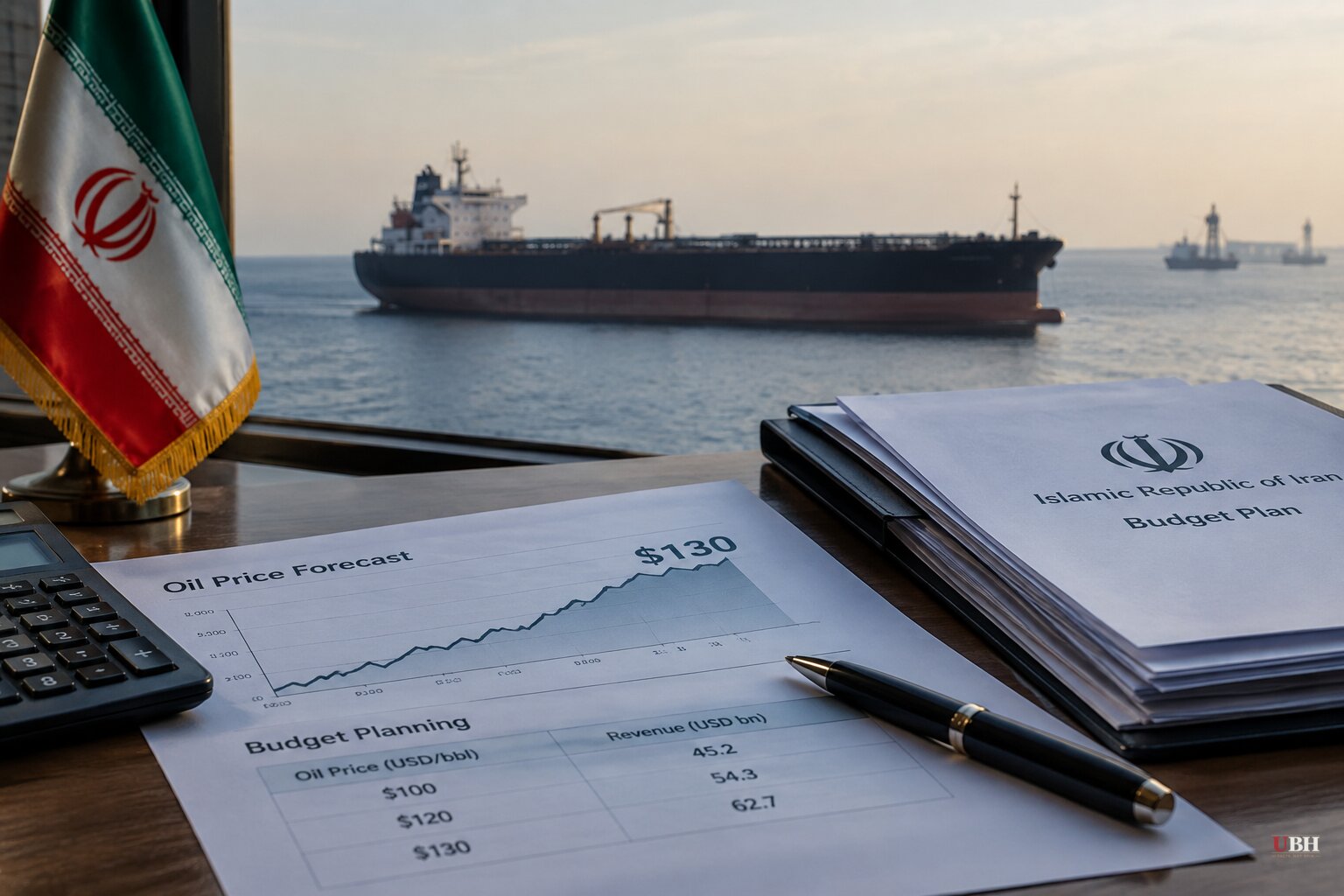
Since the U.S. and Israel launched the war on Feb. 28, oil has climbed from around $70 to roughly $117 a barrel. Iran now appears to be planning its next budget around a price it may have no way to collect.
Hamid Pourmohammadi, head of Iran's Plan and Budget Organization, said Sunday that the Economic Council approved the directive for drafting the budget for the Iranian year 1406, which starts in March 2027. He said the bill goes to parliament within a month. He did not disclose the oil price the government will assume.
The IRGC-linked Fars News Agency reported separately that the organization is considering a scenario built on $130 oil. The previous budget used $55. Tehran's Haft-e Sobh newspaper called the $130 figure a "shock."
Iran has historically budgeted on conservative price assumptions, and a baseline that high would break with that habit. A scenario is not a baseline.
The blockade is the problem
A higher global price does not help a seller that cannot ship. Before the U.S. imposed a blockade on Iranian ports in April, Iran held close to 150 million barrels in floating storage, according to Kpler. By mid-October that had fallen to 866,000 barrels.
The U.S. Navy reinstated the blockade in the Gulf of Oman in mid-July after the U.S.-Iran "deal to make a deal" collapsed. United Against Nuclear Iran said that as of early October at least 50 Iranian tankers were stranded inside the Persian Gulf near Iran's coast.
"There's no more oil to discharge to China anymore," said Homayoun Falakshahi, Kpler's head of crude oil analysis.
Kpler also says Iran's trackable floating inventory outside the blockade zone has hit zero. It projects Tehran's crude revenue could run dry by mid-December, once outstanding payments are settled.
What a dry-up would and would not mean
Oil directly supplies roughly 30% of Iran's government budget, according to Gregory Brew of Eurasia Group and Miad Maleki of the Foundation for Defense of Democracies. Maleki puts the figure at 50% to 60% of regime revenue when indirect income from oil and refined products is counted.
Iran entered the year expecting to export about 1.7 million barrels a day at roughly $54, Brew said. Actual exports fell short, though higher prices let Tehran build some cushion.
Maleki cautioned against reading December as a cliff. "The December timeline is more of a cash flow kind of disruption, and not really a collapse state," he told Fox News Digital. He said Tehran has so far let inflation and a weakening rial absorb the pressure, and could shield military spending while cutting civilian programs. "The purchasing power of Iranians incrementally declines," he said.
That cuts against the premise of the pressure campaign. The blockade can drain cash without immediately starving the IRGC.
Competing export claims
Iranian officials deny the squeeze is that severe. Mohsen Zanganeh, a member of parliament's Planning and Budget Committee, said Iran earned more than $11.5 billion from oil in the first four months of the year, 85% of its projected oil revenue. He claimed exports continue at no less than 600,000 barrels a day.
U.S. Central Command says the blockade has prevented at least $25 billion in crude exports and that nothing but humanitarian supplies has moved by sea. Neither account has been independently verified. Vessel-tracking services estimate Iranian exports have plunged since August.
Hormuz attacks continue
Tehran is pushing back at sea. More than a dozen strikes on shipping have occurred since the end of September, keeping crude above $100. Shipping industry experts say six commercial vessels were reportedly struck in and around the strait in a single day, the most since the war began. Some incidents were reported late.
IRGC chief Ahmed Vahidi called Hormuz "Iran's strategic red line." Washington says free navigation in international waters is inviolable, a position the Gulf states that depend on the strait share.
Iran's army said this week that a tanker that had switched off its tracking systems struck naval mines east of the strait and caught fire. It did not name the vessel or describe the crew's condition. Iranian state television has separately claimed seven tankers were hit by attacks or mines in a single night. That claim has not been verified.
Lloyd's List Intelligence says willing operators are moving Gulf oil through the strait at night in a U.S. military-protected lane near Oman, transponders off, and transferring cargoes to tankers in the Gulf of Oman. Aramco CEO Amin Nasser says the East-West pipeline, which bypasses Hormuz, has gone from 2 million to 7 million barrels a day.
The political clock
President Trump said on Truth Social that the U.S. will not attack Iran before the Nov. 3 midterms and that the administration is "having productive discussions" with Tehran. His stated goal is preventing an Iranian nuclear weapon.
Two dates now frame the next phase: Iran's budget bill is due in parliament within a month, and Kpler's mid-December projection for the end of Iran's seaborne crude income. Whether Tehran's $130 scenario survives into the bill will show what it expects from the blockade.
Sources used for this briefing
7 links from 6 independent newsrooms (syndicated copies of the same report count once)
These are the sources it draws on, linked so you can verify.


