
Unbiased headlines. Facts, not spin.
Unbiased Headlines is an independently owned news organization. We bring you the facts, not opinions, written fresh from 110+ named sources. Sources linked so you can verify it yourself.
 energy
Breaking / Critical (9/10)
Brent Closes at $113.88 After Khamenei Sets Conditions to End War, as Houthis Claim New Ras Tanura Strike
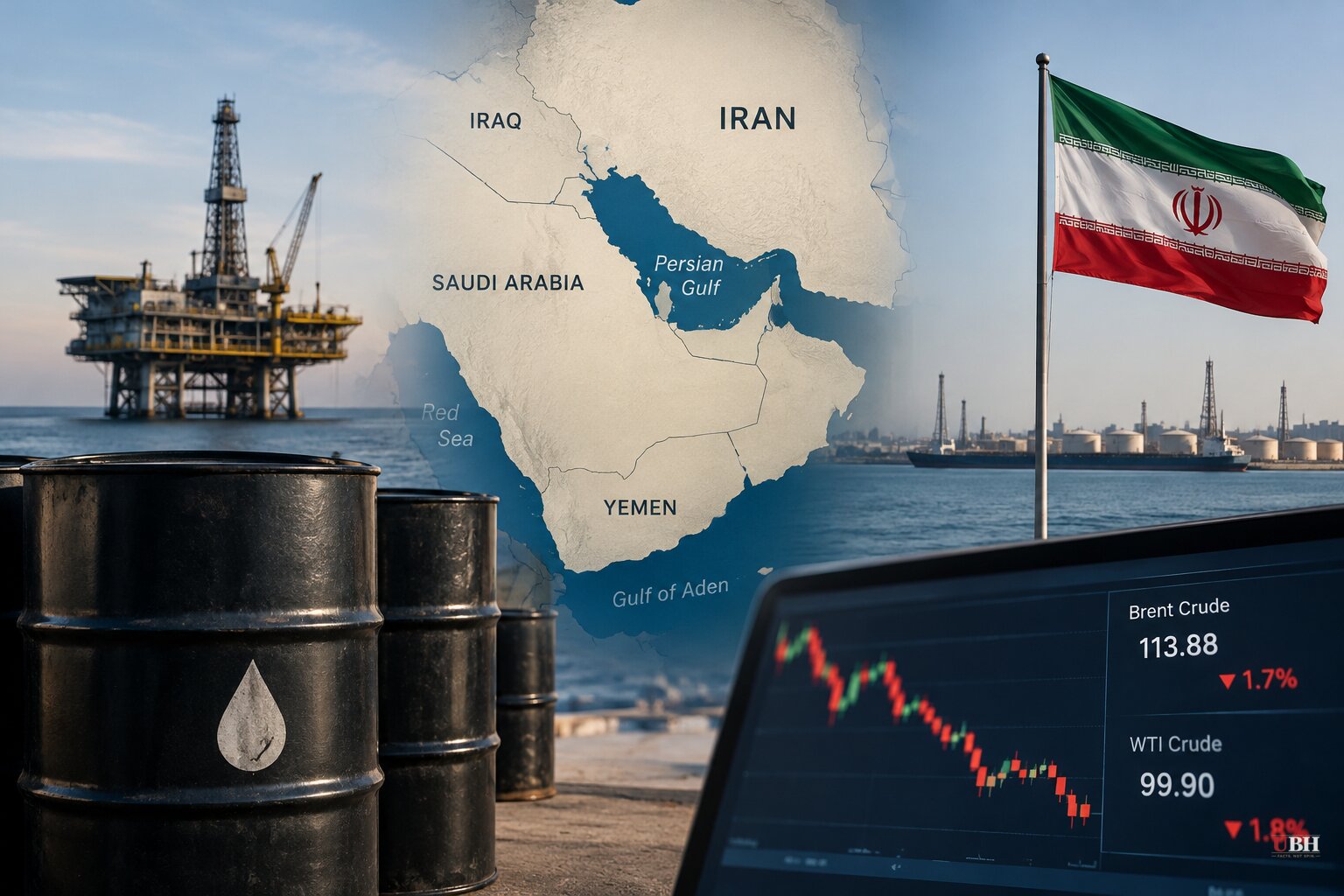
Eight months into the Iran war, and a day after the Saudi, Pakistani and Turkish delegations met Iranian leaders in Tehran, oil finished Tuesday, Oct. 27, lower for a second straight session. Brent futures lost 1.7% to settle at $113.88 a barrel. U.S. West Texas Intermediate fell 1.8% to $99.90.
The drop came even though the Houthis claimed a fresh missile attack on Saudi Arabia's Ras Tanura refinery earlier in the day.
Khamenei: the limbo has to end
Supreme Leader Mojtaba Khamenei met Mohsen Rezaei, secretary of Iran's Supreme National Security Council, on Tuesday. A post on the supreme leader's account said the current state of "neither war nor peace" needs to end. It also said Iran should keep pursuing the conditions its officials have laid out, and that it will maintain control over the Strait of Hormuz.
The post did not list those conditions. In September, Rezaei said Tehran had passed its terms to Washington through Qatar: an end to the war on all fronts, release of frozen funds, and an end to the naval blockade. The strait remains the sticking point.
The Persian Gulf Strait Authority, the Iranian body that now handles passage requests, said Tuesday that ships operated by South Korea's Sinokor will face legal action from Nov. 1 over alleged crossing violations. An Iranian ambassador also floated a seven-day plan to reopen Hormuz, according to market reports. No agreement has been announced.
The Tehran talks and the Houthi strikes
Saudi Defense Minister Prince Khalid bin Salman, Pakistani army chief Field Marshal Syed Asim Munir and Turkish intelligence chief Ibrahim Kalin met President Masoud Pezeshkian, the foreign minister and the security council head on Monday, Oct. 26. Iran's Foreign Ministry spokesman Esmaeil Baqaei called the talks a step toward regional security cooperation and said further consultations are possible.
No deal to stop Houthi attacks on Saudi Arabia came out of the meeting. Houthi military spokesman Yahya Saree said on X that the group hit Ras Tanura with a ballistic missile and caused "massive fires." The Saudi-led coalition said it intercepted three missiles fired toward the Eastern Province. Maritime security agency Vanguard reported a fire in the Ras Tanura area that had been contained. The extent of any damage or disruption to oil operations is unclear.
Explosions also shook Riyadh, and residents received phone alerts to take shelter. The coalition said it intercepted two ballistic missiles aimed at the capital.
The Houthis, who are allied with Iran, have repeatedly attacked Saudi Arabia in recent weeks, hitting energy infrastructure and civilian targets such as airports.
Turkey moves on the Mecca pact
In Ankara, a Turkish parliamentary committee approved the Mecca Joint Defense Agreement with Saudi Arabia and Pakistan on Tuesday, according to AP. The 16-article pact treats an armed attack on one member as an attack on all three. It also provides for military cooperation and joint weapons production. The full parliament has not yet voted.
Hormuz: competing claims
The IRGC Navy claimed U.S. forces had withdrawn from the Strait of Hormuz. U.S. Central Command rejected that. It said American forces remain present and that the U.S. and its regional partners control the waterway. Iranian broadcaster IRIB separately reported that a tanker it described as violating Iranian rules caught fire after hitting a mine in the eastern strait. That report is unconfirmed.
Qatar, which is mediating, took a harder line than Tehran's description of the talks. Its foreign ministry urged Iran to stop threatening Gulf states and open the strait so negotiations can succeed. It also said a Qatari delegation had visited Tehran.
President Donald Trump said in a Fox News interview on Sunday, Oct. 25, that he was approaching a decision on whether to strike a deal with Iran or intensify military operations. In the past week he has also said the war could end very soon and that the U.S. must make sure Tehran cannot rebuild nuclear weapons.
What the oil market is pricing
Saudi crude exports exceeded 7 million barrels a day in the first 22 days of October, according to Bloomberg's Javier Blas, citing Vortexa data. That is back to pre-war levels and suggests production has climbed toward 9 to 10 million barrels a day.
UBS analyst Giovanni Staunovo said in a Tuesday note that he expects Brent to stay near $110 through year-end. He said the market has not normalized even with Middle East exports up from earlier in the war. "Vessels remain exposed to attacks, insurance and freight costs have risen sharply, and increased ship-to-ship transfers required to cross the Strait of Hormuz are absorbing tanker capacity," he said.
Staunovo said global oil inventories have fallen by about 500 million barrels since February and that government releases of strategic stockpiles are largely over. Commercial stocks will fall faster in the coming months if security does not improve, he said. Inventories will also take time to rebuild after any resolution, which could keep prices elevated.
Before the war, about one-fifth of the world's oil and gas shipments moved through Hormuz. Iran has since largely halted traffic there.
The next fixed date is Nov. 1, when Iran says its legal action against Sinokor vessels begins. Trump has not said when he will decide between a deal and escalation.
Sources used for this briefing
7 links from 5 independent newsrooms (syndicated copies of the same report count once)
These are the sources it draws on, linked so you can verify.


