
Unbiased headlines. Facts, not spin.
Unbiased Headlines is an independently owned news organization. We bring you the facts, not opinions, written fresh from 110+ named sources. Sources linked so you can verify it yourself.
 energy
Major Story (8/10)
Iran's Hormuz Authority Says Legal Action Against All Sinokor Tankers Starts Nov. 1
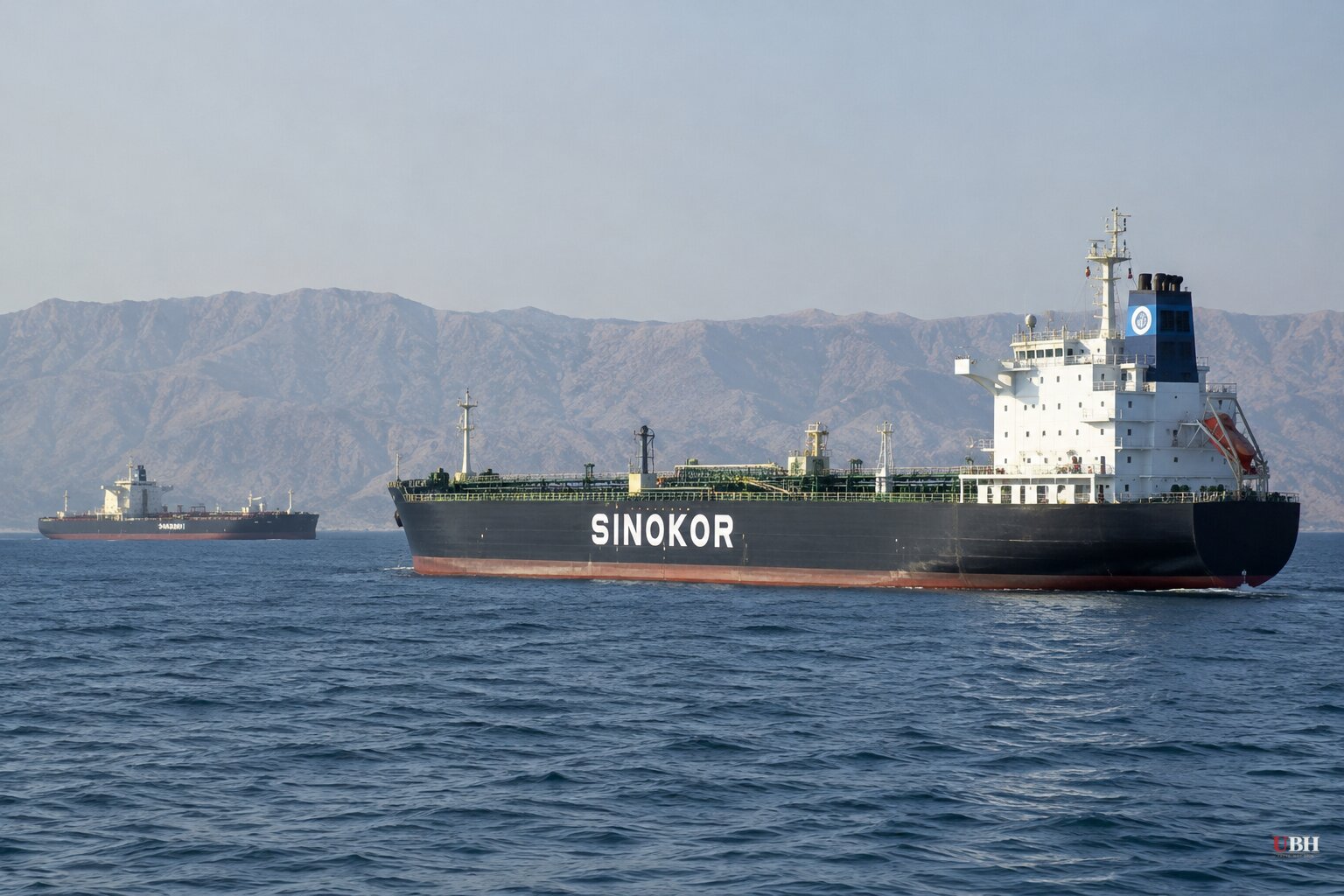
Iran's Persian Gulf Strait Authority (PGSA) said Tuesday, Oct. 27, that vessels belonging to Sinokor Shipping Company will face "legal action" starting Nov. 1. The announcement came in a post on X.
The PGSA claims Sinokor ships "have committed the highest number of crossing violations over the past 3 months." It said "appropriate enforcement actions have been taken against at least 7 of them." It did not say what those actions were.
The authority also warned cargo owners, beneficiaries and insurers that legal action would follow. That widens the threat well beyond one shipowner.
Who is Sinokor, and why Iran is pointing at it
Sinokor is a South Korean group controlled by tycoon Ga-Hyun Chung. It is not a household name, but in September its ships carried 105.6 million barrels of crude through Hormuz. That is almost 40% of everything that crossed the strait that month, according to a Bloomberg analysis of ship-tracking and other data from Vortexa, Equasis and Signal Group.
The next three owners combined moved 97.3 million barrels: Saudi Arabia's Bahri, the Kuwait Oil Tanker Company, and the shipping unit of Abu Dhabi National Oil Co. None of the four companies replied to requests for comment on those figures. The analysis counted vessel ownership, not operators.
Sinokor built its position before the war. It amassed a large tanker fleet through purchases and time charters ahead of the conflict. When Hormuz was all but closed, Gulf producers facing full storage and forced shutdowns hired those ships at exorbitant rates.
Gulf crude exports have since recovered to close to pre-war levels. Sinokor is still among the most active owners in the shuttling trade: short runs that load inside the Gulf, cross Hormuz and discharge at ship-to-ship transfer points in the Gulf of Oman. Its tankers have moved crude from Saudi Arabia and the UAE, and more recently some Iraqi and Qatari cargoes.
A toll regime Washington does not recognize
Iran created the PGSA in May to manage passage requests in the strait. Since then it has named vessels it says broke Iranian transit rules and threatened penalties including fines and detention.
Tehran runs a transit corridor inside its own territorial waters, with tolls and safety fees administered by the Islamic Revolutionary Guard Corps. Washington and the International Maritime Organization reject that framework as inconsistent with international maritime law. The US has sanctioned the PGSA and warned shipping companies that complying with its requirements could expose them to sanctions.
IMO Secretary-General Arsenio Dominguez says only one route is recognized. "Right now there's only one route that was adopted back in 1968 that is approved and recognized for IMO and that appears in all the charts for the vessels to operate," he told Fox News Digital.
So a shipowner moving oil out of the Gulf faces a bind. Follow the Iranian route and risk US sanctions. Use the international scheme and, by Tehran's definition, risk a "violation."
Mines and the Oct. 17 tanker fires
The threat is not only legal. The IRGC navy said on Oct. 17 that two tankers caught fire after hitting naval mines while crossing Hormuz, according to Iranian state media. State media said the vessels carried about 2 million barrels of crude and had switched off their positioning and radar systems while using a route Iran had not authorized. That account is Iran's, and independent confirmation is not in hand.
Dominguez said the IMO's information is that mines remain in the traffic separation scheme. "Whilst the conflict is ongoing, it's very difficult for us to use third parties to verify that it is clear of these hazards," he said. "We cannot guarantee that a vessel that intends to transit that route will not be hit by a mine."
Seoul gets pulled in
The announcement landed the same day Iran's ambassador to South Korea, Ahmad Erfanian, gave an interview to Seoul's KBS. "Iran's firm position is clear: We do not want war, nor do we want the conflict to spread to other countries," he said. He urged South Korea to "refrain from any actions that might further heighten tensions or complicate the situation."
Seoul is weighing options to protect shipping and energy routes near Hormuz. Tehran's message to a US treaty ally is that a Korean company's ships are now the PGSA's top enforcement target.
The tanker market is already under strain
Rates for very large crude carriers have jumped more than 1,600% this year, according to Bloomberg's reporting. Brokers told Bloomberg that WhatsApp messages from Sinokor announcing new high-rate charters have for months helped move the Baltic Exchange's TD3C benchmark, in a Gulf trade that is largely covert and short on verifiable data.
That benchmark is under legal challenge. Hearings began this week in a London lawsuit by trader Mercuria Energy Group against the Baltic Exchange. Mercuria argues the benchmark is no longer fit for purpose because of the war's disruptions. According to its legal filings, Mercuria has complained to the UK Financial Conduct Authority. A person with knowledge of the matter says at least one other market participant has also contacted the regulator.
If Iran follows through, Sinokor's tankers, the benchmark that tracks their rates and the insurers behind them all feel it. The PGSA has not said what "legal action" means in practice, whether it covers seizures, fines or court cases, or how it would reach cargo owners and insurers outside Iran. The first answers are due when the Nov. 1 deadline arrives.
Sources used for this briefing
7 links from 7 independent newsrooms (syndicated copies of the same report count once)
These are the sources it draws on, linked so you can verify.


