
Unbiased headlines. Facts, not spin.
Unbiased Headlines is an independently owned news organization. We bring you the facts, not opinions, written fresh from 110+ named sources. Sources linked so you can verify it yourself.
 energy
Major Story (8/10)
Event date: October 14, 2026 ·
Fire Near Saudi Ras Tanura Oil Terminal Contained as Missile Attacks Continue; Brent at $116.50
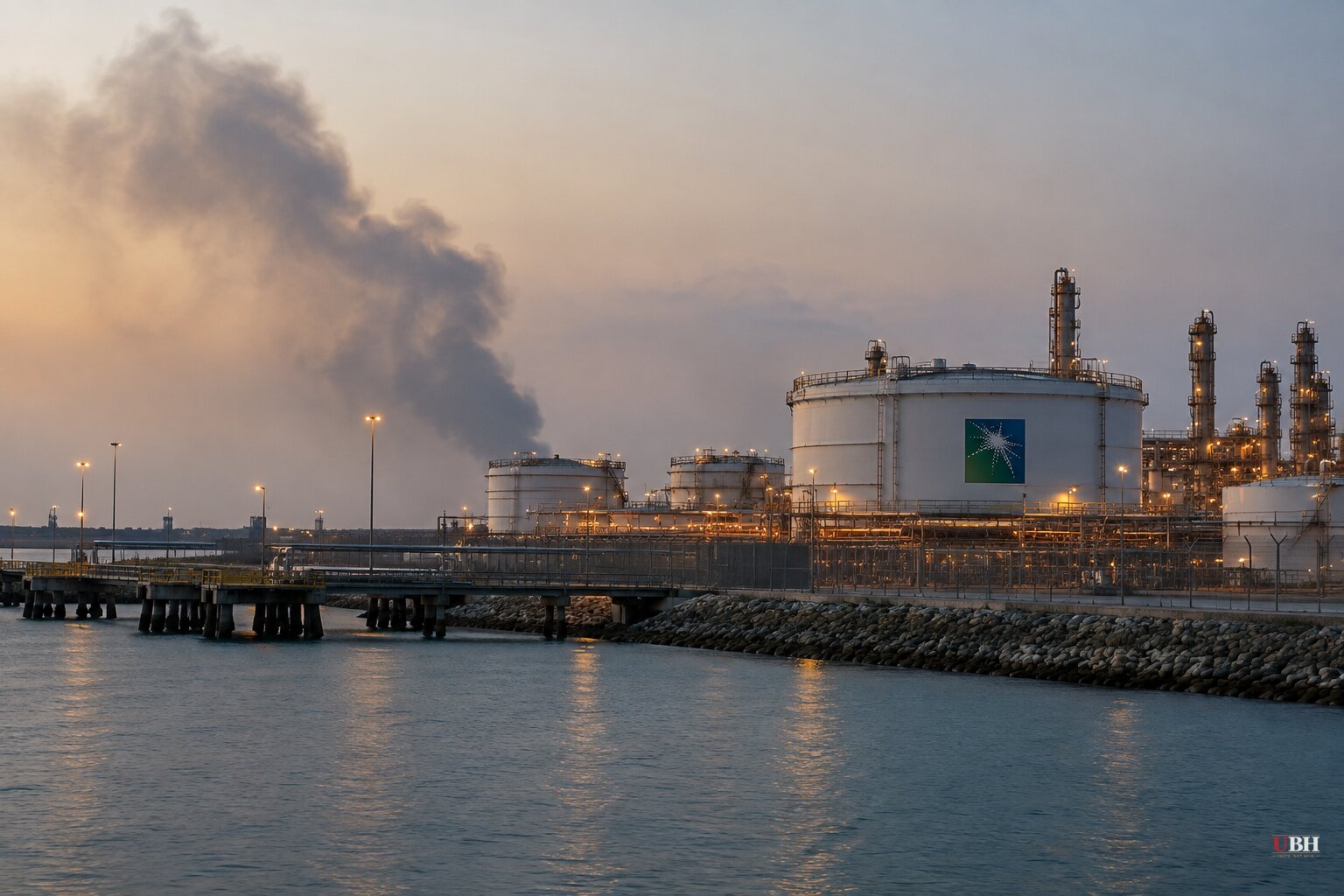
A fire broke out near Saudi Arabia's Ras Tanura oil export terminal early Tuesday, Oct. 27, following an attack in the region. It was contained hours later. The extent of the damage has not been disclosed.
Bloomberg first reported the fire. Saudi authorities have not said what caused it.
The Saudi-led coalition in Yemen said Tuesday it intercepted and destroyed three ballistic missiles launched toward the kingdom's Eastern Province and four drones aimed at the south. Saudi Civil Defense said the threat had passed in both the Eastern Region and Kharj governorate. The coalition's statement did not link those interceptions to the Ras Tanura fire.
Why Ras Tanura matters
Ras Tanura sits on the Persian Gulf coast. It is home to Saudi Arabia's largest domestic refinery, with capacity of about 550,000 barrels per day. Before the regional conflict, the terminal exported more than 5 million barrels of crude daily.
Oil moved on the news. As of 8:25 a.m. GMT Tuesday, Brent crude was up 0.6% at $116.50 a barrel. West Texas Intermediate was up 0.7% at $102.50. U.S. equity markets have not yet opened for the day.
A month of strikes on Saudi infrastructure
This is the latest hit in an escalating campaign. Fighting between Yemen's Iran-backed Houthis and the Saudi-led coalition reignited this summer and intensified last month after years of relative calm.
In mid-October, a fire broke out at an Aramco administrative building in Dhahran, the company's headquarters city. The Saudi Energy Ministry said no one was hurt. CNN reported it was unclear whether the building took a direct hit or was damaged by falling debris from intercepted missiles. The Houthis claimed responsibility.
Dhahran is not a minor target. The complex covers 58 square kilometers and houses an estimated 11,000 residents, plus research centers and energy operations. One resident told The National it was "the loudest explosion I have ever heard in my life."
On Oct. 10, a strike on a passenger terminal at King Khalid International Airport in Riyadh killed 13 people, according to Epoch Times reporting. Other accounts put the toll at 14. Saudi Civil Defense also said debris from intercepted cruise missiles over Riyadh injured four people and damaged 15 homes.
Saudi Arabia's civil aviation authority said a separate attack on King Fahd International Airport in the east killed two people, a Saudi citizen and an Indian national, and injured eight. The Houthis claimed that strike on Telegram, along with an attack on an Aramco facility in Yanbu where a fire broke out. They offered no evidence of a claimed strike on the Saudi Defense Ministry in Riyadh.
The National also reports that Houthi strikes earlier this year hit Aramco refineries at Ras Tanura, Jubail and Yanbu.
Riyadh hits back
Saudi Arabia has struck targets inside Yemen. The coalition attacked a fuel depot it said the Houthis were using to support strikes on Saudi airports and energy sites, as well as attacks on Red Sea shipping. It also named the Sabah central station and fuel facilities in Sanaa, Hodeidah and Dhamar.
The Houthi-controlled Yemen Oil Company disputes that account. It said the targeted facility held no petroleum products and that the strike would not affect fuel supplies. The Houthis said two civilians were killed and two injured. The coalition said it warned civilians to leave the area beforehand.
The Houthis have said they will keep hitting Saudi airports and oil facilities. They have warned international shipping companies and personnel working at those sites to stay away, calling them "legitimate targets."
Saudi Arabia's cabinet, chaired by Crown Prince Mohammed bin Salman, warned on Oct. 13 that the Houthis would face consequences. It said the kingdom would not tolerate threats to its security or to navigation in the Red Sea and the Bab al-Mandab Strait. Turkey, Egypt, Pakistan and Saudi Arabia, calling themselves the R4 Group, said in an Oct. 11 joint statement that they would support "all legitimate measures and steps" Riyadh takes in response.
The Iran war backdrop
Bab al-Mandab matters more than it used to. Tehran closed the Strait of Hormuz in late February after U.S.-Israeli operations aimed at dismantling Iran's nuclear program. That pushed more Saudi and global energy flows toward the Red Sea route the Houthis are threatening.
President Donald Trump said at a rally in Sioux City, Iowa, that U.S. naval escorts had reopened Hormuz to non-Iranian oil exports, with more crude moving through the strait in the past week than at any time before the war. He also said the blockade has cut off Iran's own exports. Trump invoked the Defense Production Act to speed domestic oil output, saying industry cannot do it fast enough on its own. Brent at $116.50 shows prices remain far from relief.
Trump also acknowledged a problem on the diplomatic side. "We wiped out their leaders," he said, leaving no clear counterpart to negotiate with.
What Aramco says
Aramco's chief executive said this month that "our system is intact" and that the full 12 million barrel-per-day capacity could be available within days. Aramco has not commented on the Ras Tanura fire. The 2019 strike on Abqaiq and Khurais temporarily knocked out more than 5% of global oil supply, and the question now is whether Tuesday's damage at Ras Tanura is cosmetic or operational.
Sources used for this briefing
6 links from 6 independent newsrooms (syndicated copies of the same report count once)
These are the sources it draws on, linked so you can verify.


