
Unbiased headlines. Facts, not spin.
Unbiased Headlines is an independently owned news organization. We bring you the facts, not opinions, written fresh from 110+ named sources. Sources linked so you can verify it yourself.
 energy
Major Story (7/10)
Event date: October 14, 2026 ·
EPA Previews Second Methane Rollback, Says It Would Save Oil and Gas Industry $45 Billion
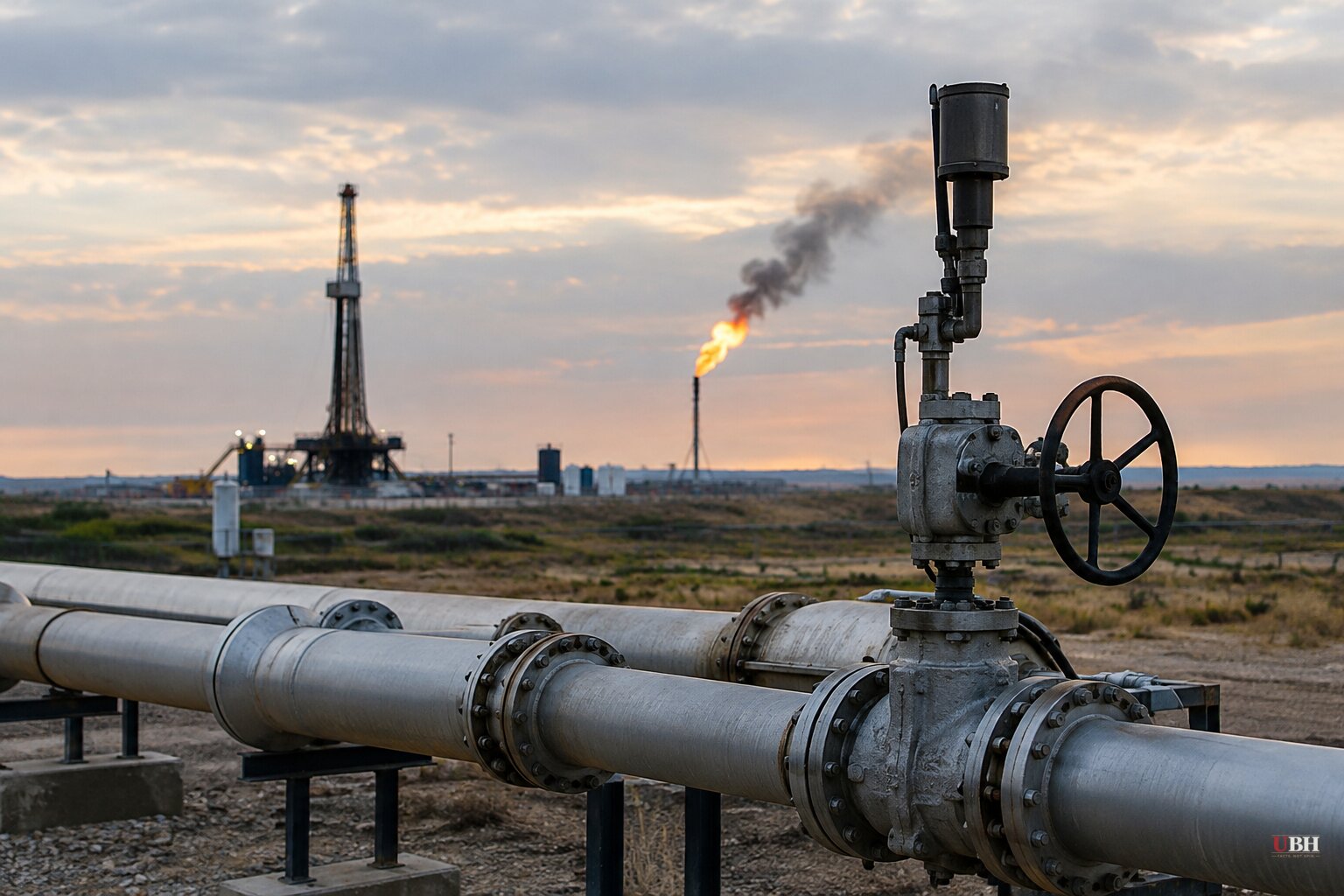
EPA Administrator Lee Zeldin told an oil and gas audience in Santa Fe on Oct. 7 that the agency is about to propose a second round of rollbacks to the Biden-era 2024 methane rules. He said the proposal would come "in the coming days."
The EPA estimates the changes would save the industry $45 billion. As of Oct. 13, it had not released the proposed rule or the analysis behind that number.
What Zeldin previewed
Zeldin spoke at the New Mexico Oil and Gas Association's annual meeting. He said the proposal "takes on many of the problems American producers and operators have raised with us."
He listed four targets: the burden on marginal wells and operators generally, the Super Emitter Program, associated gas, and control device requirements.
The Super Emitter Program uses third-party monitoring, including satellite detection, to flag very large leaks and blowouts. The Trump administration had already pushed final implementation back to Jan. 22, 2027. Zeldin has now signaled it will be eliminated outright.
"Americans must be able to afford to heat their homes in the winter and fill up their car and drive to work," Zeldin said. "They can't do that when the people producing the energy are weighed down by unnecessary burdens."
A rule that keeps getting rewritten
The regulatory ping-pong is old. The Obama administration announced federal methane requirements for oil and gas in May 2016. The first Trump administration rolled them back in August 2020. In July 2021, Congress used the Congressional Review Act to reverse that rollback, and President Biden signed it.
The EPA then published its 2024 rule. It set standards for new, reconstructed and modified sources, known as OOOOb, and emission guidelines for states to build plans covering existing sources, known as OOOOc.
The second Trump administration delayed implementation in March 2025. Zeldin's Oct. 7 announcement is described as the second part of the agency's reconsideration of those rules.
The industry cost argument
The EPA's position is that the 2024 rules load costly restrictions onto producers, and that those costs get passed to customers. Marginal wells are the sharpest example. Operators of low-output sites argue that compliance can cost more than a well is worth.
The agency also frames the move as part of a wider deregulatory push. Separately, the EPA says its overall rollback agenda has produced $1.6 trillion in savings, a figure it has promoted on its own webpages. That is the agency's estimate, not an audited number.
The $45 billion figure deserves the same caution. It is an EPA estimate with no published analysis behind it yet.
What opponents say
The Environmental Defense Fund rejects the cost framing. Jon Goldstein, the group's associate vice president for energy transition, said the proposal would "create huge loopholes for low-producing, high-polluting well sites, rescind the super-emitter program and weaken safeguards that cut waste and pollution."
Goldstein also made an argument that does not depend on climate at all. Leaked methane is natural gas that producers could have sold. He said the nation has already lost nearly $7 billion in energy value since the administration stopped enforcing key methane requirements. That is EDF's figure.
John Rutecki, EDF's regulatory and legislative manager, said low-producing sites emit small amounts individually but "cumulatively it is a large impact." He said satellites can now spot large plumes, which gives the public a way to hold operators accountable. He also said there is currently no national standard for what operators must do to control methane from existing sources.
Julia Kane, a researcher with the watchdog group Fieldnotes, went further. She said Zeldin's EPA is giving oil and gas corporations "a toothless methane standard they can use to pretend they're well-regulated." She cited a Fieldnotes report, based on industry communications and Freedom of Information Act records, that alleges a coordinated industry lobbying strategy. The EPA did not respond to a request for comment on those claims.
EDF also noted that Zeldin made the announcement at a closed-door industry conference rather than in a public forum.
The science behind the fight
Methane is the main component of natural gas. Mother Jones cites scientists and policy experts who say it traps about 80 times more heat than carbon dioxide over 20 years. The oil and gas sector is one of the largest U.S. sources, according to that reporting, and accounts for roughly a third of global methane emissions.
Environmental groups call methane the second-biggest driver of climate change after carbon dioxide. The administration's line is that cheaper energy for households comes first.
What happens next
The proposal's text has to be published before anyone can check what it actually does to marginal wells, flaring and control devices. Then comes a public comment period, and a final rule would follow after that.
The calendar adds pressure. Jan. 22, 2027 is the date for the delayed super-emitter program, and January 2027 is when state plans for existing sources were due. Rutecki said it is unknown whether that deadline will be extended again. Courts have also been part of this rule's history. The EPA's published analysis, if it arrives, will show how it arrived at $45 billion.
Sources used for this briefing
7 links from 7 independent newsrooms (syndicated copies of the same report count once)
These are the sources it draws on, linked so you can verify.


