
Unbiased headlines. Facts, not spin.
Unbiased Headlines is an independently owned news organization. We bring you the facts, not opinions, written fresh from 110+ named sources. Sources linked so you can verify it yourself.
 energy
Notable (6/10)
Event date: October 21, 2026 ·
IRENA Says World Needs 18.4 TW of Renewables by 2035 and $256 Trillion in Spending Through 2050
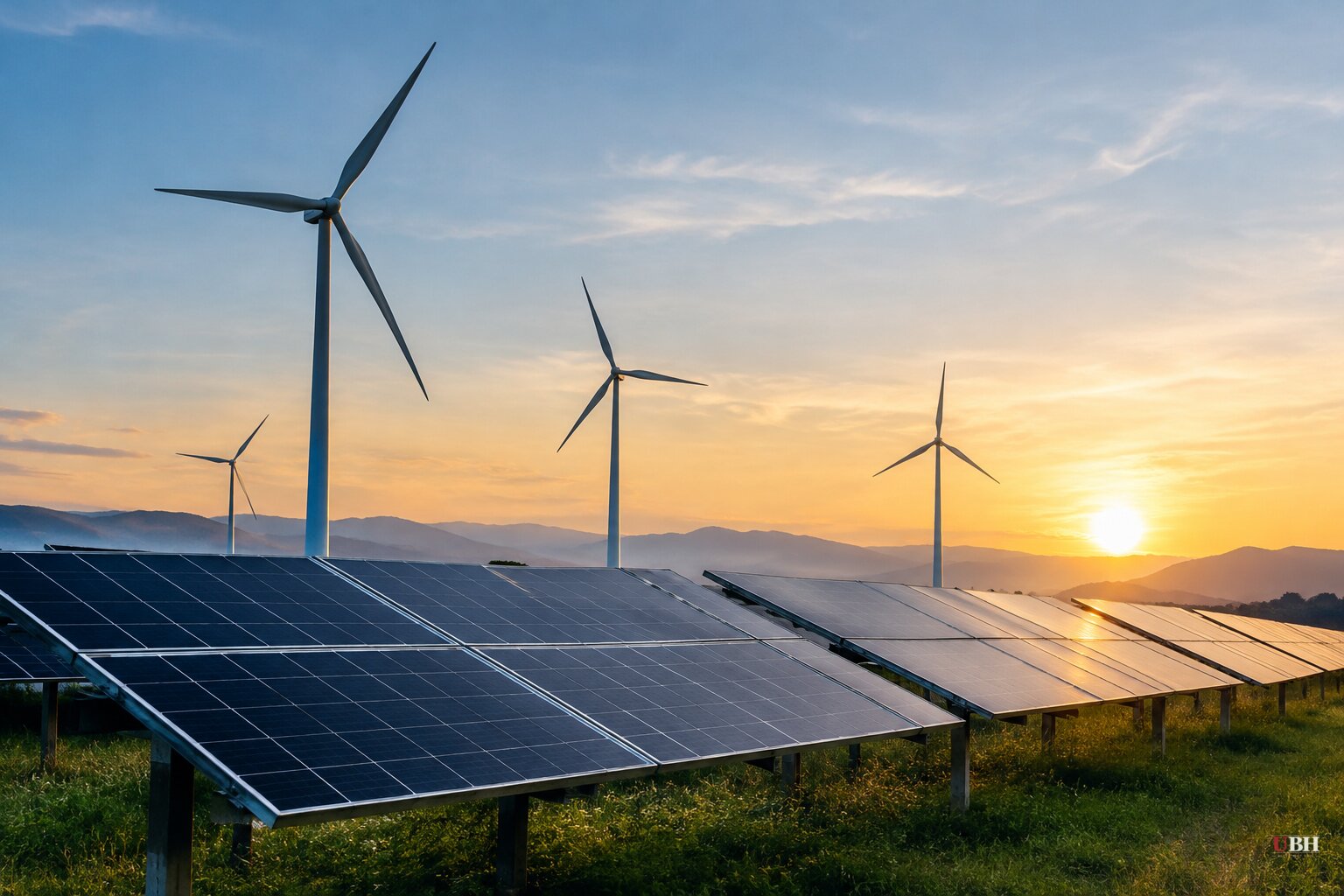
The International Renewable Energy Agency (IRENA) put a price tag on its 1.5°C climate path this month: more than $256 trillion in cumulative investment and spending between 2026 and 2050. That works out to about $10.3 trillion a year, and roughly $78 trillion more than the world would spend under existing government energy plans.
The figures come from IRENA's World Energy Transition Outlook 2026: 1.5°C Pathway. This is a modeled scenario, not a forecast of what will happen.
The capacity targets
Under the scenario, installed renewable capacity grows from about 5.2 TW (5,155 GW) in 2025 to 18.4 TW (18,393 GW) by 2035, then to 38.2 TW by 2050. That requires average net additions above 1.3 TW a year from 2026 through 2035.
Solar and wind would supply most of it. IRENA projects renewables at about 78% of global electricity generation by 2035 and 92% by 2050.
Electricity's share of final energy use would climb from about 23% today to 35% by 2035 and past 50% by 2050. By 2050 that means roughly 77% of energy in buildings, 47% in transport and 42% in industry.
The regional breakdown:
- East Asia and the Pacific: 2,540 GW in 2025 to 7,563 GW in 2035
- North America: 612 GW to 2,240 GW by 2035, with $4.7 trillion in cumulative renewable power investment through 2050
- Europe: 1,071 GW to 2,418 GW by 2035
- Rest of Asia: 316 GW to 2,674 GW by 2035
- Middle East: 57 GW to 1,064 GW by 2035
- Africa: 82 GW to 607 GW by 2035
The money
IRENA says new renewable generation alone needs about $1,520 billion a year from 2026 to 2035. Offshore wind investment would have to rise roughly elevenfold from 2025 levels, onshore wind about 2.7 times, and solar about 1.3 times.
Grids are the larger bottleneck. Annual transmission and distribution investment must double from about $500 billion in 2025 to $1 trillion a year between 2026 and 2035. Cumulative grid spending reaches nearly $29 trillion by 2050.
Storage must grow from 416 GW in 2025 to 2,530 GW by 2035, roughly sixfold.
Over the full period, renewable generation capacity accounts for about $41.7 trillion of the total.
IRENA's own warning
The agency is not selling a smooth ride. Its report says the transition is moving "far too slow and uneven" to hold warming to 1.5°C. The scenario itself assumes what IRENA calls a "limited and temporary overshoot" of 1.5°C, followed by a return to the target.
Director-General Francesco La Camera wrote in the foreword that the policy challenge has shifted "from avoiding any overshoot of 1.5°C, to limiting its magnitude and duration."
The report also says missing grid connections are already hampering new renewable capacity. "Record growth in renewables is not enough on its own: energy efficiency is falling short, grids are struggling to keep pace, and global energy demand continues to surge," La Camera said. "We cannot deliver the transition by simply adding renewables to an unchanged energy system."
IRENA lists seven priorities for the next decade. They include integrated energy and market planning, country-specific roadmaps, grid modernization, and stronger industrial and investment strategies. It also says governments must manage the shift while safeguarding reliability, affordability and energy security.
What IRENA says it buys
IRENA estimates the 1.5°C pathway would lift average global GDP by about 1.1% relative to current plans. It puts the cumulative gain at roughly $46 trillion to $47 trillion by 2050.
Renewable energy employment could grow more than fivefold from just over 16 million jobs today. The agency also projects end-user power prices in emerging markets could be 15% lower by 2050.
Set beside each other, the headline numbers are $78 trillion in extra spending against a roughly $46 trillion to $47 trillion GDP gain, both measured against current government plans. IRENA's affordability caveat is explicit: it says affordability, social protection, skills and equitable access must be built in from the start.
The backdrop
The report landed amid an oil price spike. Brent crude rose about 3.5% on Friday, Oct. 23, to pass $117 a barrel, its highest since April, after Tehran threatened Gulf oil and data facilities. No source ties that move to the IRENA report. It is the same energy-security ground the agency says governments must cover.
IRENA's 32nd Council met in Abu Dhabi to review the outlook and discuss renewables-based electrification and energy security.
It is not clear who will write the checks. The $78 trillion gap is the difference between what governments have planned and what IRENA says the 1.5°C path requires. The report does not show which governments or investors have committed to closing it. Its own numbers say the grid money, a doubling to $1 trillion a year, has to show up before the generation can be used.
Sources used for this briefing
7 links from 7 independent newsrooms (syndicated copies of the same report count once)
These are the sources it draws on, linked so you can verify.


