
Unbiased headlines. Facts, not spin.
Unbiased Headlines is an independently owned news organization. We bring you the facts, not opinions, written fresh from 110+ named sources. Sources linked so you can verify it yourself.
 energy
Major Story (7/10)
Event date: October 23, 2026 ·
NRC Finalizes Rule Letting Reactor Applicants Reuse DOE and Pentagon Test Data, Effective Nov. 25
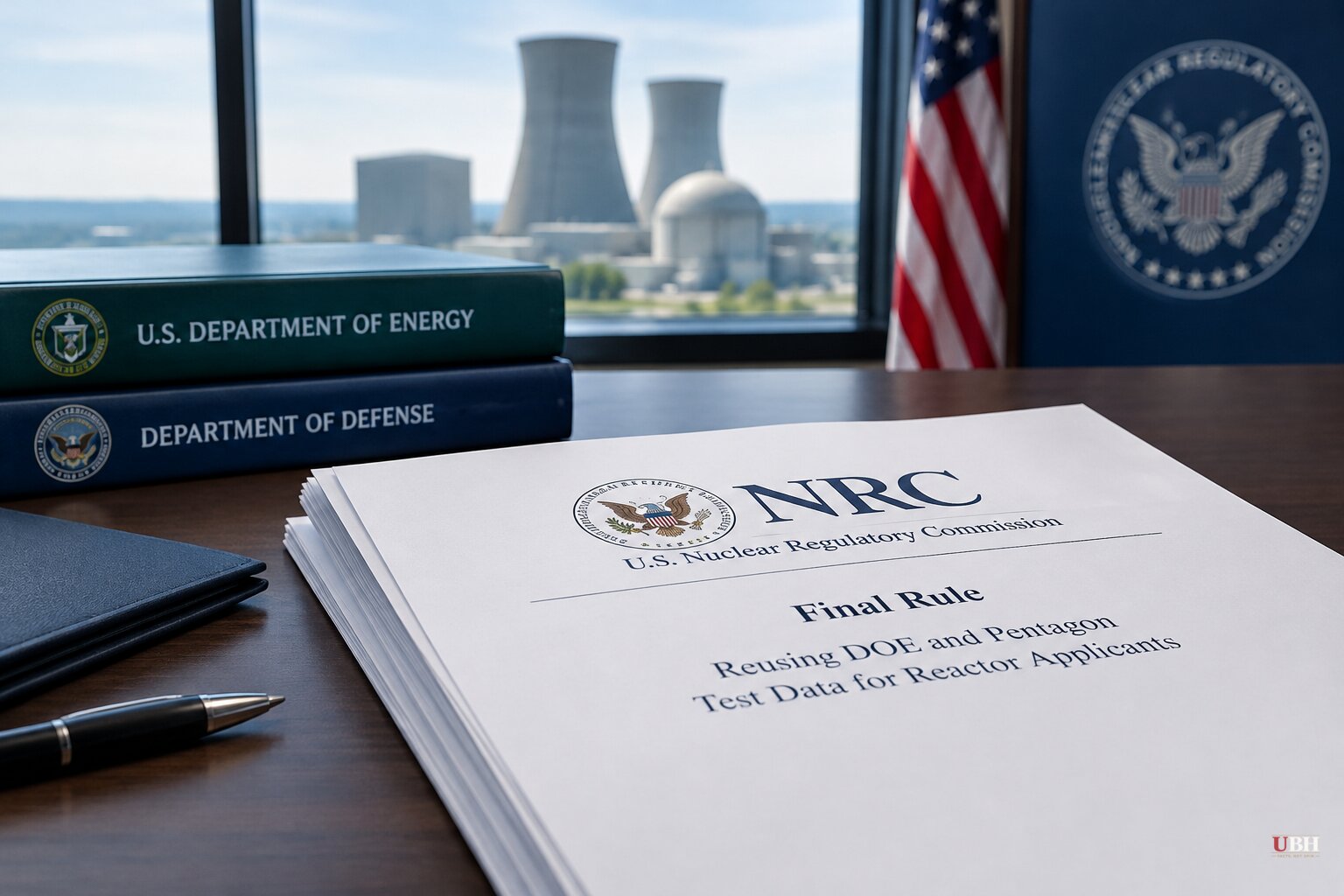
Since President Trump's May 2025 Executive Order 14300 told the Nuclear Regulatory Commission to speed up licensing, the agency has proposed and now finalized a rule that lets commercial reactor applicants reuse safety work already done under federal demonstration programs. The NRC announced it Thursday, Oct. 22. The Federal Register published it Oct. 26. It takes effect Nov. 25.
What the rule does
Applicants seeking a commercial license can now submit analyses, test data and other information generated in reactor demonstration programs run by the Department of Energy or the Department of War. Before, developers moving from a federally authorized demonstration to an NRC-licensed plant could be forced to redo technical work that had already been done.
The NRC says it is the first major change to its reactor regulations under EO 14300.
The agency proposed the rule April 2 and received 136 unique comment submissions. In response, the final rule spells out that applicants stay responsible for meeting every applicable statutory and regulatory requirement. It also gives examples of the kinds of information that can support an application.
"This rule delivers the EO 14300 vision for an expedited path from DOE and DOW projects to NRC commercial licensing," NRC Chairman Ho Nieh said. "High-quality applications showing how DOE and DOW results apply to NRC requirements will help us review them more efficiently."
The clock
Nieh told reporters the targets are about 18 months for first-of-a-kind applications and about 12 months for nth-of-a-kind applications. He called them targets, not guarantees, and said actual times will vary by application, especially for the first few reviews.
The NRC says the change should cut licensing costs and its own review workload. It has not put a dollar figure or a number of months saved on either.
What still has to be proven
A prior demonstration does not carry a design through automatically. Applicants must show how the federal results apply to NRC requirements. They must also identify differences between the demonstration reactor and the proposed commercial plant, including design, site and hazards that could affect safety.
Nieh said the rule is "not a shortcut" and "not a compromise." He added that NRC reviews could be more stringent on consequence analysis, meaning estimates of offsite radiological, health or economic impacts of severe accidents, and on hazards such as earthquakes and tornadoes.
The NRC's final rule also states that "nothing in this rule delegates to DOE, [DOD], or any other agency the NRC's functions to evaluate a request for NRC approval."
The objections
Edwin Lyman, director of nuclear power safety at the Union of Concerned Scientists, said it is critical that the NRC keep its authority to make independent safety and security determinations. "For all their flaws," he said, the NRC's licensing procedures are far more rigorous and transparent than those at DOE or the Department of War.
The NRC itself acknowledged in the final rule that it saw "significant public interest," with some commenters worried the changes would weaken its independent evaluations. The agency says the rule leaves that commitment and the underlying requirements untouched.
Fewer people, faster targets
The NRC is also shrinking. The agency has been dealing with above-normal attrition, according to FedScoop's reporting. The White House's fiscal 2027 budget proposal would cut nearly 200 full-time positions.
Commissioner Bradley Crowell raised the problem at a May congressional hearing. "The people that we've lost are the very senior, most experienced folks, and they'll be replaced by interns and fellows," he said. He warned that at some point staff "are going to be asked to do more than they have ability."
Senators at the same hearing asked how the agency would guard against risk given the cuts and the efficiency push. They pointed to the potential for "skipped steps" in licensing. The NRC's stated answer is the rule's text: independent review stays, and applicants carry the burden of proof.
The case for the rule is simple and on the taxpayer's side. Duplicative federal reviews of the same reactor cost money and time. The same government pays for the demonstration and then the licensing review. Cutting the overlap is the kind of reform conservatives have asked for, provided the final safety call stays with the NRC.
Not the only hurdle
Licensing is one piece of the problem. Developers still face financing, nuclear fuel supply, supply chains and the basic task of building projects on schedule. A faster permit does not pour concrete or enrich uranium.
The NRC says it will post a detailed response to the 136 comment submissions on its website and in its Agencywide Documents Access and Management System. The first real test comes after Nov. 25, when the first applicants cite DOE or Department of War results and the NRC either meets its 18- and 12-month targets or doesn't.
Sources used for this briefing
6 links from 6 independent newsrooms (syndicated copies of the same report count once)
These are the sources it draws on, linked so you can verify.


