
Unbiased headlines. Facts, not spin.
Unbiased Headlines is an independently owned news organization. We bring you the facts, not opinions, written fresh from 110+ named sources. Sources linked so you can verify it yourself.
 energy
Major Story (8/10)
Three Russian Diesel Tankers Cross Atlantic Toward US Ports as Blumenthal Demands Shipping Firms Recall Cargoes
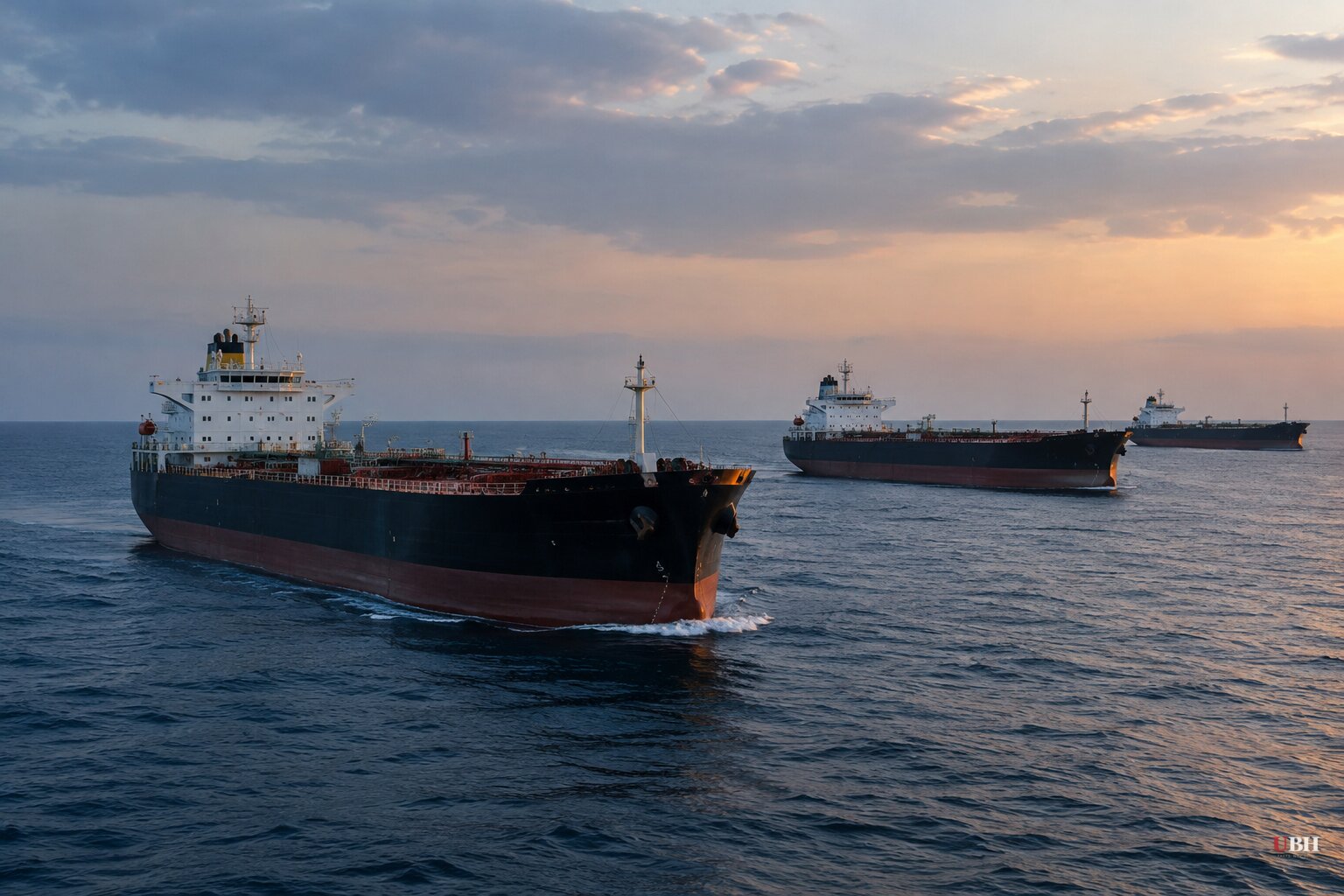
Since Trump and Putin announced their diesel agreement on Oct. 9, the first Russian cargoes have left port. Three tankers are crossing the Atlantic toward U.S. ports, and Russian Deputy Prime Minister Alexander Novak said a fourth is expected to depart Oct. 28. "There are three ships at the moment. The fourth has not yet departed," Novak said at the Gas Exporting Countries Forum summit, according to TASS.
The three vessels carry roughly 140,000 metric tons of diesel in total.
Wright: more could follow
Energy Secretary Chris Wright told CNBC's "Power Lunch" today, Oct. 27, that additional Russian cargoes could "quite possibly" sail under the sanctions waiver. He described the policy as "a carrot in front of Russia."
"I wouldn't call this going soft on Russia — it is not," Wright said. He said the six-month waiver covers only diesel, not Russian crude or other products, and that Russia has to change its behavior "to get any meaningful value for it."
On CNN's "State of the Union" on Sunday, Wright made the same argument. Russia is short on diesel itself, he said, and "the only way they can get additional diesel to export is if they turn down the conflict with Ukraine." Trump wrote on Truth Social that he does not want to "foolishly" drive Russia away from the bargaining table while negotiating peace.
The legal fight
The Treasury Department issued General License No. 135 on the day of the deal. It authorizes transactions tied to buying, shipping and importing Russian diesel and runs until April 7, 2027.
Sen. Richard Blumenthal, D-Conn., sent letters today to two shipping companies, Eastern Mediterranean Maritime Limited and PetroVietnam. He demanded they recall tankers carrying Russian diesel bound for U.S. ports. Blumenthal argues that the Treasury license cannot override the Ending Importation of Russian Oil Act of 2022.
Other lawmakers make the same argument. They say the administration cannot bypass the 2022 law without congressional approval. The same coalition has threatened to investigate companies involved in the shipments.
Jeremy Paner, a Hughes Hubbard & Reed partner and former Treasury sanctions official, takes the opposite view. He told Fox News Digital the claim that Trump broke the 2022 law "is actually not founded in law." The president, he said, "certainly has the authority in this case to provide the authorization." Paner added that a U.S. authorization does not erase the underlying prohibition.
Bipartisan opposition
The objections go beyond one Democratic senator. Several Republican senators signed a letter with Democratic colleagues calling the deal "a gift to our adversary and a betrayal of our Allies."
Sen. Thom Tillis, R-N.C., was blunter on X: "Beyond irresponsible. What part of enforcing a law passed 86-11 by the Senate does the President and his advisors not understand?" He added that if Trump wants lower energy prices, "he can do it by solving the Iran problem, not by doing a solid for Vladimir Putin."
Ukrainian President Volodymyr Zelenskyy says waiving sanctions on Russia "seems wrong" to him. Kyiv has hit Russian refineries all year to cut Kremlin energy revenue. Those strikes forced Moscow to impose a diesel export ban in July, which the Kremlin has partially lifted to fulfill the Trump-Putin deal.
How much fuel, and when
The agreement calls for 800,000 metric tons of Russian diesel across October and November, followed by another 1 million tons. The first tranche is 300,000 tons and the second is 500,000.
Analysts say that will not move prices much. The first tranche equals about 75,000 barrels per day if spread over a month, and the second about 124,000. Global diesel demand runs around 28 million barrels per day.
Diesel prices have spiked since the U.S. and Israel attacked Iran on Feb. 28. Iran has effectively shut the Strait of Hormuz, and the International Energy Agency has said the diesel shortage could run into 2027.
Delivery timing matters politically. MarineTraffic projects the Russian-flagged tanker Talisman will reach the U.S. East Coast on Nov. 9. A tanker that left Primorsk on Oct. 22 was tracked toward New York with an expected arrival around Nov. 7. A third vessel, the Leruo, has left Russia bound for the "Atlantic Coast" without declaring the U.S. as its destination.
The midterms are Tuesday, Nov. 3. The administration has acknowledged the pressure of rising fuel prices ahead of the vote, but none of the tracked cargoes is projected to land before Election Day.
Post-war energy talks
Separately, the Financial Times reports, citing people familiar with the matter, that the White House and Kremlin are discussing post-war energy ventures. Proposals include restarting U.S.-Russian oil and gas joint ventures off Sakhalin Island and a plan for U.S. companies to help resume Russian oil sales to Europe through the Druzhba pipeline.
The ideas are being pushed by envoy Steve Witkoff, who met Putin in St. Petersburg in early September and visited Moscow last week. Everything is contingent on a comprehensive peace deal, and nothing is finalized. Europe opposes easing sanctions before the war ends, and ExxonMobil has no intention of returning to Russia.
The next concrete marker is the fourth tanker's departure, scheduled for Oct. 28. After that, the first landings in early November will test whether Blumenthal's recall demand, or any congressional investigation, changes what happens at the dock.
Sources used for this briefing
8 links from 6 independent newsrooms (syndicated copies of the same report count once)
These are the sources it draws on, linked so you can verify.


