
Unbiased headlines. Facts, not spin.
Unbiased Headlines is an independently owned news organization. We bring you the facts, not opinions, written fresh from 110+ named sources. Sources linked so you can verify it yourself.
 energy
Major Story (8/10)
Saudi Oil Exports Hold Near Wartime Highs in October, but Trackers Disagree Widely
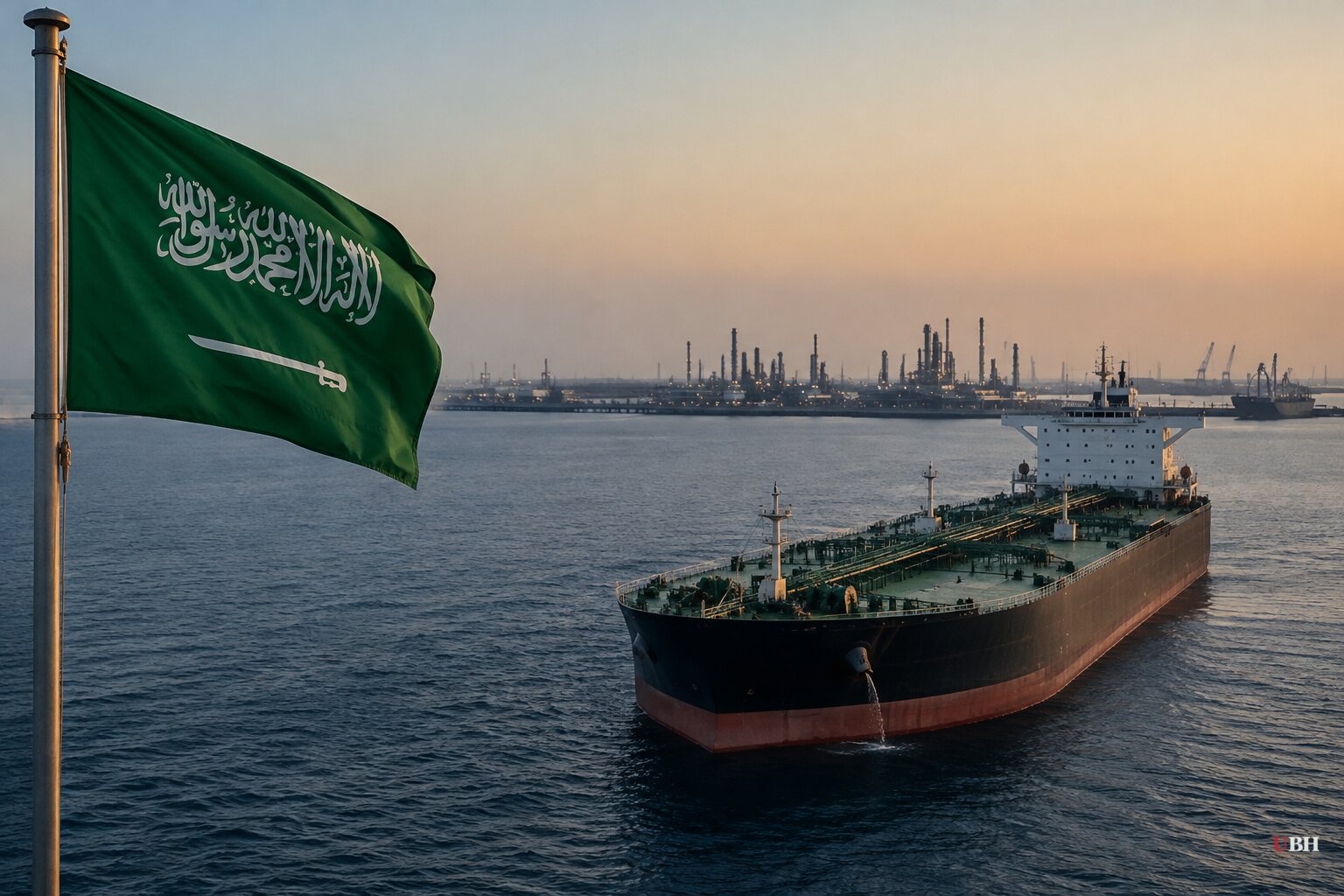
Since the Iran war began, Saudi Arabia has kept most of its crude moving even as Houthi missiles and Iranian attacks on Gulf shipping escalated. October's tracking data shows how well that is holding up, and the trackers do not agree.
Three trackers, three answers
Vortexa puts Saudi exports from the west and east coasts at 6.5 million barrels a day so far in October, against 6.6 million for all of September. Tankertrackers.com estimates 6.99 million barrels a day, which would be a prewar level.
Kpler has it much lower. Bloomberg cites Kpler at 5.4 million barrels a day, lower than in September. Kpler's own count, as cited by Egypt Oil & Gas, is 5.52 million barrels a day for Oct. 1 to 25.
The spread between the lowest and highest estimates is well over a million barrels a day. Preliminary tanker-tracking data is a moving target, and all of these figures will shift.
Kpler's head of crude oil analysis, Homayoun Falakshahi, said the full-month figure could rise to about 5.8 million barrels a day. He said additional Saudi shipments are still being recorded after they transit the Strait of Hormuz. Some cargoes were also transferred at sea in the Gulf of Oman, from vessels loaded at Saudi ports onto other tankers.
For scale, Kpler recorded a February peak of 7.33 million barrels a day, the month before the war began. On Kpler's numbers, October is on track to be the second-highest month since the war started.
The Gulf side is taking the hit
The port-level numbers show where the pressure is. Kpler data has crude exports from Ras Tanura on the Persian Gulf averaging 2.95 million barrels a day through Oct. 25, down from 4.16 million in September.
Yanbu on the Red Sea averaged 2.21 million barrels a day over the same period, compared with 2.54 million in September. Kpler also logged 352,000 barrels a day from unspecified loading ports.
Ras Tanura and Yanbu handle nearly all Saudi oil exports. Ras Tanura sits inside the zone where Iran is attacking vessels with missiles, drones and mines. Yanbu sits on the Red Sea, where the Houthis have announced a blockade on Saudi oil exports.
Those averages end on Oct. 25, before the latest strike claim.
Ras Tanura: claim, fire, open questions
On Tuesday, Oct. 27, Houthi military spokesman Yahya Saree said a ballistic missile hit the Ras Tanura refinery and caused "massive fires." Saudi authorities have not confirmed that the refinery was struck.
Maritime security agency Vanguard reported a fire in the Ras Tanura area after an attack early Tuesday. It said the fire had reportedly been contained, but that the extent of damage and any impact on oil-loading operations remained unclear.
Bloomberg, citing a person familiar with the matter, also reported the fire near the terminal was contained.
Ras Tanura combines a refinery able to process 550,000 barrels a day with an export terminal. It was suspended for a period in the early months of the war as a precaution.
The Houthis frame all of this as a campaign against Saudi energy infrastructure. Saree has claimed hits on the East-West Pipeline, its pumping stations, the Rabigh refinery and an Aramco facility at Yanbu. Riyadh has confirmed intercepting missiles but has not confirmed damage to the pipeline or other installations. None of the Houthi claims has been independently verified.
Missiles keep coming
The fire has not stopped the attacks. Early Wednesday, the Saudi-led coalition said it intercepted and destroyed a Houthi ballistic missile launched toward the western city of Taif. Saudi Civil Defense issued early warnings for Jeddah and Yanbu governorates, then said minutes later that the danger had passed.
On Tuesday evening, debris from two intercepted ballistic missiles damaged a building, a construction project and a vehicle in Riyadh, Saudi Civil Defense said. Its spokesperson did not say whether anyone was hurt.
The coalition spokesman, Maj. Gen. Turki Al-Maliki, said air defenses also destroyed three ballistic missiles aimed at the Eastern Province on Tuesday. They shot down four drones targeting southern Saudi Arabia.
Diplomacy and alliances
The strikes came a day after Saudi Arabia's defense minister, Pakistan's army chief and Türkiye's intelligence chief met Iranian officials in Tehran to try to lower regional tensions. The three countries recently signed a mutual defense agreement in Mecca.
Egypt's parliament has separately authorized its military to help defend Saudi Arabia if asked. The form of that support is unclear. Houthi political bureau member Mohammed Ali al-Houthi called the Egyptian decision a declaration of war and said the group is "not afraid of any alliance that may be formed."
On the ground in Yemen, Saudi-backed government forces reportedly pushed the Houthis out of coastal areas they seized in September. That weakens the group's hold on part of the Bab el-Mandeb route. The Houthis say they repelled a Saudi-backed advance near the strait.
What to watch
Brent crude was trading at $116.26 a barrel at 09:18 GMT on Tuesday, according to Reuters, as cited by Fish4News. That price reflected competing concerns about regional supply disruption and diplomatic talks, not solely the latest Houthi claims.
The next hard data comes when October closes on Saturday. That will show whether Kpler's projected 5.8 million barrels a day, Vortexa's 6.5 million or Tankertrackers' 6.99 million is closest. The Ras Tanura loading figures for the days after Tuesday's attack are the open question. Saudi authorities have not said whether the terminal's operations were disrupted.
Sources used for this briefing
7 links from 7 independent newsrooms (syndicated copies of the same report count once)
These are the sources it draws on, linked so you can verify.


