
Unbiased headlines. Facts, not spin.
Unbiased Headlines is an independently owned news organization. We bring you the facts, not opinions, written fresh from 110+ named sources. Sources linked so you can verify it yourself.
 energy
Major Story (8/10)
Event date: October 21, 2026 ·
WTI Trades Above $102 as US Crude Stocks Fall a Fourth Week and Houthis Claim Strike on Saudi Refinery
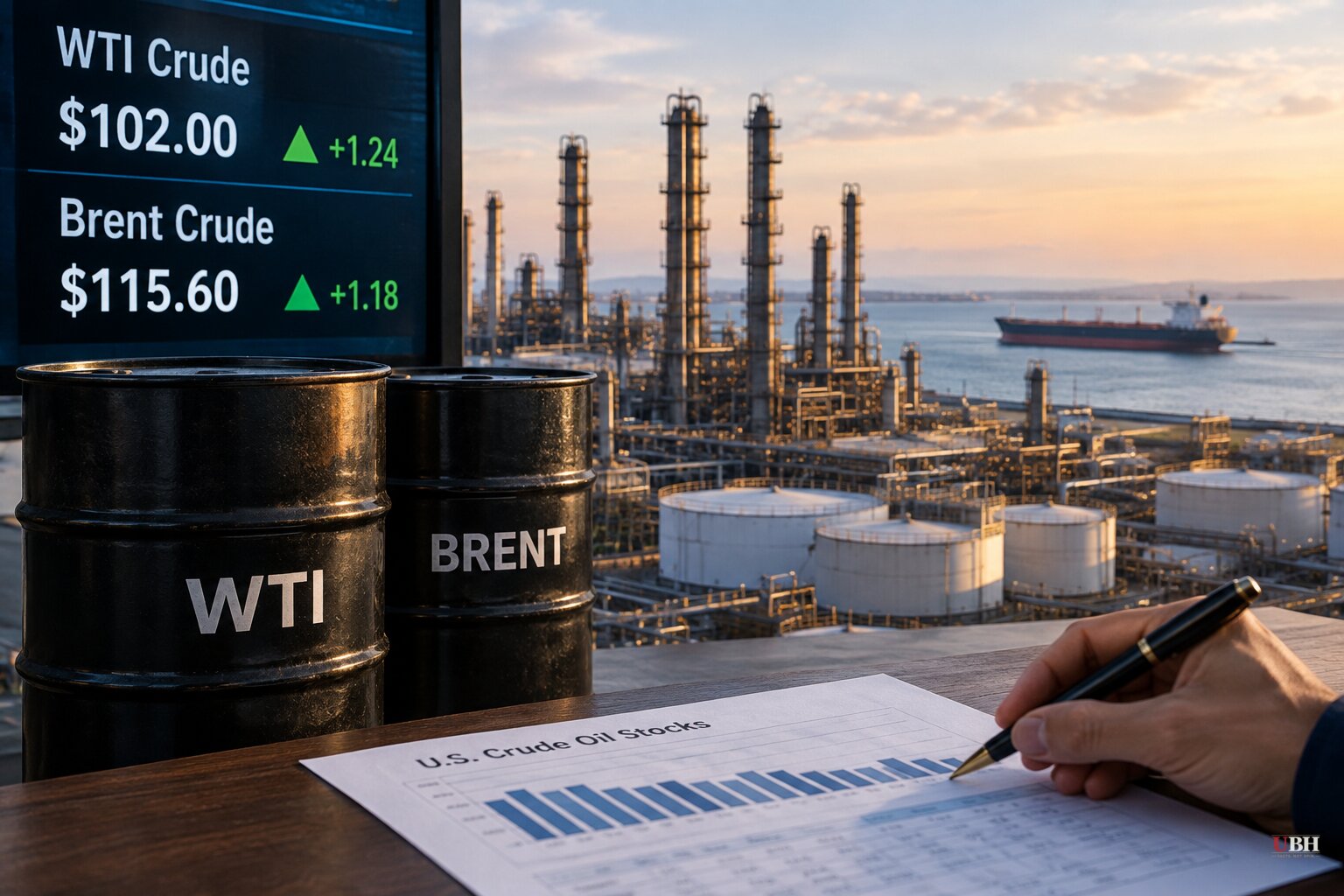
Oil is climbing again. WTI was trading around $102.40 a barrel Wednesday morning, up about $2.50 on the day and nearly $5 from this time last week, according to OilPrice. Brent was at $115.61, up roughly $7 on the week.
Two things moved the market today, Oct. 28: a government inventory report and a claim of an attack on Saudi infrastructure.
The Houthi claim
The Houthis said Tuesday that they hit Saudi Arabia's Ras Tanura refinery in the Eastern Province with a ballistic missile. That is the Houthis' account. The sources do not include a Saudi confirmation or a damage assessment.
Traders are pricing in the risk anyway. "The market is pricing in a larger probability of re-escalation," said Warren Patterson, head of commodities strategy at ING. Ole Sloth Hansen, head of commodity strategy at Saxo Bank, pointed to uncertainty around the Israeli election and the US midterms, "just days away."
ANZ Research analysts said talk of diplomacy has not produced meaningful selling. Traders are watching events on the ground instead.
What the EIA numbers show
Commercial crude inventories fell 1.89 million barrels in the week ending Oct. 23, the Energy Information Administration said. Analysts had expected a 15,000-barrel build. Stocks now stand at 410.6 million barrels, 4% below the five-year average. The American Petroleum Institute's private figure, released Tuesday, showed a 2.03 million barrel draw.
That is the fourth straight weekly drop. Stocks at Cushing, Oklahoma, the delivery point for WTI futures, fell 624,000 barrels.
Gasoline went the other way. Inventories rose 3.87 million barrels, after a 3 million barrel drop the week before, even as refinery utilization slipped. Distillates fell 1.46 million barrels and sit 10% below the five-year average.
US crude production rebounded to a record high after hurricane-related shut-ins. That follows Hurricane Isaias, which forced evacuation of more than 130 Gulf platforms and rigs in early October and briefly shut in about 1.5 million barrels a day of output. Crude exports jumped to nearly 5 million barrels a day, the highest since late May.
The Strategic Petroleum Reserve was barely touched. The drain was about 100,000 barrels, the eighth week in a row the Trump administration has left it essentially alone.
Pump prices
Gasoline demand fell by 624,000 barrels a day in the EIA week and dipped below the five-year seasonal range. One week does not make a trend. Over four weeks, gasoline demand averaged 8.6 million barrels a day, and total products supplied averaged 20.8 million, up 0.2% from a year ago.
Retail prices remain steep. AAA data put the national gasoline average at $4.36 a gallon in one recent reading, the highest ever for this time of year, with a more recent tally near $4.25. Diesel sat about 20 cents below its all-time high, set last month, according to the same AAA data.
Why the Strait reopening has not fixed prices
The Strait of Hormuz is no longer paralyzed, but moving crude through it costs far more than it did before the Iran war. Clarksons, the London shipping research firm, says hiring a supertanker for the Persian Gulf to China run costs $1.6 million a day. It was $65,000 a day last year and $230,000 just before the war began.
Tom Kloza, chief energy adviser at Gulf Oil, put the per-barrel cost of getting crude out of the Gulf at about $33, up from roughly $2. "That's insane," he said.
The Wall Street Journal reported that oil producers are paying $30 million to $40 million in insurance for a round trip through the strait. Some shippers are offering sailors up to $25,000 a trip. The UK Maritime Trade Operations has logged multiple commercial vessels hit by projectiles in recent days, including at least two crude tankers.
Jan Stuart, global energy strategist at Piper Sandler, rejected the idea that a reopened strait means relief. "The wars have not been resolved. There is no peace. The energy system is still constricted," he said. Ukrainian drone strikes on Russian refineries and Houthi attacks in the Red Sea add to the squeeze.
What comes next
Two weeks ago, on Oct. 15, WTI settled at $97.97 after a hurricane-driven 8.6 million barrel crude draw. The International Energy Agency said then that members agreed to speed up the release of more than 20 million barrels of diesel from strategic stocks. Washington was also weighing easing sanctions on shadow-fleet tankers to bring down freight rates. No decision on that is in the sources.
Patterson of ING says oil prices "remain sensitive to developments in the Persian Gulf, specifically around what action, if any, the US may take following the US midterm elections." The next EIA report will show whether last week's drop in gasoline demand was a blip or the start of something real.
Sources used for this briefing
7 links from 6 independent newsrooms (syndicated copies of the same report count once)
These are the sources it draws on, linked so you can verify.


