
Unbiased headlines. Facts, not spin.
Unbiased Headlines is an independently owned news organization. We bring you the facts, not opinions, written fresh from 110+ named sources. Sources linked so you can verify it yourself.
 energy
Major Story (8/10)
Event date: October 18, 2026 ·
U.S. Diesel Rises a Second Straight Week to $6.35 as Democrats Tell Banks and Ports to Preserve Russian Diesel Records
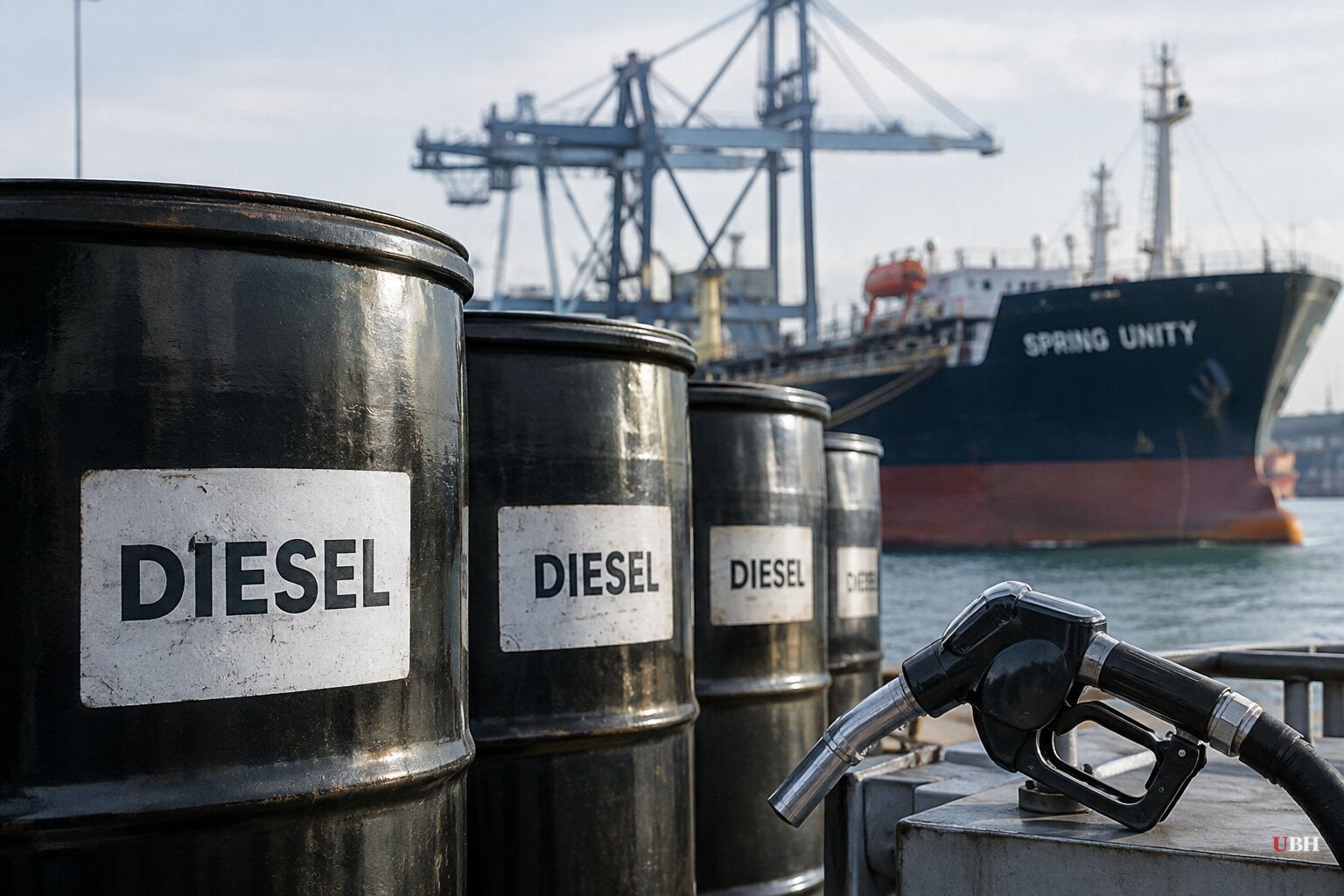
Since Trump announced a diesel deal with Vladimir Putin on Oct. 9 and Treasury suspended sanctions on Russian diesel deliveries until April 2027, the promised price relief has not shown up at the pump. Diesel averaged $6.35 a gallon in the latest Energy Information Administration reading, a second straight weekly increase and just below the record $6.53 set in September.
The midterms are Nov. 3. A Pew Research Center survey conducted Sept. 28 to Oct. 4 found 84% of registered voters call the economy very important to their vote, and 54% say the same of energy policy.
What the price data shows
Trump has blamed Ukrainian drone strikes on Russian refineries for the price spike. Ukrainian President Volodymyr Zelenskyy rejects that. "That is completely untrue," he said.
Federal data points to the Iran war as the trigger. Diesel stayed below $3.90 a gallon from August 2025 until U.S. and Israeli strikes on Iran began Feb. 28. It then jumped nearly 25% in a week to $4.86, according to the EIA.
Russia's own officials agree on the cause. Deputy Foreign Minister Georgy Borisenko said Oct. 12 that the key to stabilizing the market is "the speediest normalization of the situation around the Persian Gulf."
The International Energy Agency said in an Oct. 14 report that easing Russia's diesel export ban is unlikely to materially change global supplies, because Russia lacks the working refinery capacity. Zelenskyy put it in numbers: Russia accounts for 2.2% of global diesel supply.
The shipment and the claims around it
The Kremlin said last Friday that the first tanker had sailed. Spokesman Dmitry Peskov said "regular supplies will continue." Deputy Prime Minister Alexander Novak said the first cargo is 40,000 tons.
Marine intelligence firm Kpler said the vessel was signaling New York with an arrival date of Nov. 7. That would be the first Russian diesel delivery to the United States since July 2023.
The scale is small. Forty thousand tons is roughly 300,000 barrels, about 7% of the roughly 4 million barrels of diesel the U.S. burns in a single day.
Trump's stated volumes are bigger: more than 300,000 tons immediately, another 500,000 in November and 1 million after that. Novak said Russia could return to 3 to 3.5 million metric tons a month by year-end.
Novak also claimed global diesel prices have already fallen "five to six percent." The U.S. average moved the other way this week.
Trump says the fuel does not have to land in America to help American consumers. "That's a diesel deal that's going to be released into the world for the world market because the world market suffers with high prices," he told reporters.
Democrats build a paper trail
Axios obtained a letter sent Saturday to JPMorgan, Bank of America, Citi, Wells Fargo, Goldman Sachs and Morgan Stanley. It was also sent to ports. Rep. Greg Meeks (D-N.Y.), in line to chair House Foreign Affairs if Democrats win the chamber, signed it.
The letter states that "any importation of Russian diesel into the U.S. raises significant legal questions and may be subject to legal action, as well as congressional investigations." It asks recipients not to enable the "purchase, transportation, importation, unloading, storage, financing, or distribution" of the fuel. It also asks them to preserve records of "proposed or actual" transactions, citing "anticipation of further congressional oversight."
The legal dispute centers on a bipartisan 2022 law barring imports of Russian oil, gas and petroleum products. Critics say the deal violates it. The Treasury Department has repeatedly said the agreement is legal.
The pushback is not only from Democrats. Six Republican senators joined Democrats in urging Trump to reverse course, and five House Republicans signed a separate bipartisan letter seeking to revoke the Treasury authorization.
Who benefits
Analysts at the Institute for the Study of War and the Carnegie Russia Eurasia Center say the deal helps Moscow more than American drivers. In their assessment, it gives Russia deeper diplomatic ties with Washington and more money for its war effort. It also raises the prospect that U.S. pressure will halt Ukraine's strikes on Russian refineries, which they describe as one of Kyiv's few levers.
John Hardie of the Foundation for Defense of Democracies argues the arrangement would be tolerable to Kyiv only as part of a mutual energy truce. Trump announced an "energy ceasefire" Oct. 11, saying both parties had agreed. Zelenskyy said Russian strikes on Ukrainian energy infrastructure continued afterward. As of Oct. 13, no terms of the truce had been publicly confirmed.
The Kremlin sees the deal differently. Peskov said the diesel entering world markets will have "a certain positive effect on the stabilization of the oil markets." He also criticized European governments for opposing it.
What comes next
The Nov. 7 New York arrival is the first test of whether Russian diesel physically reaches U.S. shores under the Treasury license. Axios noted it is unclear how much Russian diesel, if any, will land in the U.S. Whether banks and ports handle the cargo, and what Democrats do with the records they have asked them to keep, will depend on who controls Congress after Nov. 3.
Sources used for this briefing
8 links from 8 independent newsrooms (syndicated copies of the same report count once)
These are the sources it draws on, linked so you can verify.


