
Unbiased headlines. Facts, not spin.
Unbiased Headlines is an independently owned news organization. We bring you the facts, not opinions, written fresh from 110+ named sources. Sources linked so you can verify it yourself.
 energy
Major Story (8/10)
Brent Falls About 6% to $106 After Iran's President Says Supreme Leader Granted Government Authority on Talks
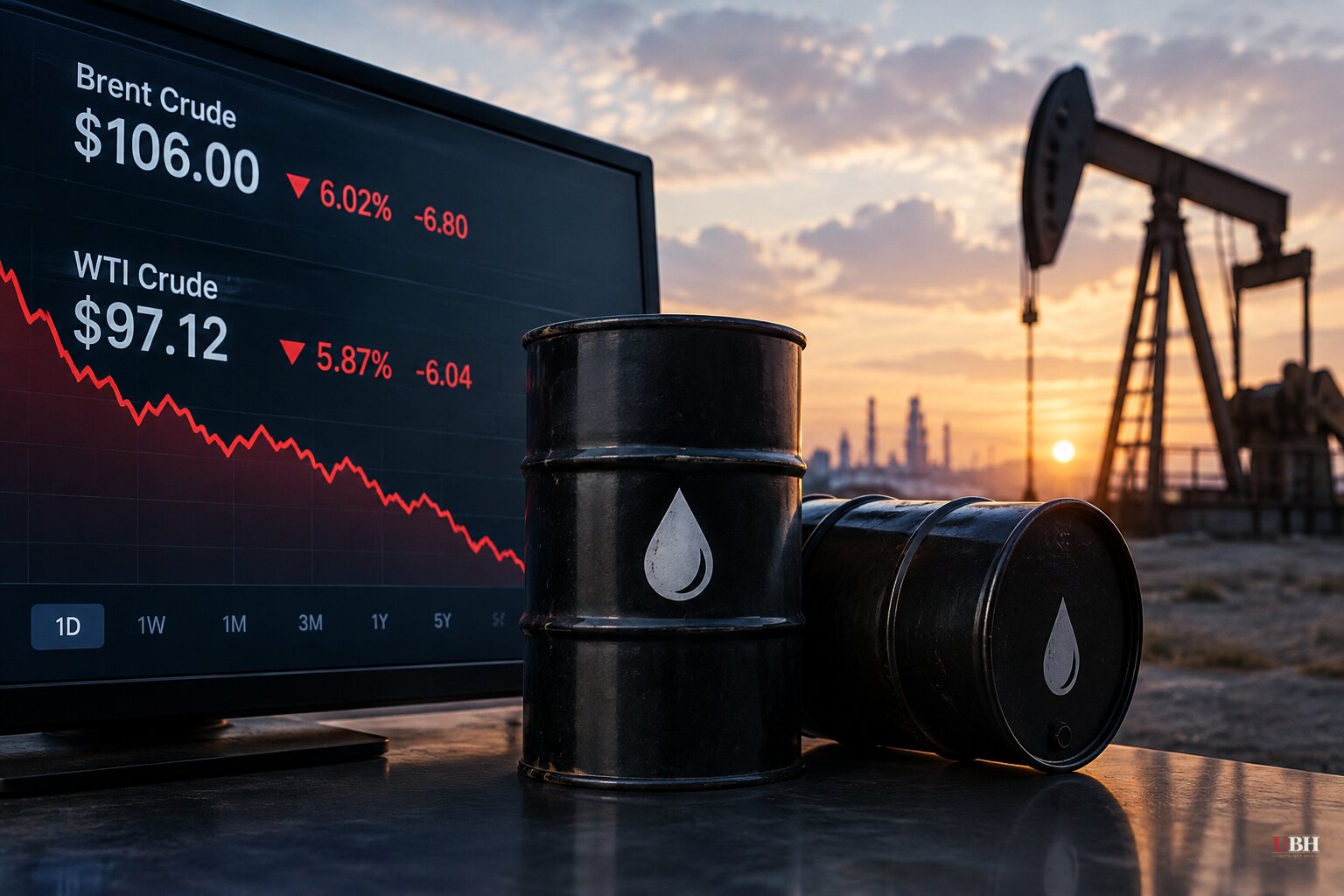
Since Brent first slipped below $110 in early Asian trading Monday, Nov. 2, the selloff has widened. By 9:50 a.m. ET, Brent futures were down 6.4% at $106.20 a barrel, and U.S. West Texas Intermediate was down 6.5% at $97.35.
Two statements drove the latest leg down. Pezeshkian said the Supreme Leader has granted the government certain authorities regarding negotiations, according to Iran's state-run ISNA news agency. Separately, Rubio told reporters over the weekend that Trump "hasn't made a decision" on military action and "would prefer to do it peacefully."
What Tehran is saying
Strategic decisions in Iran still rest with the Supreme Leader, so any deal needs his sign-off alongside the negotiators'. The Pezeshkian remark gives the government more room to deal, but it does not amount to approval of a specific agreement.
On Saturday, Oct. 31, Khamenei himself told the armed forces to meet "any level or type of threat" with "an immediate, impactful, and geographically unrestricted response."
Foreign Ministry spokesman Esmaeil Baghaei said Monday that contacts with the U.S. are continuing through mediators. "The dialogues are continuing. However, the issue is complex," he said. He added that Iran's September proposal remains the focus and can be shortened, but that condensing it does not change Tehran's position on its nuclear program. Baghaei said a transfer of Iran's highly enriched uranium stockpile to another country has not been discussed.
Foreign Minister Abbas Araghchi said an agreement is possible if Washington "demonstrates goodwill" and is "truly seeking a peaceful solution." He said Tehran expects sanctions lifted, U.S. military presence in the region cut back to earlier levels, and the blockade lifted.
Kyodo, citing a senior Iranian official, reported that Iran conveyed seven conditions to Qatar, including an end to the U.S. blockade of Iranian ports. The same official said Tehran would take a flexible position on nuclear issues if a deal reopens the Strait of Hormuz, though the U.S. is seeking simultaneous nuclear concessions.
Iran has put forward a two-day framework to reopen Hormuz, down from a seven-day version proposed a month ago. It is conditioned on Iran's demands being met, including lifting the blockade, releasing frozen funds and sanctions relief. The U.S. has not accepted it.
Washington's mixed signals
Axios reported that Trump told Israeli Prime Minister Benjamin Netanyahu in a phone call that he wants to give negotiations a chance, and that the stance concerned Netanyahu.
The military track has not been shelved. The Wall Street Journal reported the U.S. has told a number of Gulf Arab states to prepare for a possible brief but intense operation against Iran once Tuesday's midterms are over. The Journal also reported that a top military commander briefed Trump on options last Thursday. Trump has said talks are under way, has repeatedly threatened to resume strikes after the election, and has not made a final call on resuming them.
Trump has previously said he will not attack Iran before the midterms. Oil traders had priced in escalation risk after the vote, which is why Brent finished October at a six-month high.
Vice President JD Vance wrote last week to Mohsen Rezaei, secretary of Iran's Supreme National Security Council, in an effort to revive talks. Trump said he approved the outreach, which was meant to sketch a possible structure for talks rather than a full peace plan. A high-ranking Iranian official dismissed a separate Qatari plan as unacceptable. The U.S. and Iran signed a memorandum of understanding on June 17, but it collapsed.
The supply backdrop
The price drop does not fix the physical shortfall. ADNOC's chief executive said the world has drawn nearly 1 billion barrels from inventories since the war disrupted shipping through Hormuz, and that supply buffers have been "eroded." Goldman Sachs said Brent could reach $140 in 2027 if Gulf output stays 3.5 million barrels per day below its 2025 average.
Seven core OPEC+ producers agreed Sunday to hold December targets, about 31 million barrels per day combined. Most Gulf members are pumping well below those targets because of the war. The full group meets Nov. 29.
Tamas Varga of PVM Oil Associates noted that attacks on ships and refineries in the Middle East continue, "doing little to inspire confidence in the prospects for lasting ceasefires." Tim Waterer of KCM Trade called Monday's move a technical pullback after last week's gains.
Markets elsewhere moved with oil. Precious metals and equity futures rose, and the dollar fell, as traders bet lower crude would ease inflation and rate-hike pressure. Analysts at Investing Live said a clear breakthrough, not headlines, would be needed to change the broader trend.
What to watch
Tuesday's midterm vote removes Trump's stated reason to hold off on strikes. Whether Washington answers Iran's two-day proposal, and whether the Supreme Leader backs whatever terms emerge, will decide if the roughly $7 drop in Brent holds or reverses.
Sources used for this briefing
8 links from 8 independent newsrooms (syndicated copies of the same report count once)
These are the sources it draws on, linked so you can verify.


