
Unbiased headlines. Facts, not spin.
Unbiased Headlines is an independently owned news organization. We bring you the facts, not opinions, written fresh from 110+ named sources. Sources linked so you can verify it yourself.
 energy
Major Story (7/10)
Goldman Sachs Raises December Brent Forecast to $105 From $90 on Supply-Disruption Risk
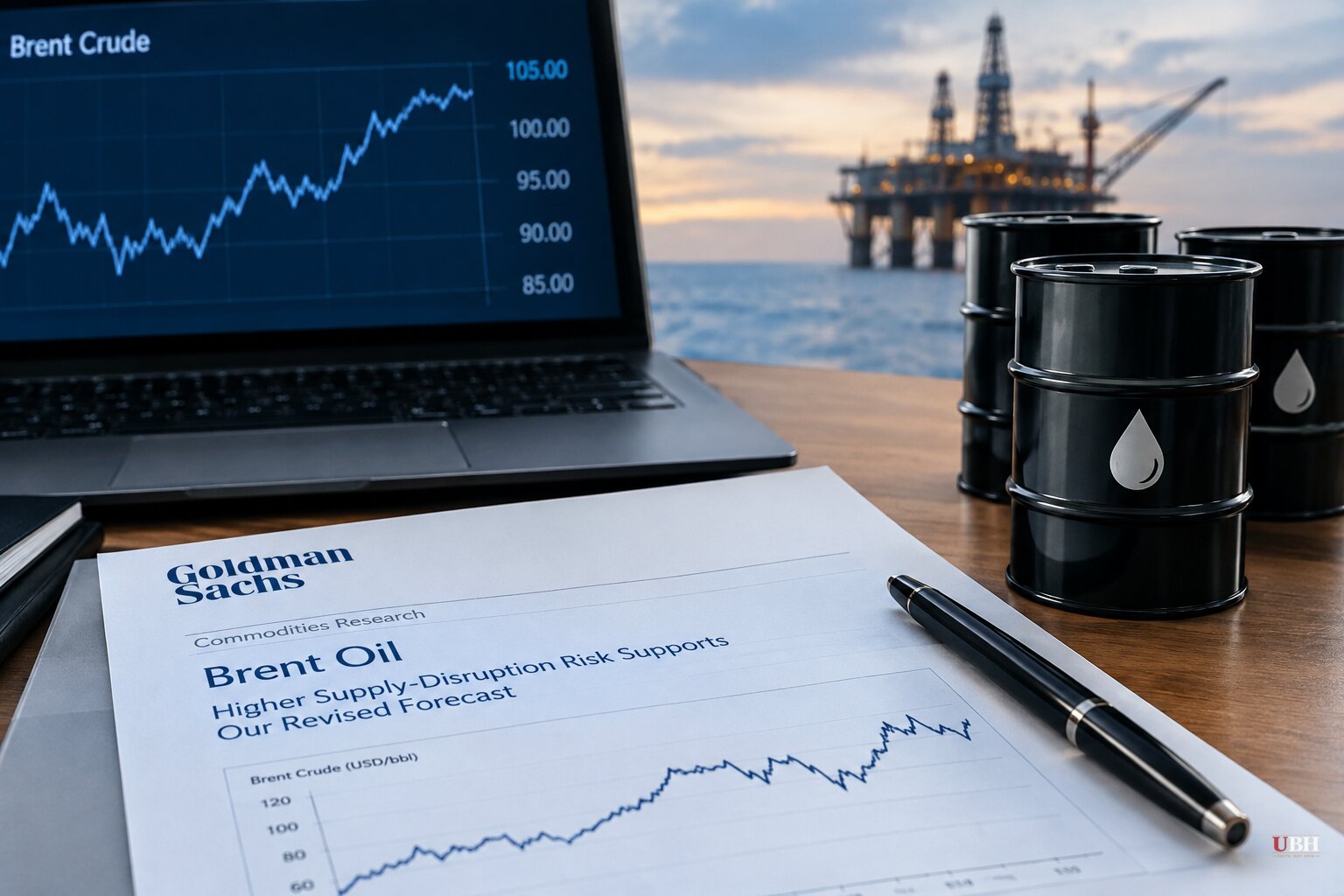
Goldman Sachs raised its oil price forecasts on Sunday, Nov. 1, saying the risk of supply disruption from the Middle East and the Russia-Ukraine war is not going away.
The bank now sees December Brent at $105 a barrel, up from $90. Its December West Texas Intermediate forecast rose to $94 from $81. For 2027, it lifted its average Brent forecast to $88 from $80 and WTI to $78 from $73. The note was led by strategist Daan Struyven, with analyst Yulia Zhestkova Grigsby among the authors.
Morgan Stanley and ANZ have also moved their year-end Brent forecasts to $105.
Where prices stand
Brent settled Friday at $116.72 a barrel. WTI closed at $103.27. Brent rose 14% in October and finished the month at a six-month high.
That run has partly reversed. At 1:30 a.m. ET today, Nov. 2, Brent futures were down about 3% at $110.05 and WTI futures at $100.71, as Iranian and Qatari officials held talks for a third straight day. Those are overnight futures levels, not a regular-session close.
Note what Goldman is forecasting. Its December target is below where Brent trades now. The bank's argument is that the current price carries a large premium that a shock could widen and a deal could erase.
The $27 premium
Goldman estimates the risk premium baked into prices at about $27 a barrel, up from nearly $25 in mid-October. The bank says that premium explains most of Brent's climb to $118 in October.
The underlying market barely changed over the same period. Goldman says Brent's fair value held in the $90s. Global inventories stayed flat, and both Middle East supply and world demand adjusted to high shipping risk and high prices. In its mid-October note, Goldman had said global oil demand fell 3.3 million barrels per day year on year in the third quarter.
The bank's reasoning for the higher forecast is that many traders believe a lasting diplomatic breakthrough will be hard to achieve. It also points to the length of past major supply shocks.
A standing disruption allowance
The bigger change is structural. Goldman said the timing and location of disruptions are nearly impossible to predict, so its 2027 base case now includes a global supply disruption allowance of 1 million barrels per day.
It also laid out an upside scenario. If average Gulf output in 2027 stays 3.5 million barrels per day below its 2025 average, Goldman says Brent could reach $140 and average about $130 for the year.
Goldman cited prediction-market platform Polymarket for the odds on a U.S.-Iran ceasefire. Implied odds that the ceasefire ends in escalation rose from 10% before the election to 50% in mid-November and 75% by year-end, according to the bank's note. Goldman said markets are focused on three scenarios: a strike on Iran's underground nuclear sites, a strike on missile bases near the Strait of Hormuz, or broad strikes on energy infrastructure including power grids and Kharg Island.
Diplomacy against escalation
The talks cut the other way. Iran has discussed a Qatar-brokered plan under which Tehran says the Strait of Hormuz could reopen within two days if Washington meets its conditions. That prospect weighed on crude in early Asian trading.
Secretary of State Marco Rubio said over the weekend that President Trump would prefer a diplomatic resolution. Rubio said Trump has not decided on next steps but is confident the U.S. military could carry out an operation if needed.
Axios, citing Israeli and U.S. sources, reported a different picture of Saturday's call between Trump and Israeli Prime Minister Benjamin Netanyahu. Per that report, Netanyahu is pressing Trump to strike Iran right after Tuesday's midterms, while Trump wants to give negotiations more time. No new military operation has been announced.
The Trump administration continues to maintain a naval blockade of Iranian oil exports, and commercial vessels still face security threats in the Strait of Hormuz. Over the weekend, multiple vessels were reportedly struck or damaged in the Gulf, the Strait of Hormuz and the Gulf of Oman. Ukraine also resumed drone attacks on Russian oil refineries.
IAEA Director General Rafael Grossi told the U.N. General Assembly on Friday that the agency has completed much of the preparation needed to verify Iran's nuclear activities if Washington and Tehran strike a deal. No agreement authorizing inspections has been announced.
What comes next
The U.S. midterm elections are Tuesday, Nov. 3. Goldman's own probability markers put the next test in mid-November, when it says the market is pricing even odds that the ceasefire collapses.
Russian President Vladimir Putin is also expected to host Iranian President Masoud Pezeshkian in Moscow next week. If the Qatar-brokered Hormuz plan produces a reopening, Goldman's $27 premium has room to shrink. If strikes resume, its own scenario work puts Brent at $140.
Sources used for this briefing
7 links from 7 independent newsrooms (syndicated copies of the same report count once)
These are the sources it draws on, linked so you can verify.


