
Unbiased headlines. Facts, not spin.
Unbiased Headlines is an independently owned news organization. We bring you the facts, not opinions, written fresh from 110+ named sources. Sources linked so you can verify it yourself.
 energy
Major Story (8/10)
Brent Drops About 4% to $108.64 as Iranian Negotiators Leave Qatar Talks With Draft Proposal Circulating
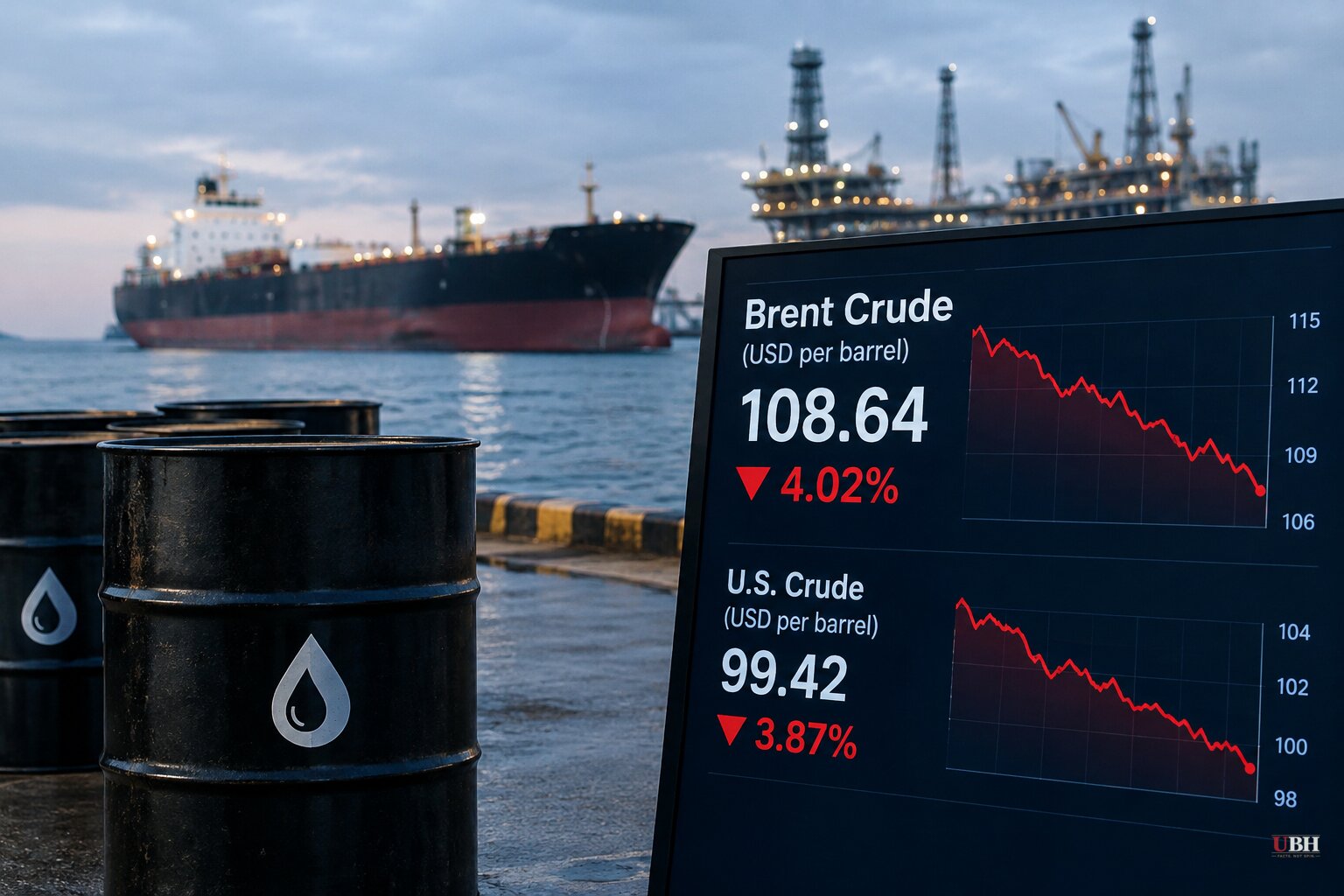
Since Brent slipped to $109.75 in early Asian trading Monday, Nov. 2, the sell-off has widened. By 1020 GMT, Brent futures were down $4.79, or 4.2%, at $108.64 a barrel. U.S. West Texas Intermediate traded at $99.71, down $4.41, or 4.2%. That puts the U.S. benchmark under $100 for the first time in this stretch of trading.
CNBC's early-morning quote was steeper still. At 5:49 a.m. ET, January Brent was down 4.61% at $108.20 and December WTI was down 4.44% at $99.50.
What changed in the talks
Iranian negotiators have left the Qatar-mediated talks, and a draft proposal is being circulated, an official briefed on the discussions said Monday. A follow-up meeting is possible. The official did not describe the draft's contents.
Iranian Foreign Minister Abbas Araqchi said Sunday that the "ongoing and progressing" talks were meant to continue consultations with the Qatari mediators. He said Tehran was prepared for "both defence and diplomacy."
Iranian authorities also signaled that a deal is still possible, as long as their demands are implemented tangibly, according to Al Jazeera.
One market-analysis outlet, Investing Live, reports that Iran has proposed a two-day framework to reopen the Strait of Hormuz. In exchange, Tehran wants sanctions relief, the release of frozen assets and changes to the U.S. military presence. That is shorter than a seven-day framework Iran floated a month ago. The same outlet says the U.S. has not accepted it. Washington has not publicly responded.
Washington's signals
Secretary of State Marco Rubio told reporters over the weekend that President Trump "hasn't made a decision." Rubio said Trump has "incredible confidence" that the U.S. could act militarily if needed. "But we would prefer to do it peacefully," he said.
Axios, citing sources, reported that Trump told Israeli Prime Minister Benjamin Netanyahu in a phone call that he wanted to give diplomacy more time before considering further strikes.
Speaking Sunday to Right Side Broadcasting Network before an Iowa rally, Trump was quoted as saying: "We've had such a victory, and we'll put it away very soon, one way or the other. Either they'll make a deal, or we'll just end it."
The military track hasn't gone away
The diplomacy is running alongside preparations for more fighting. The Wall Street Journal and The New York Times have both reported that the U.S. is preparing for possible renewed military action after Tuesday's midterm elections. Reports also say Iran is preparing for additional strikes.
Supreme Leader Mojtaba Khamenei said Saturday that Iran's armed forces must meet "any level or type of threat" with "an immediate, impactful, and geographically unrestricted response."
Tamas Varga of oil broker PVM Oil Associates said attacks on ships and refineries in the Middle East, and on civilians in Ukraine, continue and do "little to inspire confidence in the prospects for lasting ceasefires in the foreseeable future." He added: "Nonetheless, hope springs eternal."
Tim Waterer, chief market analyst at KCM Trade, said hopes of diplomatic progress and the absence of meaningful military escalation over the weekend "have taken some of the immediate heat out of prices for now."
Supply picture
Brent ended October at its highest in six months, on concerns that the conflict could escalate after the midterms. The talks follow a recent rise in attacks on oil tankers in the Strait of Hormuz.
There are some counter-signals on supply. Two of three ship-tracking companies said Saudi Arabia raised crude exports in October versus September, despite Houthi attacks on its energy infrastructure.
Still, the war that began at the end of February has drained stocks. The CEO of Abu Dhabi's state-owned ADNOC said the world has pulled nearly 1 billion barrels from inventories since shipping through Hormuz was disrupted.
Goldman Sachs raised its forecasts Sunday. It said Brent could jump to $140 in 2027 if Gulf output stays 3.5 million barrels per day below its 2025 average. UBS commodity analyst Giovanni Staunovo said Brent should stay near $110 at year-end. He cited record freight costs, constrained tanker capacity and recovering Chinese imports.
Downstream costs
Ryanair CEO Michael O'Leary told CNBC that European airlines could charge "significantly higher airfares" of up to 20% next year as fuel costs rise. The airline says its fuel bill may be €2 billion higher in 2028 unless the war ends.
What to watch
Tuesday, Nov. 3, brings the U.S. midterms. Whether the draft being circulated becomes an agreement, or the strike preparations described by U.S. media move forward, will decide if the roughly $20 of premium that has built into Brent since the war began unwinds or returns. The next Iran-Qatar meeting has not been scheduled.
Sources used for this briefing
7 links from 6 independent newsrooms (syndicated copies of the same report count once)
These are the sources it draws on, linked so you can verify.


