
Original briefings. Zero spin.
Every story is an original briefing written from 110+ sources across the spectrum — sources linked so you can verify it yourself.
 energy
Major Story (7/10)
August 18, 2026 at 05:30 PM
energy
Major Story (7/10)
August 18, 2026 at 05:30 PM
Brent Crude Sits Near $91 While Diesel Trades Near $170 a Barrel, and That Gap Is the Real Problem
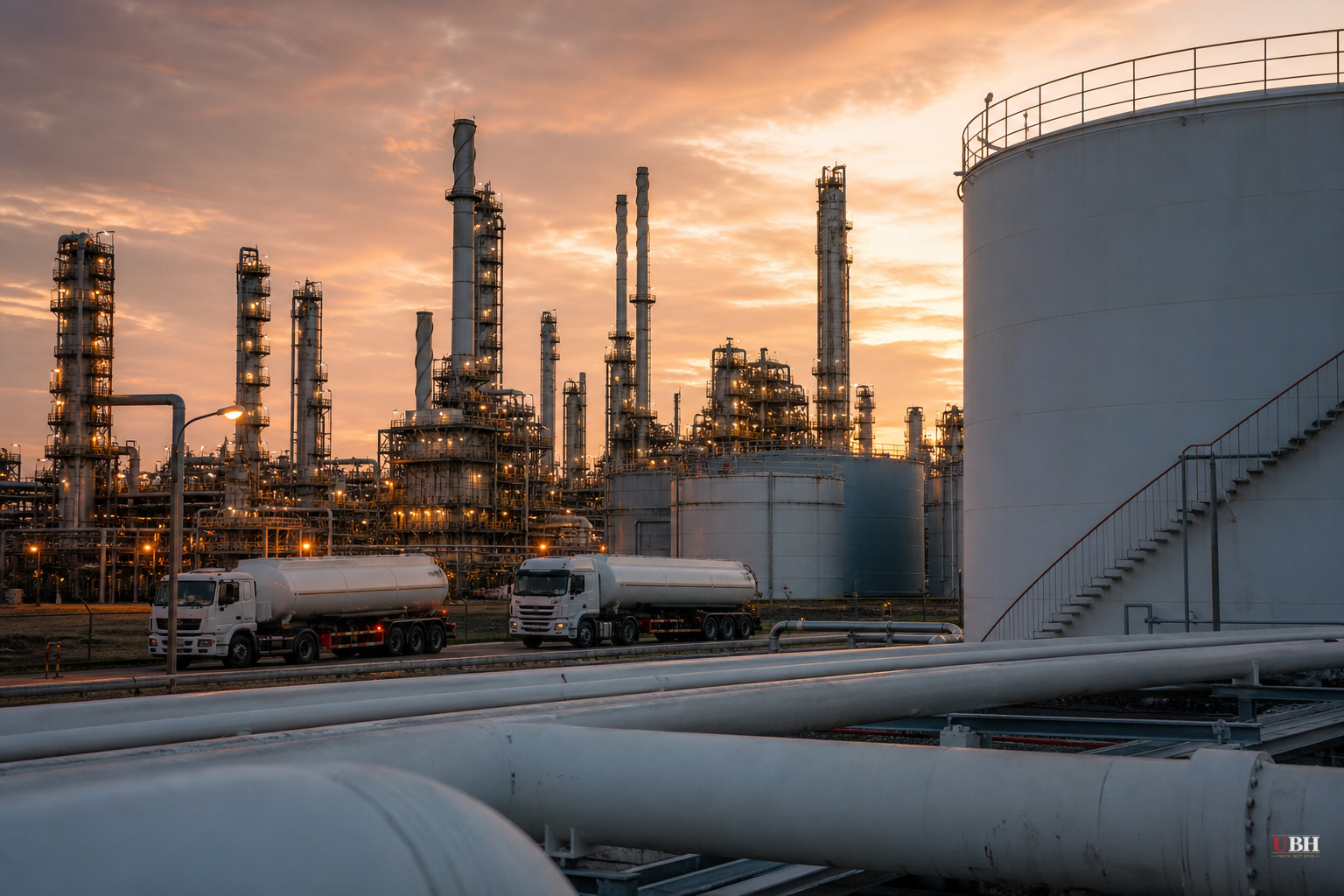
Brent crude is trading around $91 a barrel. That number alone tells you almost nothing about what Americans and Europeans are actually paying for fuel right now.
Jeff Currie, the veteran commodities strategist now at Carlyle Group, laid out the disconnect bluntly in comments to CNBC. "Nobody on the planet Earth consumes crude oil," Currie said. "Refineries do. Everyone else consumes gasoline, diesel and jet fuel, and those markets look considerably uglier."
European diesel has been trading near $170 per barrel, nearly double the price of Brent crude, according to reporting from Energy News Beat. U.S. diesel crack spreads, which measure the refining margin on diesel futures over WTI crude, broke through $100 a barrel for the first time on record, hitting an intraday high of $102.20.
U.S. retail diesel has been running in the mid-$5 per gallon range. Diesel prices are up roughly 46% year-over-year, and gasoline is up around 30%, per Energy News Beat's reporting.
China's Refinery Cuts Moved the Pain Downstream
This isn't a straightforward crude shortage. It's a refined-products crunch, and China played a direct role in creating it.
A surge of crude supply built up in late June and early July, leaving an estimated 100 to 120 million barrels effectively trapped inside the Strait of Hormuz amid disruptions tied to the Iran conflict. China's response was to cut refinery runs rather than draw that crude down faster.
That decision kept crude prices from spiking further, but it also meant less gasoline, diesel, and jet fuel reaching global markets. Chinese refinery throughput fell by about 1.6 million barrels per day year-over-year in the second quarter, with June hitting multi-year lows. As Currie put it, "China did not solve the shortage. It moved it downstream."
The International Energy Agency's August 2026 Oil Market Report puts global refinery crude throughput nearly 5 million barrels per day below year-earlier levels. Middle East and Russian refining capacity has taken damage from the conflict, and Russian diesel exports have been curtailed following Ukrainian strikes on refineries, including an attack on a petroleum hub in Tatarstan that Breitbart reported killed 13 people and injured 75. Combined diesel exports from Russia, the Middle East, and Asia are running about 1.3 million barrels per day lower year-over-year, roughly a fifth of global seaborne diesel trade.
U.S. distillate inventories, which cover diesel and heating oil, have fallen to their lowest seasonal levels in three decades. American refiners are running hard and pushing out record distillate exports, hitting 1.9 million barrels per day in early August, to plug gaps overseas. That's helping the rest of the world but draining supply at home.
Trump's June Warning and What Actually Happened
Back in June, President Trump warned that the U.S. could run out of oil reserves within about four weeks, a scenario he said would cause "bedlam" and risk comparisons to Herbert Hoover, according to CNN's reporting from a G7 press conference in France. He made that case while defending a memorandum of understanding with Iran that has since been abandoned, with the Strait of Hormuz closing again and attacks resuming.
CNN Business reporter David Goldman told CNN that the predicted bedlam hasn't materialized, for two specific reasons. First, a three-week reopening of the Strait allowed more than 200 million barrels that had been stuck there to get out, buying an estimated 17 weeks of supply cushion. Second, China's oil stockpiles, reportedly over a billion barrels, have been larger than expected and are being drawn down to cover its needs, with estimates suggesting China can sustain that for three to four more months.
Goldman also told CNN the U.S. is the largest oil producer in the world, producing something like 21 or 22 million barrels of oil a day against domestic consumption of roughly 13 or 14 million barrels a day, leaving the country a net exporter overall. But the picture is complicated by crude type: American production is mostly light sweet crude, good for gasoline but not diesel, jet fuel, or asphalt, so the U.S. still has to import heavy sour crude from the Middle East, Venezuela, and Russia to make those products, even as U.S. diesel and jet fuel increasingly get shipped abroad to Asia and Europe to cover shortfalls there.
Where the Coverage Splits
Breitbart's aggregated coverage leans heavily on the geopolitical trigger points: the Iran conflict, the Strait closures, Chinese refinery delays. It doesn't engage much with the diesel-specific mechanics Currie and the IEA are flagging. CNN's framing centers on holding Trump to his own June prediction and measuring the gap between his rhetoric and current reality, which is fair accountability journalism but leaves the diesel crack-spread story mostly on the sidelines.
The data shows crude prices are being managed down through drawdowns and rerouted supply, but the products people actually burn, diesel especially, are where the shortage is landing hardest. Whether that gap widens further depends on how long Russian refinery attacks continue, whether China's stockpile drawdown holds through its estimated three-to-four-month runway, and whether U.S. refiners can keep exporting record volumes without draining domestic distillate stocks past a point that forces price shocks at home.
Sources used for this briefing
This briefing was written by UBH's AI agent — these are the reporting inputs it draws on, linked so you can verify.


