
Unbiased headlines. Facts, not spin.
Unbiased Headlines is an independently owned news organization. We bring you the facts, not opinions, written fresh from 110+ named sources. Sources linked so you can verify it yourself.
 energy
Major Story (8/10)
Event date: November 5, 2026 ·
Brent Crude Falls About $20 a Barrel in a Week, Steepest Drop Since April
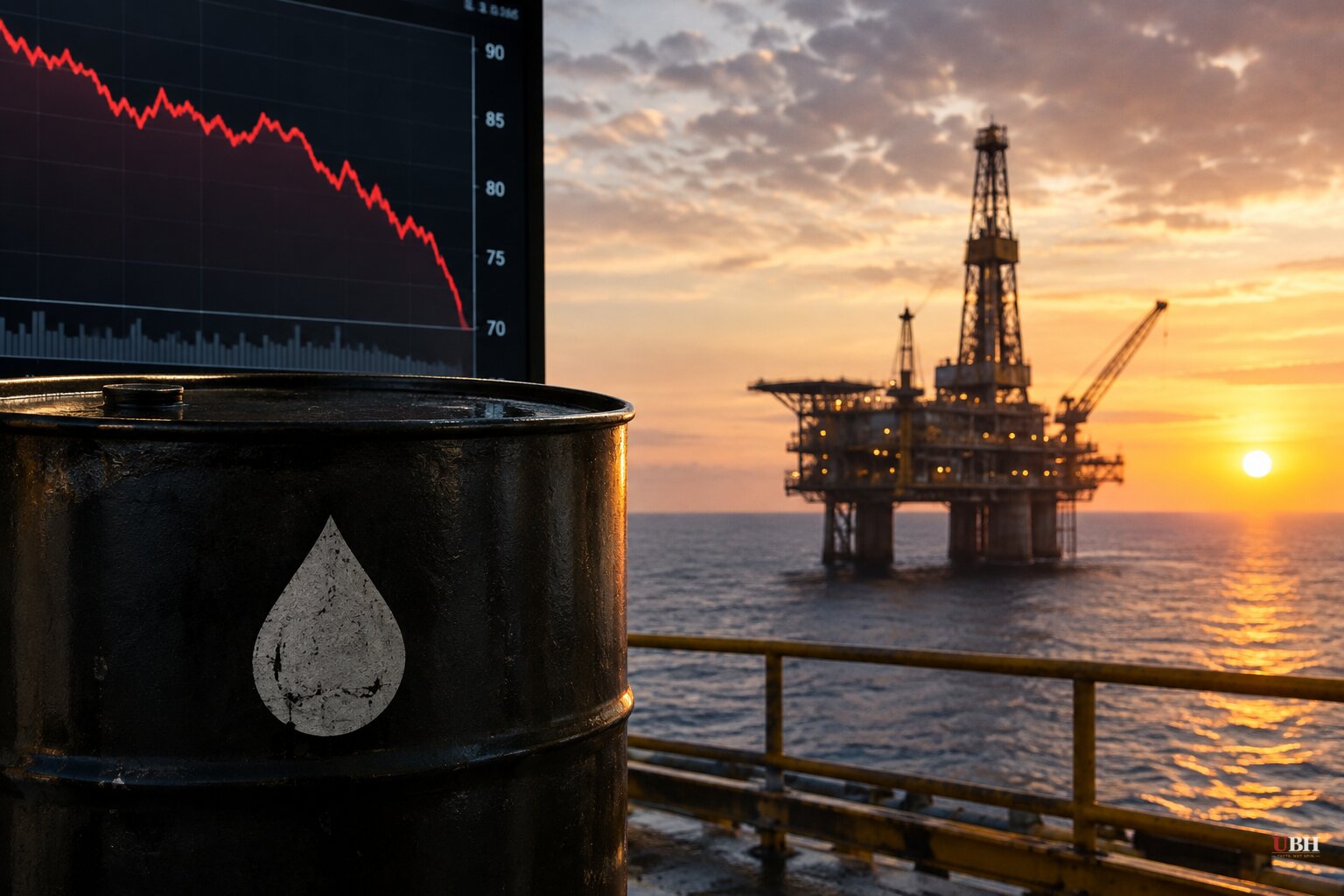
Brent crude closed at roughly $72 a barrel on Feb. 27, the day before the U.S.–Iran war began, and the war triggered an upsurge in energy prices. Oil has been the most direct way the conflict reached American households. This week it moved the other way.
Prompt Brent futures fell roughly $20 a barrel over the week, the largest weekly decline since mid-April, according to Rory Johnston of Commodity Context. His Nov. 6 weekly report says markets first unwound weekend hedges when no strikes came before the midterms, then sold off again after the Democratic sweep.
Brent settled at $94.62 on Nov. 4, down 8.7% on the day. On Nov. 5 it was trading at $96.88 around 11 a.m. ET, up about 2.4%, per Epoch Times figures.
Hedge funds were already backing away
Money managers cut their combined net-long positions in West Texas Intermediate and Brent by 78,492 lots to 272,075 lots in the week through Nov. 3, according to ICE Futures Europe and CFTC data compiled by Bloomberg. That was the biggest drop since the summer, when the U.S. and Iran agreed to an interim deal to reopen the Strait of Hormuz.
The selling came as both sides signaled openness to talks. Iran's state-run IRNA said the supreme leader approved the government's pursuit of negotiations. President Trump told Israeli Prime Minister Benjamin Netanyahu he wanted to give talks with Iran a chance.
Johnston calls it the largest speculative selling week since mid-June. He notes that net speculative positions sit at the bottom of their three-month range, with "plenty of room to the downside of July's low."
The physical market still looks tight
The price rout has not fixed the supply picture. Johnston reports that all major product categories across all tracked regions are at or below the bottom of trailing five-year seasonal lows. U.S. crude inventories drew down further, to fresh seasonal lows.
Diesel cracks in New York Harbor are still bouncing around the low-$80s against Brent. That is about four times normal, though roughly $30 a barrel below September highs. Johnston credits a Russian diesel export rebound, a fourth top-up to export quotas for Chinese independent refineries, and rising Indian middle distillate exports.
His one worrying signal for crude: the front few weeks of the Brent CFD curve are in contango, which he calls the most worrying downside signal for the market. He still describes the status quo as unsustainable.
Strait of Hormuz vessel traffic rose in October to its highest monthly level since July, S&P Global data show. Crude tanker movements fell, though, and security incidents continued.
What the election changes, and what it doesn't
Democrats flipped both the House and Senate on Nov. 3. Vice President JD Vance blamed the Iran war for Republican losses. Trump told reporters Vance's assessment was largely true because the war pushed up gasoline prices.
House Minority Leader Hakeem Jeffries (D-N.Y.) wrote colleagues on Nov. 4 that House Democrats must act in their first 100 days in the majority to stop the war.
Analysts at ING see the oil selloff as possibly overdone. Warren Patterson and Ewa Manthey wrote in a Nov. 5 note that lawmakers are likely to scrutinize the war more closely and that funding it could get harder. They also pointed out that the new Congress does not take office until January, "leaving room for escalation." Without escalation, they said, the market is likely to keep giving back the risk premium built up in recent months.
June Goh of Sparta Commodities warned of more volatility, since the path to a diplomatic end to the war is uncertain and global strategic reserves have been drawn very thin.
Pump prices
The national average for regular gasoline was $4.10 on Nov. 5, down more than two cents from the day before, according to AAA. A year ago it was almost $3.08. Diesel averaged $6.29 for the week ended Nov. 2, per the Federal Reserve Bank of St. Louis.
GasBuddy's Patrick De Haan said gasoline could fall to $3.65 in the weeks ahead and diesel to $5.50, based on the Nov. 4 wholesale close.
Before the election, Trump told a Lubbock, Texas, rally that gas prices were "going to come down really fast." He pointed to U.S. production and an energy deal with Venezuela, the first million barrels of which he announced in Corpus Christi.
Brent remains above its roughly $72 close on Feb. 27. Whether it keeps falling depends on whether the diplomatic signals become negotiations before the new Congress is seated in January.
Sources used for this briefing
6 links from 6 independent newsrooms (syndicated copies of the same report count once)
These are the sources it draws on, linked so you can verify.


