
Unbiased headlines. Facts, not spin.
Unbiased Headlines is an independently owned news organization. We bring you the facts, not opinions, written fresh from 110+ named sources. Sources linked so you can verify it yourself.
 energy
Notable (5/10)
DataVita says Lanarkshire AI datacentre will be fully grid-served, dropping private-wire renewables plan
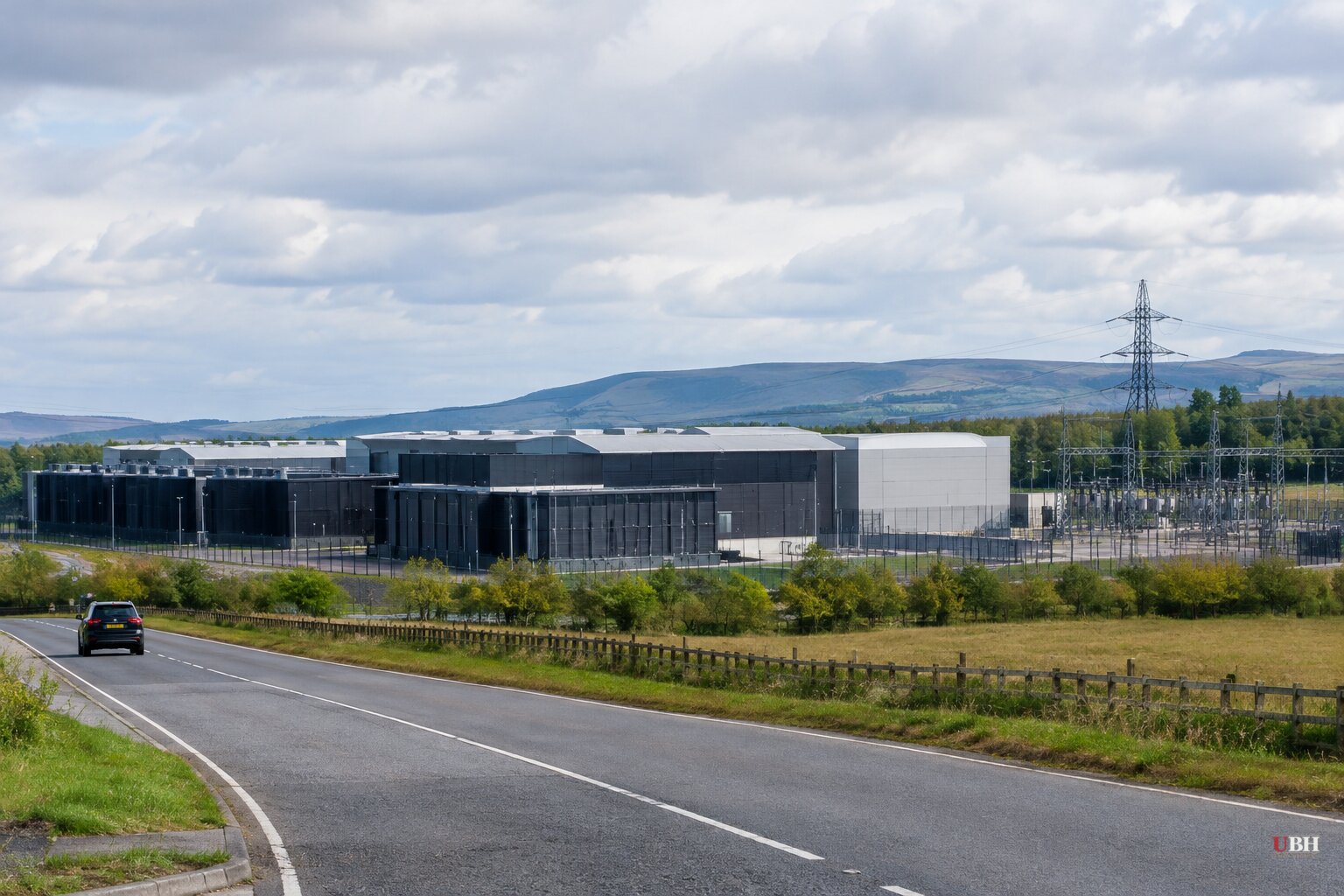
DataVita has dropped the central energy promise behind its planned AI datacentre development at Chapelhall, outside Airdrie. The site will now be "fully grid served," the company says.
The earlier pitch was different. DataVita announced more than 1GW of renewable capacity, including wind, solar and battery storage, delivered "through private wire connections directly linked to the data centre." That is roughly the output of a small nuclear reactor or Britain's largest windfarm.
From private wires to the National Grid
When the Guardian questioned the pledge, DataVita said the arrangement was "subject to final commercial agreements, planning, grid and consenting processes." The company has since revised the plan. Wind and solar farms "could connect in the future," it now says, but they are not part of the current design.
A DataVita spokesperson said: "Our datacentres are being designed to be grid served … Our grid supply will be through a renewable power purchase agreement."
The company disputes that it ever misled anyone. "Our commitment to renewable energy is unchanged," the spokesperson said, adding that the power drawn from the grid will be largely renewable.
That is a real distinction. A renewable power purchase agreement is a contract to buy renewable electricity. It is not a dedicated physical line from a wind farm to the datacentre. The site would draw from the same grid as everyone else, and DataVita's argument is that its contracts will match that draw with renewable supply.
The numbers that got mixed together
The project's headline figures describe different things. The 500MW figure is the size of the planned datacentre development. The 1GW figure was the proposed generation capacity meant to feed it. Neither is electricity being delivered today.
Planning documents for a separate 120MW proposal at the Chapelhall site, first revealed by The National in September, add another layer. They include 48 backup generators. Up to 32 could run in "load support mode" when peak customer demand coincides with air temperatures above 21°C (about 70°F), to help cool the computing equipment.
Jen Thompson, who lives 50m from the proposed site, told The National the potential air pollution and noise were a "massive worry" for her four children.
Public money and a stalled strategy
DataVita remains backed by £202m in guarantees from the National Wealth Fund. Those are guarantees, not a cash grant, but taxpayers are on the hook if the project falters. The company says the development will bring 3,400 jobs to Lanarkshire.
The site was meant to be an "AI growth zone" under the AI strategy of former prime minister Keir Starmer's government. Developers in such zones were to get incentives, potentially including energy discounts and faster planning approvals.
The Guardian reports that the strategy began to founder a little over a year after launch, once its investigations showed little solidity behind many announced plans. Two flagship UK AI investments are now in question over how they will power themselves or afford the electricity.
The constraints are well known. UK energy costs are higher than in most of Europe, and datacentre developers face years-long waits for grid connections. A site that depends entirely on the grid is exposed to both.
What critics say
Kat Jones, director of Action to Protect Rural Scotland, called the shift "emblematic of the hyperbolic claims being made by data centre developers in Scotland."
"Hyperscale AI datacentres simply cannot run on renewable power alone, they absolutely need a highly reliable source of grid power," she said. "It is not surprising that the goalposts have now changed."
DataVita's answer is that the goalposts have not moved, only the plumbing. Its stated goal of renewable-matched electricity stands, in its account, even as the physical supply route changes.
The facts on the record are narrow. A project sold on dedicated green generation is now designed around the grid, and a private-wire concept that depended on commercial and consenting processes has been set aside. A £202m public guarantee still stands behind it.
DataVita has not said when, or whether, the wind and solar park it proposes in North Lanarkshire will be built. Until it does, the renewables are a possibility, and the grid is the plan.
Sources used for this briefing
7 links from 5 independent newsrooms (syndicated copies of the same report count once)
These are the sources it draws on, linked so you can verify.


