
Unbiased headlines. Facts, not spin.
Unbiased Headlines is an independently owned news organization. We bring you the facts, not opinions, written fresh from 110+ named sources. Sources linked so you can verify it yourself.
 energy
Major Story (7/10)
Event date: November 3, 2026 ·
Study Projects Wildfires Could Destroy Up to 449,000 U.S. Structures by 2060
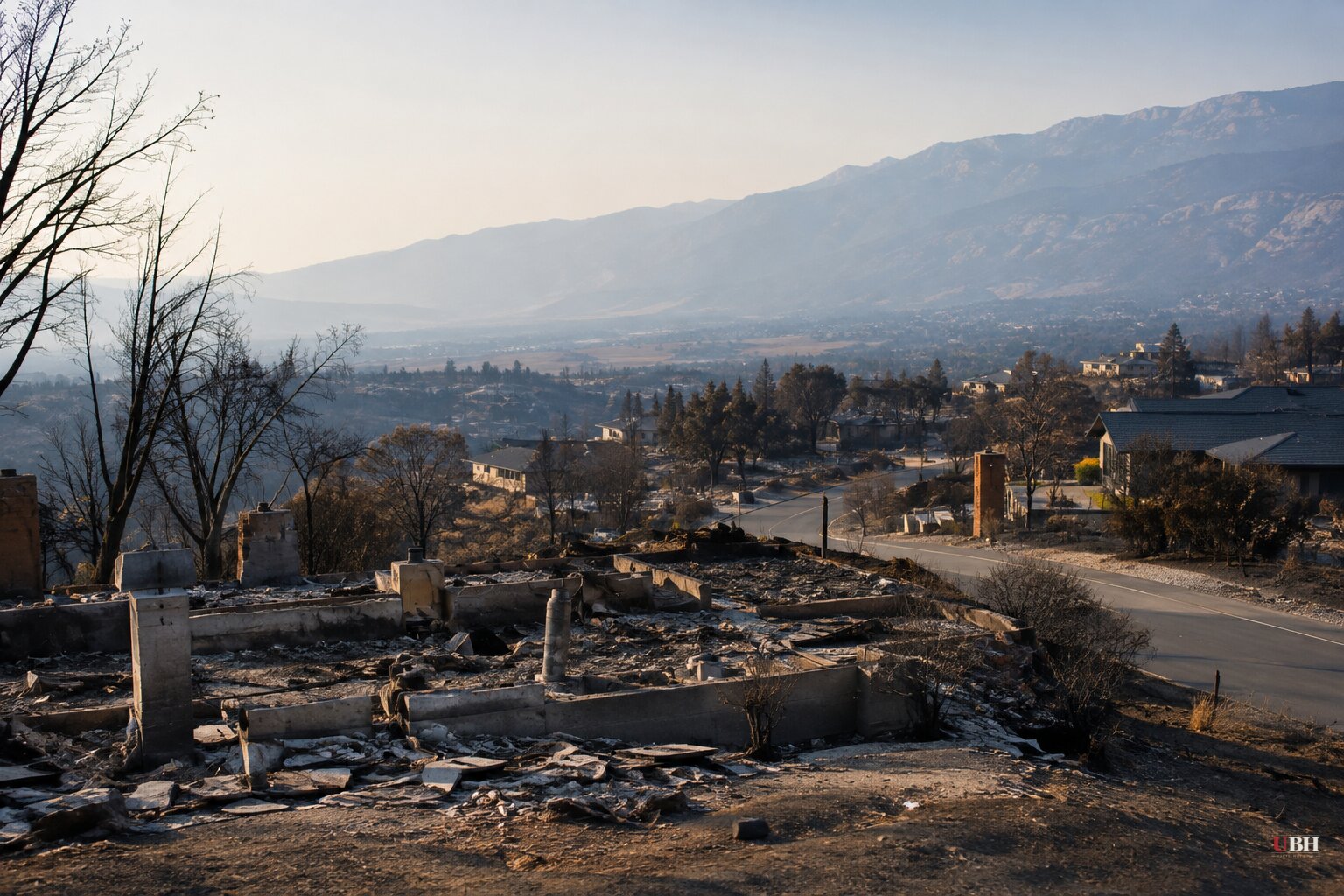
A new University of Colorado Boulder study projects that the number of homes and other structures damaged or destroyed by wildfire in the U.S. each year will nearly triple by mid-century. The upper estimate is up to 449,000 structures lost by 2060.
The range is wide. A peer-reviewed risk assessment cited in engineering trade coverage puts the total between 133,000 and 449,000 structures, depending on development patterns and how much adaptation happens. The high end assumes more building in fire-prone areas and little hardening of what is already there.
A 2026 season that fits the projection
The researchers point to this year as a preview. The fire season opened with historically low mountain snowpack, early snowmelt and exceptional warmth across much of the West. The U.S. then had its hottest summer on record, according to the study's authors.
In June, Colorado's Aspen Acres Fire destroyed hundreds of structures. In July, four firefighters died of injuries suffered when the fast-moving Knowles Fire overtook them near the Colorado-Utah border.
In August, wind-driven fires swept into Spokane, Washington, neighborhoods. More than 800 homes were damaged and tens of thousands of residents were forced to evacuate.
Colorado had burned more than 318,000 acres by late October, nearly twice its annual average since 2000. Summer monsoon rains helped crews gain ground and kept many Rocky Mountain fires small, but total acreage nationally was still well above average.
The U.S. spent 48 consecutive days at Preparedness Level 5, the highest national alert, when firefighting resources are stretched thin. The 10-year average is 25 days a year.
The small share of fires doing most of the damage
A 2024 study by the same team used satellite imagery from 2001 to 2020 to measure how fast fires grow. It defined "fast fires" as those burning more than 4,000 acres in a single day.
Those fires made up only 2.7% of the events analyzed. They were responsible for 78% of documented structure destruction and 61% of reported firefighting costs.
The authors say that speed is the problem. Flames can overwhelm emergency response before crews get a chance to contain them.
What the researchers say is driving it
The authors list several overlapping causes, and not all of them are about climate.
One is a century of fire suppression. It has allowed dry vegetation to pile up in forests that historically burned often.
Another is development. Construction in high-risk wildfire regions expanded tenfold between 1945 and 2015, putting more people and buildings in harm's way and adding ignition sources. Power lines, vehicles, machinery, debris burning and campfires can start fires year-round, which extends the season beyond the summer lightning period.
The researchers also attribute part of the problem to warming. They say human-caused climate change has increased the rate at which the atmosphere pulls moisture from soil and vegetation. By their estimate, that drying nearly doubled the area burned in western U.S. forests between 1984 and 2015 compared with what would have burned otherwise. That is the authors' attribution, and it is one factor among the several they list.
Annual area burned in the western U.S. has nearly quadrupled since 2000, they say.
Who is most exposed
The study finds the burden is uneven. About one-third of the western neighborhoods facing the greatest future risk are low-income communities, according to the researchers. Residents there often have fewer resources to prepare or recover.
What can be done
The authors argue that cutting a home's odds of burning does not require huge spending. They say strategies to lower the risk of losing a home to wildfire "don't have to be overly expensive."
The engineering analysis of the assessment points the same way. It says the 2060 horizon covers the full design life of many new buildings. It argues that defensible space, fire-resistant materials and evacuation access should be treated as core design requirements rather than add-ons.
That puts the decisions with local governments, builders and homeowners. Zoning in fire-prone areas, building codes and insurance requirements are mostly set at the state and local level. The projection's 133,000-to-449,000 spread will largely be determined by what those bodies require over the next three decades.
Sources used for this briefing
7 links from 6 independent newsrooms (syndicated copies of the same report count once)
These are the sources it draws on, linked so you can verify.


