
Unbiased headlines. Facts, not spin.
Unbiased Headlines is an independently owned news organization. We bring you the facts, not opinions, written fresh from 110+ named sources. Sources linked so you can verify it yourself.
 economy
Major Story (8/10)
Brazil Vows Not to Yield on Proposed 10% Aircraft Tariff and Sugar Duties as Embraer Objects
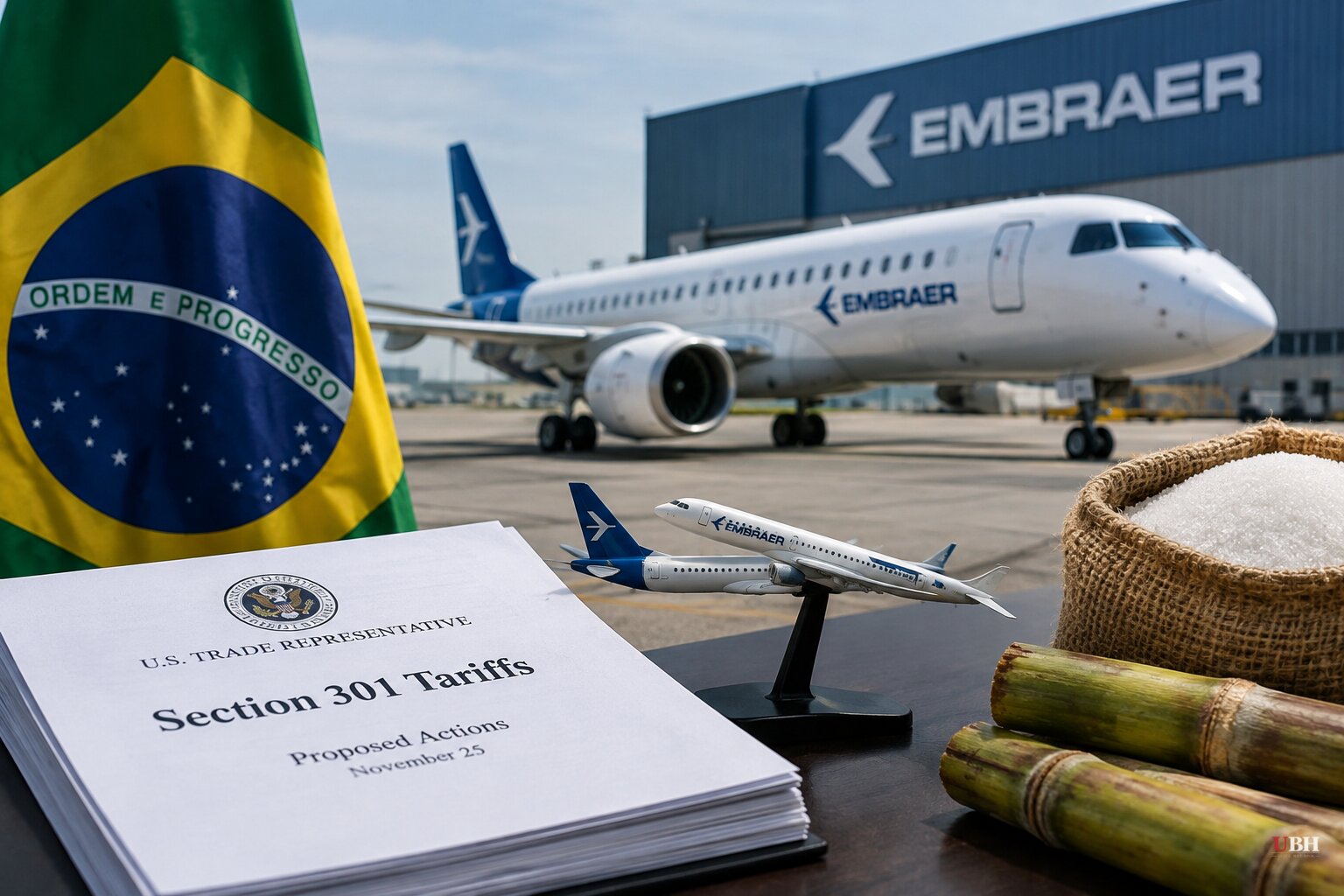
Since the Trump administration unveiled proposed Section 301 tariffs on 14 trading partners on Wednesday, Nov. 25, the details on Brazil and China have sharpened. Brazil's government is the loudest objector, and the fight now centers on aircraft and sugar.
Brazil: aircraft, sugar and a stalled negotiation
USTR Jamieson Greer's office proposed an additional 10% tariff on finished aircraft from Brazil. It also proposed higher duties on out-of-quota sugar, both raw and refined. The aircraft tariff would hit Embraer, Brazil's largest aircraft maker.
Greer said the proposal modifies tariffs imposed in July because Brazil made "no meaningful progress" on the issues in dispute. The USTR's office said the new sugar rate would ensure Brazilian sugar cannot be routed through third countries into the United States.
Brazil's presidential communications office rejected that framing. "Brazil will not yield to this type of threat," it said, calling the "unilateral decision" an "unacceptable action within the framework of the ongoing bilateral negotiating process."
The government said it will keep negotiating but is "not ruling out the possibility of adopting retaliatory measures in response to the illegal and unjust imposition of tariffs on Brazilian products." It also said it keeps the option of action at the World Trade Organization, though it has not said whether it will file a challenge.
Brazil's account of the talks is specific. The government says Washington committed in August to sending terms of reference for a possible bilateral economic and trade agreement, and has not done so despite repeated requests. It says the two sides agreed in August to a working group on trade issues, and that it has negotiated "in good faith" for more than a year.
Brazil also says the tariff proposal is meant to pressure it into changing domestic rules on the PIX payment system, digital commerce and preferential agreements, among other areas.
Embraer pushes back
Embraer rejected the aircraft proposal. The company said it "continue[s] to firmly believe in and advocate for maintaining the zero-tariff regime for the global aerospace industry, which has been in effect since the 1980s." Embraer supplies the U.S. market with business jets and commercial aircraft of up to 150 seats.
The Brazil-specific changes carry their own public hearing, scheduled for Jan. 14, 2027. The broader 14-economy proposal has a hearing on Jan. 25.
China: "political manipulation," but no threat
A spokesperson for China's embassy in Washington said the "so-called issue of 'industrial overcapacity' does not really exist and should not be used as a pretext for political manipulation." The embassy urged both sides to jointly deliver on the agreements Trump and Xi Jinping reached.
It stopped short of threatening retaliation. Foreign ministry spokesperson Guo Jiakun said earlier that "a tariff war or a trade war serves no party's interests" and called for dialogue.
China faces the highest capped rate in the proposal, 20%. The Guardian reported that in some cases this would stack with other import taxes for a total of 45%. Trade lawyer Ryan Majerus, a former Trump first-term official who also served under Biden, said the administration took steps to soften the impact on consumers, including not stacking these duties on top of the tariffs imposed in July. The two accounts of stacking differ, and the Federal Register details will settle it.
The U.S.-China truce reached last year expires Jan. 10, 2027, before the Jan. 25 hearing.
Rates for the other economies
Reports on the proposed rates for the rest of the list vary. The Associated Press reported that Vietnam also faces a 20% rate, pending finalization of trade talks, and that tariffs for other trading partners range from 10% to 18%. Greer has said the tariff on Indian imports would be capped at 17% if a trade deal was struck. Taiwan said it was confident it would keep its existing 15% tariff rate.
The administration says the rates will respect caps in existing trade deals and will not automatically pile on top of every tariff already in place. Energy, critical minerals, fertilizers and some semiconductors and pharmaceuticals would be exempt.
The administration's case and the politics
Greer argues that trading partners have built industrial strategies around "targeting manufacturing, wage and labor suppression, financial and other support, non-market economy inputs, and other market distorting practices" that erode America's manufacturing base.
He told CNBC he does not expect the tariffs to rattle the global economy. "We've talked to our trading partners about this. They know what we're proposing," Greer said. "I think a lot of this is baked in, and I don't think any of these would actually take effect earlier than a couple months from now."
The duties are also meant to help replace revenue lost after the Supreme Court ruled in February that Trump could not use an economic emergency to impose across-the-board tariffs. The rollout came the day before Thanksgiving and weeks after midterm elections that handed Democrats majorities in the House and Senate. The AP Voter Poll found about two-thirds of voters said Trump's policies had made the economy worse.
Democrats who want to block the tariffs face a hurdle. Some are likely to support duties on China, and Trump can veto any bill to overturn them.
What comes next
The administration will collect comment from affected industries and hold the Jan. 14 and Jan. 25 hearings, and the final duties are not expected to take effect before February or March. Whether Brazil takes its threatened retaliation or WTO route, and what happens to the China truce on Jan. 10, are the next decisions to watch.
Sources used for this briefing
7 links from 6 independent newsrooms (syndicated copies of the same report count once)
These are the sources it draws on, linked so you can verify.


