
Unbiased headlines. Facts, not spin.
Unbiased Headlines is an independently owned news organization. We bring you the facts, not opinions, written fresh from 110+ named sources. Sources linked so you can verify it yourself.
 economy
Major Story (7/10)
Companies Are Collecting $166 Billion in Tariff Refunds, and ProPublica Finds at Least Nine Are Using Some for Bonuses
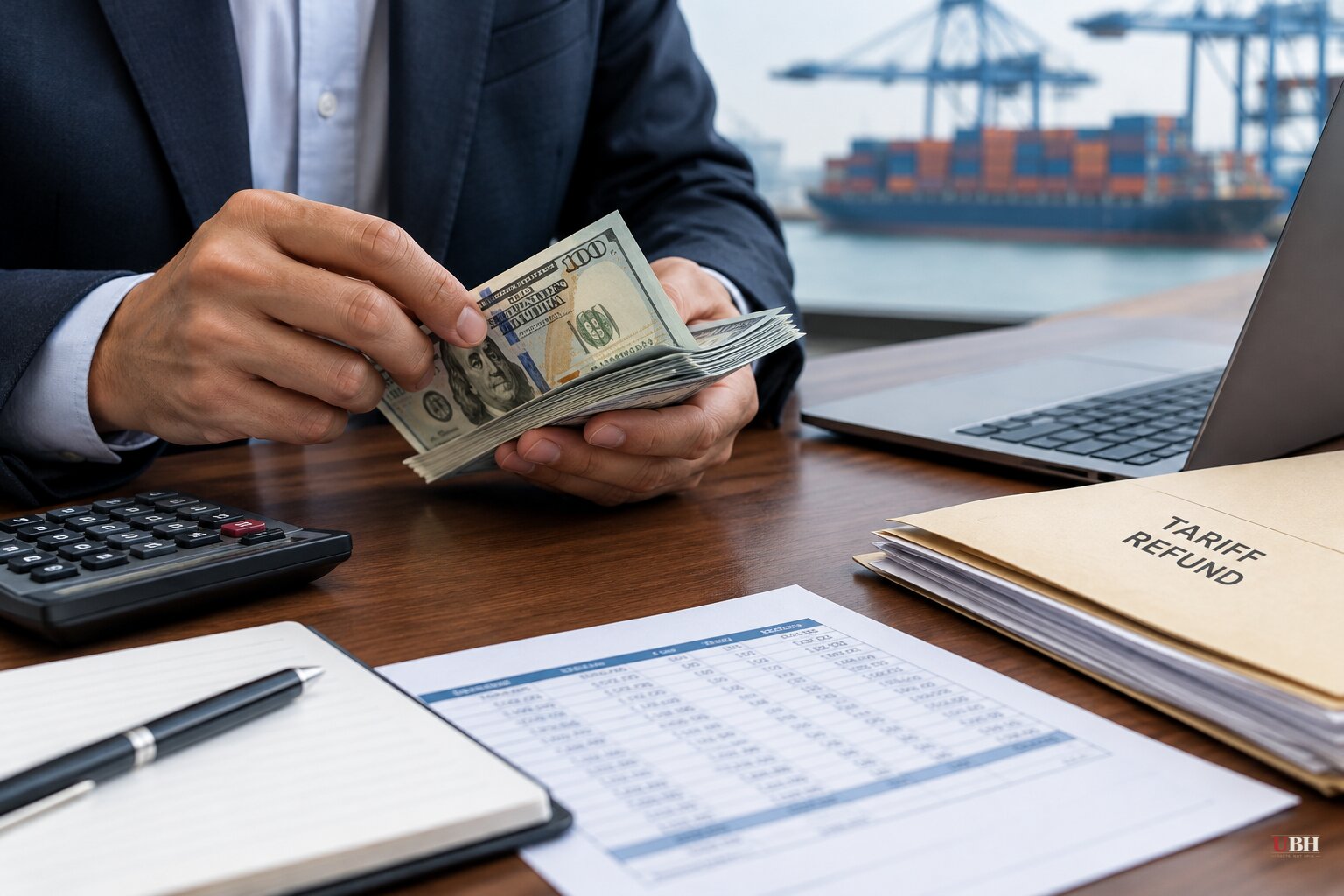
The federal government is on the hook for roughly $166 billion in tariff refunds, plus interest. The checks go to importers, not to the shoppers who may have paid more at the register.
On Feb. 20, the Supreme Court ruled 6-3 that the International Emergency Economic Powers Act does not give the president power to impose tariffs. That ended the duties President Donald Trump imposed under two national emergencies. The first, declared in February 2025, covered drugs and targeted Mexico, Canada and China. The second came about two months later, over the trade deficit, and hit nearly every U.S. trading partner.
U.S. Customs and Border Protection had disbursed more than $115 billion in refunds as of August.
Where some of the money is going
A ProPublica investigation, which used an AI tool to analyze securities filings and earnings calls, found at least nine public companies that disclosed using part of their refunds for executive or employee bonuses.
TJX, the parent of T.J. Maxx and Marshalls, said in its third-quarter earnings release that it set aside $167 million of its $463 million in refunds for incentive pay and discretionary bonuses for non-executive associates. That is about 3% of the $5.5 billion TJX earned in its last fiscal year.
Acushnet, the owner of Titleist, disclosed that about $12 million of its $45.8 million in refunds would go to incentive compensation.
Stanley Black & Decker is receiving at least $298 million, according to ProPublica's refund database. The company has not said how much of it will fund bonuses.
Nick McMillan, a computational journalist at ProPublica, said on Marketplace that Stanley Black & Decker and TJX declined to answer questions about who is being paid, how much it is worth, and whether customers should be reimbursed. He also said the administration places no requirements on what companies do with the money.
Not everyone is keeping it
The pattern is not uniform. FedEx and UPS set up portals where customers can seek refunds. Burlington Stores said it would direct its roughly $55 million refund toward customer value rather than bonuses.
The companies that are spending refunds on bonuses are doing nothing the law prohibits. Adams Lee, an international trade lawyer at Harris Sliwoski, said customers may lack a legal right to a refund unless the sales terms or a contract created one. Lee also said many companies worked with manufacturers and suppliers to split tariff costs or strike deals, so the money did not come only from one place.
The companies also lived through a costly stretch. Jonathan Todd, a partner at the law firm Benesch, said clients struggled to keep up with the speed and complexity of the changes. Some set up war rooms dedicated to tariffs, he said. Others built new compliance programs and policies. "It's just created chaos, and businesses hate chaos," Lee said.
The shoppers' side
Customers see it differently. Mark Marinaro, a Titleist customer, said his confidence in the company hit an all-time low after he learned of the investigation. He said he supports staff bonuses but objects to paying them from refunds on tariffs the Supreme Court ruled unlawful.
By late July, shoppers had filed more than 100 proposed class actions seeking a share of the refunds, according to an analysis by the law firm Thompson Coburn. Defendants include Walmart, Target, Nike and Lululemon.
Kathleen Claussen, a law professor at Georgetown University, said a refund at this scale is unprecedented, partly because the scale of business is unlike prior years.
The plain accounting
The tariffs were a tax collected at the border. Importers wrote the checks to Customs, and many passed some of that cost along in higher prices. The refund goes back to whoever wrote the check.
That leaves a real gap. Companies that charged customers more, then collect the money back and spend it on themselves, are within their rights. But shoppers have a legitimate complaint about who ends up ahead.
The tariffs were a policy choice the Supreme Court said exceeded presidential authority. The administration did not require anything of the companies that now collect the refunds.
What comes next
The more than 100 proposed class actions are the main route for shoppers. Their outcome will depend on whether courts find that sales terms or consumer-protection law give customers any claim on money that went to importers. As of August, CBP still had tens of billions of dollars in refunds left to disburse, and more companies will disclose how they spend theirs in upcoming earnings reports.
Sources used for this briefing
7 links from 7 independent newsrooms (syndicated copies of the same report count once)
These are the sources it draws on, linked so you can verify.


