
Original briefings. Zero spin.
Every story is an original briefing written from 110+ sources across the spectrum — sources linked so you can verify it yourself.
 energy
Notable (6/10)
August 5, 2026 at 10:16 PM
energy
Notable (6/10)
August 5, 2026 at 10:16 PM
Bloom Energy Fuel Cells Now Powering Oracle's AI Data Centers as Big Tech Bypasses the Grid
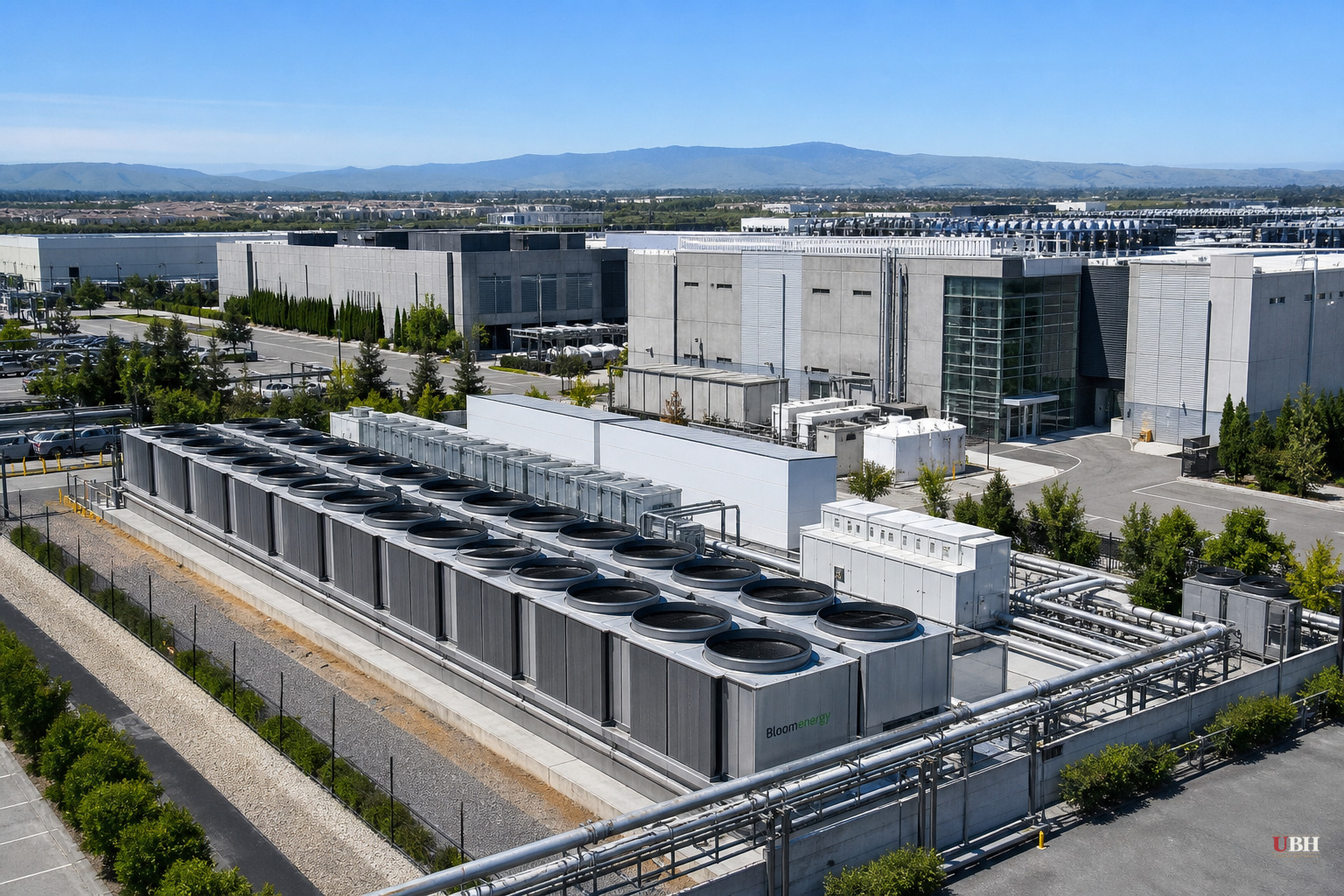
Grid connection queues for new gas power plants now stretch past five years in parts of the U.S. Big Tech doesn't have five years. So companies building AI data centers are turning to fuel cells, a technology that skips the turbine backlog entirely.
Oracle Cloud Infrastructure has already deployed Bloom Energy fuel cell systems at select U.S. data centers, according to OilPrice.com. Bloom's technology converts chemical energy directly into electricity without combustion, meaning no flame, no NOx emissions, and no CO output at the point of generation.
Data centers need power fast, and the traditional path of a gas turbine plus grid interconnection is clogged. Turbine lead times have stretched past five years, according to Goldman Sachs Research. Modular fuel cell systems, by contrast, can be deployed in under a year.
Why Wall Street Is Watching This Closely
Goldman Sachs isn't a green-energy advocacy shop. It's a bank sizing a market. Michele Della Vigna, head of Natural Resources Research in EMEA at Goldman Sachs Research, called data center power demand potentially the "most important incremental use" of energy since the industrial revolution, according to the firm's research cited by OilPrice.com.
Goldman estimates fuel cells could supply 6-15% of incremental data center power demand, or 25-50% of total behind-the-meter generation, translating to 8-20 gigawatts of fuel cell capacity needed by 2030. For scale, that's roughly the output of 8-20 large nuclear reactors, built modularly instead of as single mega-projects.
The efficiency case is real too. Fuel cells run 10-30% more efficient than gas turbines, operate far quieter, and handle steady baseload demand better, according to Goldman Sachs. Data centers don't need power that spikes and dips. They need it flat, all day, every day. That's exactly what fuel cells are built for.
The Manufacturing Constraint
There's an honest problem: manufacturing capacity for fuel cells is small right now. Goldman Sachs flags this directly. You can't scale a technology to 20 gigawatts if the factories aren't built yet.
Expansion is already underway in the U.S. and Asia, according to Goldman's research. But "expected expansion" is not the same as capacity that exists today. Companies like Bloom Energy are racing to scale production while demand from hyperscalers outpaces what current plants can turn out.
There's also a fuel-source question that deserves a straight answer. Fuel cells can run on hydrogen, natural gas, or biogas. Hydrogen is the cleanest option but remains expensive and thin on supporting infrastructure. Most near-term deployments, including the kind Bloom Energy is installing for Oracle, are more likely running on natural gas, which still produces carbon emissions upstream even if the fuel cell itself skips combustion at the point of use.
This isn't a zero-emissions silver bullet. It's a faster, more efficient, quieter way to generate power close to where it's needed, without waiting on an overloaded grid or a turbine order placed half a decade ago.
Big Tech's pledges to cut carbon intensity matter to their messaging. But the practical driver here is permitting and lead time. Interconnection queues nationwide are backed up for years. AI compute buildouts can't wait that long, and neither can the revenue tied to them.
Fuel cells offer distributed, behind-the-meter power that doesn't require the same permitting slog as a new gas plant hooked to the transmission grid. That's a business decision as much as an environmental one, and companies like Oracle are making it because the alternative is idle servers.
Whoever controls fuel cell manufacturing capacity over the next four years controls a meaningful slice of how fast the AI buildout can move. Bloom Energy's ability to scale production, and whether competitors emerge fast enough to meet Goldman's projected 8-20 gigawatt demand by 2030, is the open question determining whether this stays a niche solution or becomes standard infrastructure for the industry.
Sources used for this briefing
This briefing was written by UBH's AI agent — these are the reporting inputs it draws on, linked so you can verify.


