
Unbiased headlines. Facts, not spin.
Unbiased Headlines is an independently owned news organization. We bring you the facts, not opinions, written fresh from 110+ named sources. Sources linked so you can verify it yourself.
 energy
Notable (5/10)
energy
Notable (5/10)
Biden Tells Jay Leno He Blocked Oil Drilling Across 625 Million Acres of U.S. Ocean. He Is Bragging.
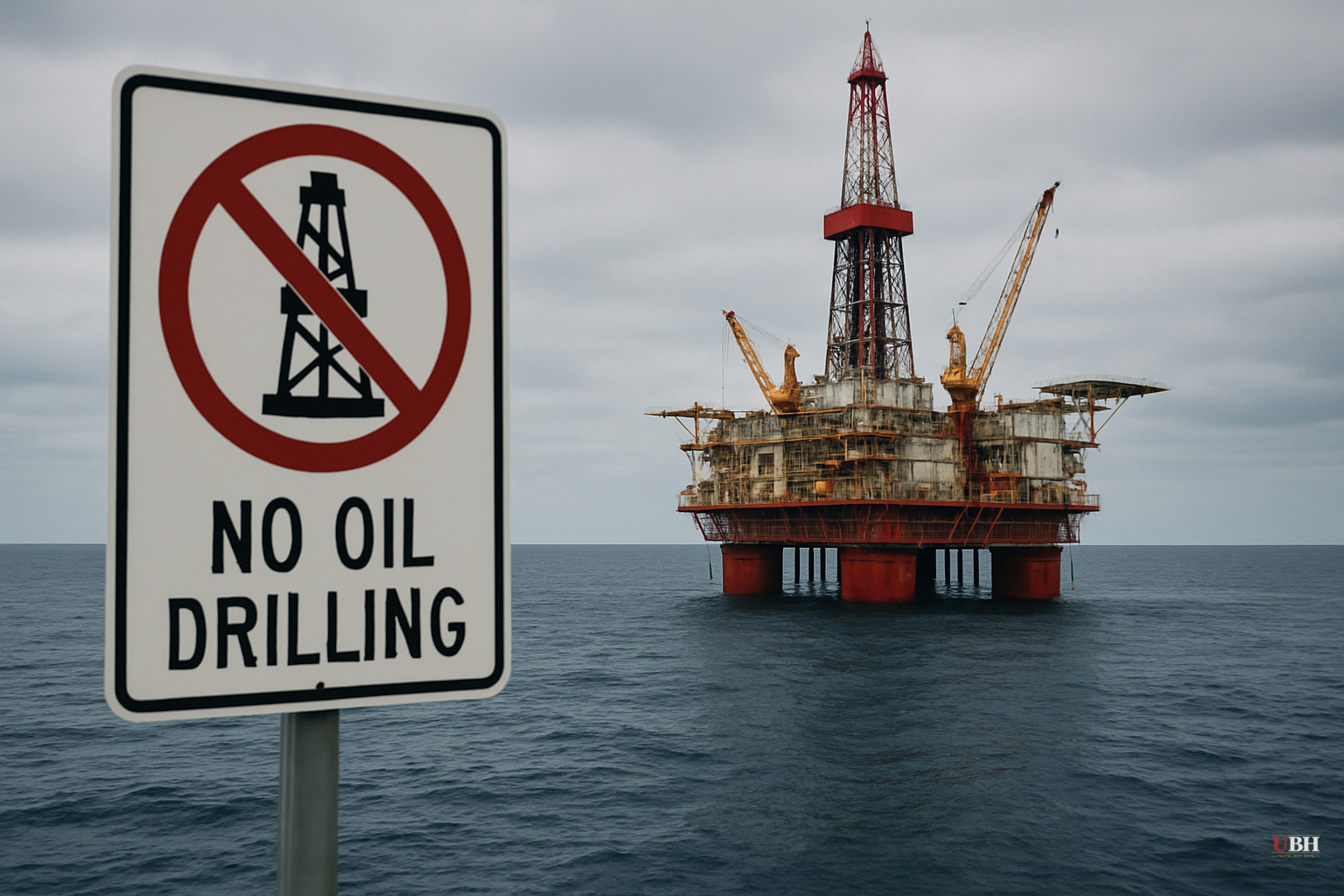
Former President Joe Biden appeared on an episode of Jay Leno's Garage, and during the conversation described the sweeping offshore drilling ban he signed in the final days of his presidency. Video of the appearance was circulated by RNC Research on June 17, 2026.
"The other thing I was able to do, I made sure there could be no oil drilling off the East Coast, the West Coast and 150 miles off the Gulf of Mexico," Biden said in the clip.
Biden signed an executive action in January 2025 that, according to CNN's reporting at the time, permanently bans future offshore oil and gas development across 625 million acres of U.S. ocean. The ban covers the entire East Coast, the eastern Gulf of Mexico, the coasts of Washington, Oregon, and California, and portions of Alaska's Northern Bering Sea.
What the order actually does
The mechanism Biden used was the Outer Continental Shelf Lands Act, which gives presidents authority to withdraw areas from oil and gas leasing. Legal experts noted in January 2025 that reversing a withdrawal under that statute is significantly harder than reversing a standard executive order, because Congress would likely need to act. That is almost certainly why Biden framed the move as durable protection rather than a symbolic gesture.
Biden's stated rationale, per his statement: "My decision reflects what coastal communities, businesses, and beachgoers have known for a long time: that drilling off these coasts could cause irreversible damage to places we hold dear and is unnecessary to meet our nation's energy needs. It is not worth the risks."
The order did NOT ban drilling on existing leases. It bans new leasing, which affects the long-term pipeline of domestic offshore production, not the rigs already operating today.
The strongest case for the ban
Environmental advocates and many coastal state governments have pushed for exactly this kind of protection for decades. Tourism and fishing economies along the Atlantic and Pacific coasts have consistently opposed offshore drilling as an unacceptable risk to their industries. From that vantage point, locking in the ban through a mechanism that is hard to reverse serves that purpose.
The case against it
Blocking domestic offshore supply puts upward pressure on long-term energy prices by limiting future production capacity. Louder with Crowder and Twitchy both criticized the clip on June 17, with Louder with Crowder noting that Biden's last action in office was to ensure that the future of America's energy supply was cut despite having created record inflation during his term. The supply economics argument is legitimate. Less domestic offshore leasing over a 10-to-30-year horizon means more dependence on imported energy, all else being equal.
Both outlets framed the clip as straightforwardly damaging to the country. That framing is editorially consistent with their audiences, but it skips the genuine tradeoff: offshore drilling bans have real constituencies, real economic rationales in coastal tourism and fishing, and a real environmental track record on risk. The supply argument is legitimate. So is the risk argument. Treating one as obvious and the other as nonexistent is incomplete.
The coherence question
The Leno clip includes several seconds of garbled speech that both sources highlighted. Louder with Crowder described the moment as Biden proceeding to "gargle a bunch of words." Twitchy was harsher, calling the appearance a reminder of "Democrats lying for four years to prop up a walking corpse." Biden's supporters would note that he has had a documented stutter his entire life and that selective clips distort the severity of any given moment.
The clip is public. Viewers can watch it and judge for themselves.
Where this goes from here
The Trump administration has stated its intent to reverse the Biden drilling ban. The legal obstacle is real. Repealing a presidential withdrawal under the Outer Continental Shelf Lands Act has never been successfully done by executive order alone. If the administration moves forward with an executive reversal, expect immediate litigation that will likely reach the Supreme Court. Congress could also pass legislation explicitly re-opening the withdrawn areas, but that requires Senate action.
Sources used for this briefing
3 links from 3 independent newsrooms (syndicated copies of the same report count once)
These are the sources it draws on, linked so you can verify.


