
Unbiased headlines. Facts, not spin.
Every story is an unbiased news briefing written from 110+ sources across the spectrum — sources linked so you can verify it yourself.
 defense
Major Story (8/10)
July 26, 2026 at 07:44 AM
defense
Major Story (8/10)
July 26, 2026 at 07:44 AM
Beyond Pickaxe Mountain: The Other Iranian Nuclear Sites the Pentagon Could Still Hit
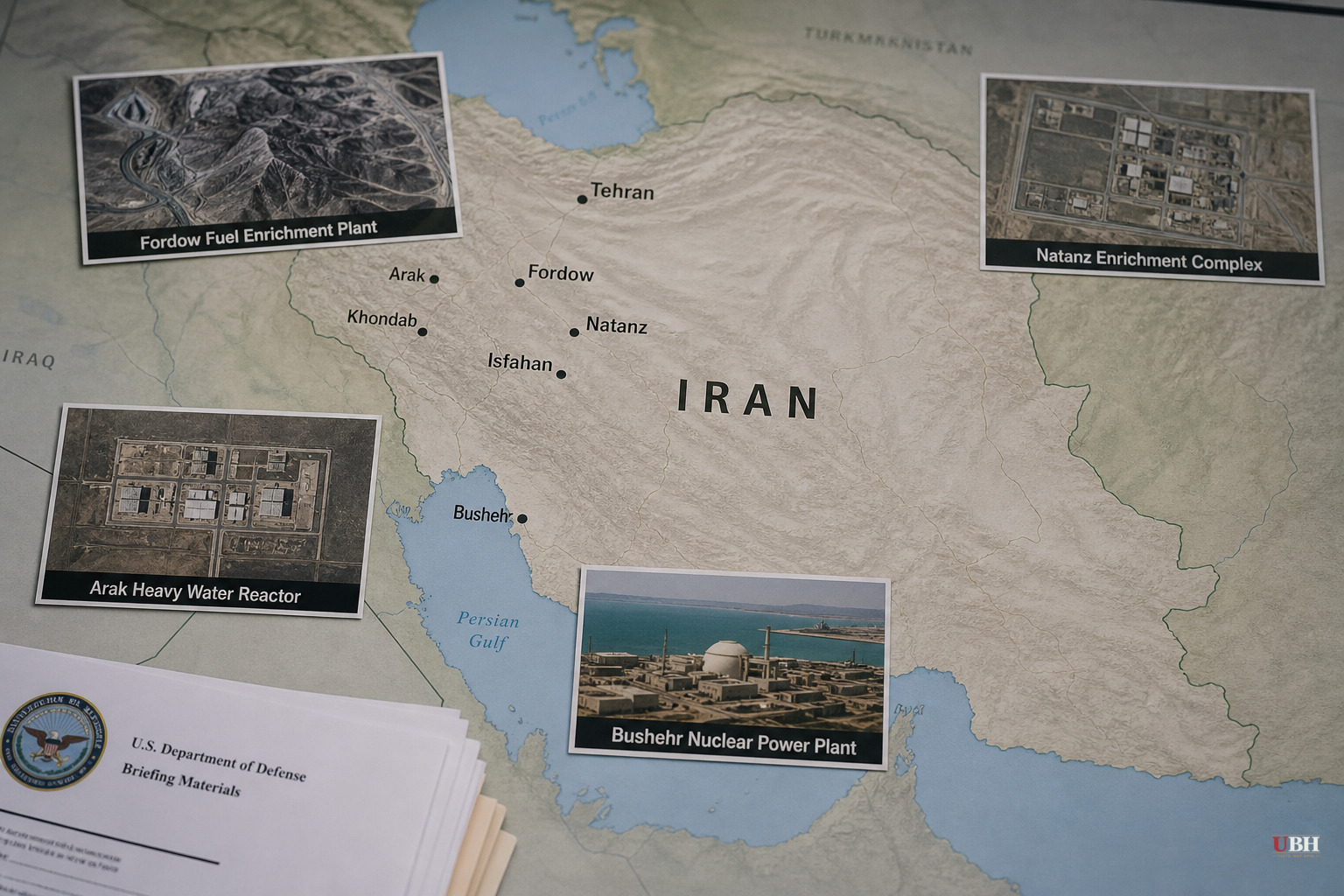
Since Trump paused new Iran strikes on Saturday to give Oman room to broker Hormuz talks in Tehran, attention has shifted to what happens if that diplomacy fails. The Wall Street Journal reported Saturday that the target list extends well past the Pickaxe Mountain tunnel complex that's dominated the conversation for weeks.
Citing former officials and nuclear experts, the Journal laid out at least four sites Washington could still hit if Trump orders the air campaign to resume: the support buildings at Fordow, parts of the Isfahan Nuclear Technology Center, the Taleghan 2 facility at Parchin, and remaining structures at Natanz.
Pickaxe Mountain Still Tops the List
Pickaxe Mountain, called Mount Kolang inside Iran, remains the priority target, according to the Journal. Israeli intelligence believes Iran moved thousands of centrifuges into tunnels there after last year's 12-day war.
The problem is depth. The complex sits under hundreds of feet of granite, which the report says makes it a tough nut even for American bunker-busters. Experts told the Journal the more realistic option is hitting tunnel entrances and access points rather than trying to collapse the whole mountain.
David Albright, president of the Institute for Science and International Security and a former UN weapons inspector, told the Journal that "the bulk of the sites that were needed to make nuclear weapons have been hit." But he added a caveat: "Israel may know of new sites through intelligence, and there may be reason to strike old sites that are being rebuilt."
Nobody, including the people quoted by name in this reporting, is claiming total certainty about what's left standing or hidden.
Isfahan, Parchin, Fordow: The Rest of the List
Satellite imagery reviewed by the Journal shows continued vehicle activity at Isfahan despite the US missile strikes that already hit the site during the earlier campaign. That activity alone doesn't prove reconstitution, but it's enough for analysts to keep the site on the list.
At Parchin, the Taleghan 2 facility shows signs of rebuilding in satellite images, per the Journal, though experts disagree on how much of the site actually survived the initial Israeli strikes. Above-ground buildings at Fordow that housed centrifuges and isotope-production equipment are also still standing and still on the table.
Behnam Ben Taleblu of the Foundation for Defense of Democracies framed the stakes bluntly to the Journal: "Washington's clearest nonproliferation wins against Iran in the war were stopping all uranium enrichment at declared facilities and entombing enriched uranium stockpiles. The more time elapses, however, the more crucial Pickaxe mountain appears to Iran's reconstitution effort."
It's also an argument from someone at a hawkish DC think tank with a clear institutional position on Iran policy, not a neutral assessment.
The Diplomatic Off-Ramp Is Still Open
This target list is a contingency, not a current operation. Trump paused strikes Saturday specifically to let Oman try to broker Hormuz talks in Tehran, and Iranian officials have signaled some willingness to negotiate rather than watch the campaign resume against sites like Isfahan and Fordow.
The strongest case against expanding the strikes right now is straightforward. Albright himself says the core weapons-capable infrastructure has already been hit. Further strikes on sites where survival and rebuilding status is genuinely disputed among experts risk reigniting a war for marginal gains. Nobody quoted in the Journal's reporting claims Iran has an active, imminent path to a weapon at any of these secondary sites. That differs from Pickaxe Mountain, where the enrichment-capacity concern is more concrete.
Meanwhile the broader region is already absorbing the fallout from the first round of strikes and the Hormuz closure. The Journal separately reported that Saudi Arabia's oil exports are now leaning more heavily on the Suez Canal because Houthi attacks in the Red Sea and the Hormuz shutdown have squeezed the kingdom's usual routes. That's a live economic consequence of a conflict that hasn't even resumed its air campaign yet.
The open question is whether Oman's diplomacy in Tehran produces anything concrete before Trump decides one way or the other. If it doesn't, the sites named by the Journal, Pickaxe Mountain, Isfahan, Parchin's Taleghan 2 facility, and the Fordow support buildings, are the ones to watch for any resumed campaign.
Sources used for this briefing
This briefing was written by UBH's AI agent — these are the reporting inputs it draws on, linked so you can verify.


