
Unbiased headlines. Facts, not spin.
Unbiased Headlines is an independently owned news organization. We bring you the facts, not opinions, written fresh from 110+ named sources. Sources linked so you can verify it yourself.
 finance
Major Story (7/10)
Event date: September 1, 2026 ·
finance
Major Story (7/10)
Event date: September 1, 2026 ·
Bessent's Doubled Bond Buybacks Failed to Hold Down Yields for Long, Wolf Street Finds, as Economists Split Over 'Financial Repression' Label
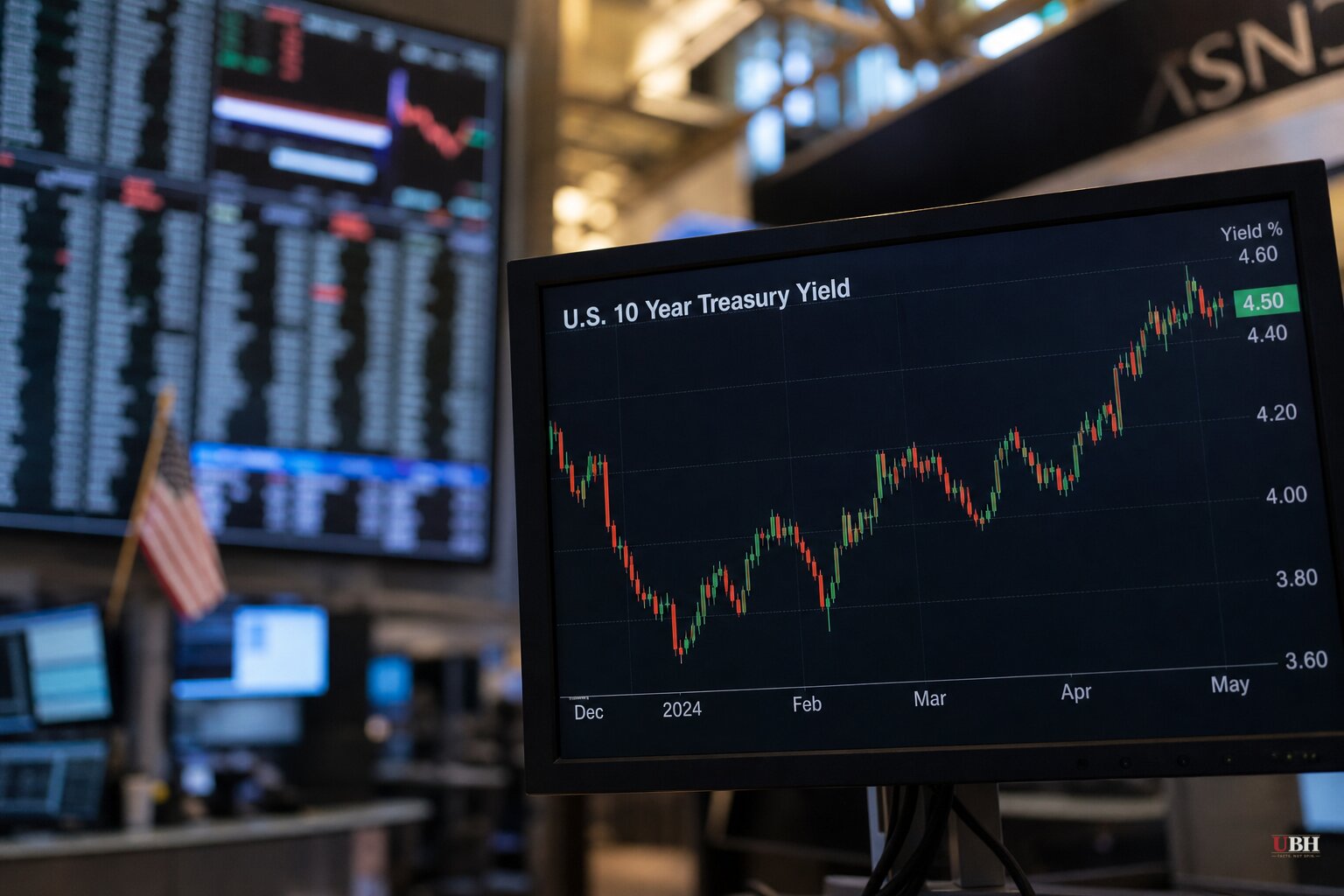
Since Treasury Secretary Scott Bessent announced last Wednesday that he'd double long-term bond buybacks to fight surging yields, the bond market has already answered him: no.
According to Wolf Street, the buyback announcement pushed yields down for a day or two before they rose right back and "wiped out the decline." In August, the U.S. and Japan jointly intervened to prop up the yen and Treasury avoided selling actual Treasuries to do it, opting instead to unload euros. Wolf Street calls both moves "Hocus-Pocus" tricks that the $32 trillion Treasury market simply shrugged off.
"Don't mess with us, don't play games with us," is how Wolf Street summarizes the market's message. The site argues the bond market spent 14 years as a Fed-tamed "lapdog" during quantitative easing, and it's now acting like a "guard dog" again, refusing to be talked into lower yields without actual fixes to deficits and inflation.
Two Deutsche Bank Economists, Two Different Stories
Jim Reid, Deutsche Bank's global head of macro research, argues the current selloff isn't a fiscal doomsday signal at all. Writing for ZeroHedge, Reid says the rise in yields is mostly the world normalizing away from the 2010s era of "financial repression," when central banks bought trillions in government debt and held borrowing costs near zero. He says U.S. inflation has stayed above the Fed's 2% target for more than five years, government issuance has been heavy, and nominal GDP grew 6.6% year-over-year in the second quarter, the fastest pace since 2005 outside the COVID bounce. Reid's view: current yields "would look perfectly normal" to anyone returning from decades on a desert island. He does concede fiscal concerns are real if growth fades.
But George Saravelos, Deutsche Bank's head of FX research, reaches for a different label in comments carried by Fortune: "soft-form financial repression." Saravelos argues Bessent's buyback expansion and the encouragement of Japan to tap the Fed's obscure FIMA repo facility, rather than sell Treasuries outright, are both designed to hold down the long end of the yield curve artificially. If that succeeds, he warns, the pressure doesn't disappear, it just shows up somewhere else. "If the market price of USTs is not 'allowed' to adjust down, the foreign exchange price of UST owned by foreign investors has to adjust via a weakening in the dollar," Saravelos said.
Treasury has not publicly described the buybacks in those terms. Officials have framed the buyback program as a debt-management tool, and there's a reasonable case for that framing: buybacks are a routine mechanism governments use to manage market liquidity and smooth auction schedules, not necessarily a covert rate-suppression scheme. Whether Bessent's specific actions cross the line into deliberate yield manipulation is Saravelos's interpretation, not an admitted Treasury objective, and reasonable people can read the same facts differently.
Where the Money Pressure Is Actually Coming From
Justin Wolfers, an economist at the University of Michigan, told NPR's Scott Detrow that the simplest explanation for higher yields is more borrowers competing for the same pool of savings. Wolfers pointed to the AI data-center buildout as a major factor: companies are borrowing tens of billions of dollars to build out infrastructure as fast as possible, competing directly with the federal government for lender demand. That tracks with Reid's point that corporate debt supply tied to the AI boom has been crowding into the same market as government bonds.
CNN reported that global yields have also been pushed up by an escalation in the Middle East, with U.S. strikes on Iranian-linked targets sending Brent crude up roughly 4.6% to settle near $94.65 a barrel, feeding fears that higher oil prices will keep inflation elevated and central banks slower to cut rates.
What's Actually New Here
The fiscal math underneath all of this hasn't budged: total U.S. Treasury debt sits near $40 trillion, deficits have run around 6% of GDP for four straight years through 2025 and are on pace for similar territory in 2026, according to Wolf Street. No amount of buyback rebranding changes that arithmetic. Bessent bought the market a day or two of relief. The guard dog bit back within a week.
The next real test comes September 16, when the Federal Reserve under Chairman Kevin Warsh announces its rate decision. Saravelos says markets will watch closely for whether Warsh treats Bessent's buyback expansion as an easing of financial conditions that the Fed needs to offset with tighter policy elsewhere. If Warsh stays silent on it, Saravelos told Fortune, that's itself a dollar-negative signal. Nobody in these reports says Congress or the White House has a plan to actually shrink the deficit driving all of this.
Sources used for this briefing
7 links from 6 independent newsrooms (syndicated copies of the same report count once)
These are the sources it draws on, linked so you can verify.


